







Definition and Meaning of the Police Report - Sealdoc - cicf state va
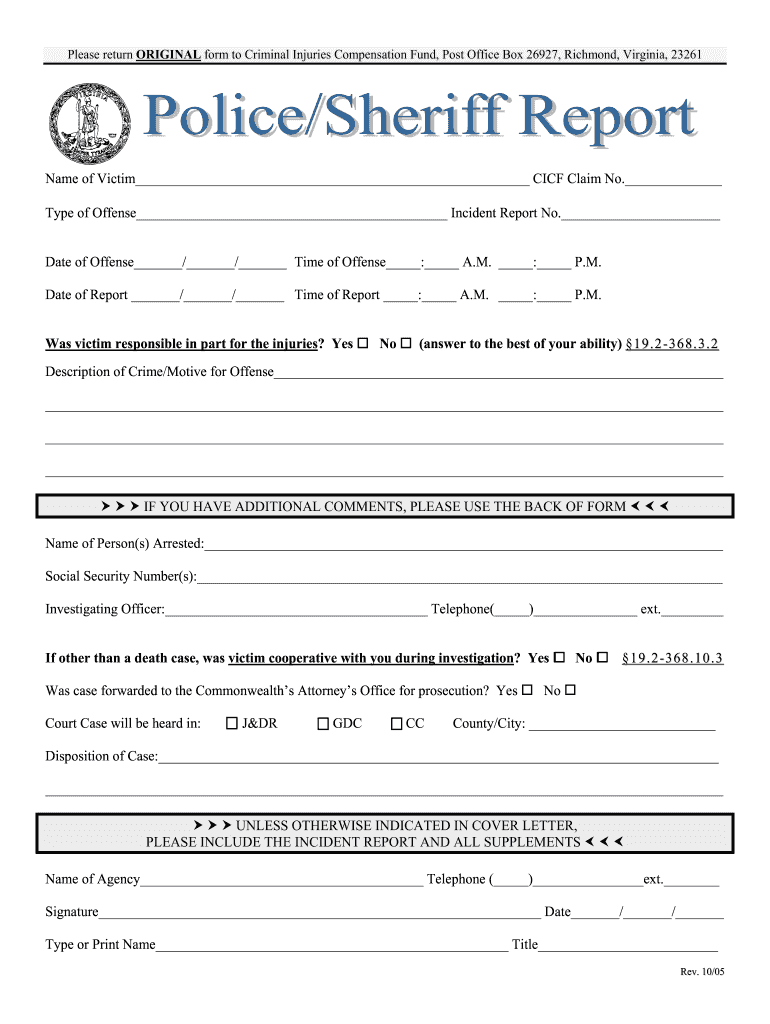
The "Police Report - Sealdoc - cicf state va" refers to a specific document used in Virginia for submitting a claim to the Criminal Injuries Compensation Fund (CICF). It serves as an official record of a crime and is a critical element in the processing of claims for victims seeking financial compensation for physical or emotional injuries suffered as a result of violent crimes.
This police report typically includes vital information about the incident, such as:
- Details of the victim
- Description of the offense
- Incident report findings
- Investigation status notes
In Virginia, proper documentation through a police report can significantly influence the outcome of a compensation claim. When filing the CICF form, accurate reporting in the police document is essential for establishing the crime's context and the victim's cooperation with law enforcement.
How to Use the Police Report - Sealdoc - cicf state va
Utilizing the Police Report - Sealdoc - cicf state va effectively requires understanding its contents and the steps necessary to complete the related claim. Here’s how you can use this report within the context of the CICF claims process:
-
Gather Necessary Information: Collect all relevant details surrounding the incident, including the report’s case number, the names of those involved, and any supporting evidence related to the crime.
-
Complete the CICF Form: Fill in the CICF claim form accurately. This includes citing specific sections of the police report to substantiate your claims. Ensure it reflects the details noted in the police report.
-
Submit Supporting Documentation: Along with the completed CICF form, submit the police report as a supporting document. The report should be current and comprehensive, detailing all facets of the incident to bolster your claim.
-
Follow Up: After submission, check back on the progress of your claim. The police report may play a key role in any further investigations or inquiries conducted by CICF.
Understanding how to leverage this report ensures your claim process moves efficiently, reflecting your rights as a victim under Virginia law.
Steps to Complete the Police Report - Sealdoc - cicf state va
Completing the Police Report - Sealdoc - cicf state va is a detailed process that requires careful attention to substance and consistency. Here’s a step-by-step guide to help you through it:
-
Obtain a Copy: Request a copy of the police report from the appropriate law enforcement agency. Ensure you have the necessary information, including the date of the incident and your identification details.
-
Review the Report Thoroughly: Check the report for accuracy. Look for correct spellings of names, dates, and the specifics of the incidents as these could affect your claim.
-
Complete Claim Sections:
- Victim Information: Fill in the victim's details, including any medical treatment incurred as a result of the crime.
- Incident Description: Summarize the incident as described in the police report.
- Investigation Notes: Include any findings from law enforcement investigations that could support your case.
-
Verification: Ensure all data points align with your initial claim submission. Misaligned facts may delay or jeopardize your claim.
-
Final Submission: Once completed and verified, submit the report along with the CICF form to the designated address, ensuring that a copy is retained for your records.
Following these steps meticulously can facilitate an efficient claims process and enhance your prospects of receiving support from the CICF.
Important Terms Related to Police Report - Sealdoc - cicf state va
Understanding specific terminology is crucial while dealing with the Police Report - Sealdoc - cicf state va and the related compensation process. Here are key terms you should be familiar with:
- Victim: An individual who has suffered physical or emotional injuries due to violent crime.
- CICF: Criminal Injuries Compensation Fund, intended to provide financial assistance to victims of violent crimes in Virginia.
- Incident Report: A documented account of the crime created by law enforcement, detailing what occurred, who was involved, and the results of the investigation.
- Disposition: Refers to the final status of the case, indicating whether it was solved, resolved, or remains under investigation.
- Claim: A formal request for financial compensation submitted to the CICF based on the details and findings within the police report.
A clear understanding of these terms can enhance your ability to navigate the processes involving police documentation and claims submissions effectively, ensuring you are well-informed throughout your journey.
Key Elements of the Police Report - Sealdoc - cicf state va
The Police Report - Sealdoc - cicf state va comprises several critical elements that provide a comprehensive overview of the crime and the context for victims applying for compensation. These elements include:
- Victim Information: Names, addresses, and contact details of each victim involved in the incident. Accurate information is essential for establishing eligibility for compensation.
- Incident Details: This section includes the date, time, and location of the incident, along with a narrative description of the events as captured by law enforcement.
- Witness Testimonies: Accounts from any witnesses present during the occurrence can provide additional context and validation of the incident.
- Injury Documentation: Medical records and details on harm suffered by the victim, which are necessary for proving claims to the CICF.
- Law Enforcement Actions: Information about arrests made, charges filed, and any ongoing investigations that stem from the incident.
These elements together form a cohesive narrative that can make or break a claim for compensation, establishing the necessary facts and context for evaluating the victim's eligibility under state laws.
Legal Use of the Police Report - Sealdoc - cicf state va
The Police Report - Sealdoc - cicf state va serves a vital legal function in the context of victims' rights and compensation. Its proper use ensures compliance with state laws and aids victims in seeking beneficial outcomes. Here’s how it fits into the legal framework:
-
Documentation for Claims: The report must be accurately completed and submitted alongside any claim to the Criminal Injuries Compensation Fund. It serves as the foundation for establishing the victim's case and claiming benefits.
-
Legal Evidence: It acts as evidence in court if legal proceedings arise, providing a factual basis for the events leading to the injury. The detail within the police report can be pivotal in advocating for the victim’s rights within the legal system.
-
Victims' Rights Protection: In Virginia, police reports protect the rights of victims under the law, helping to ensure they receive the necessary support and resources following a violent crime.
Understanding the legal implications of the police report enhances its efficacy as a tool for victims seeking justice and economic reparations.
Examples of Using the Police Report - Sealdoc - cicf state va
Utilizing the Police Report - Sealdoc - cicf state va in practical scenarios can illustrate its importance in the claims process. Here are a few examples:
-
Domestic Violence Case: After an incident of domestic violence, a victim obtains their police report documenting the event. They use the report as evidence when applying for the CICF to cover medical expenses and counseling costs arising from the assault.
-
Robbery Incident: A victim of a robbery files a claim with the CICF. The police report, detailing the incident and providing witness accounts, is critical in demonstrating the severity of the crime and the resulting impact on the victim's life.
-
Assault Claims: In a situation involving an assault, the victim gathers their police report that confirms details of the attack, which is used to justify their claim for lost wages due to time off work for recovery.
These examples reflect the police report's role beyond mere documentation, illustrating its impact on victims' access to financial assistance and legal recourse in Virginia.




