
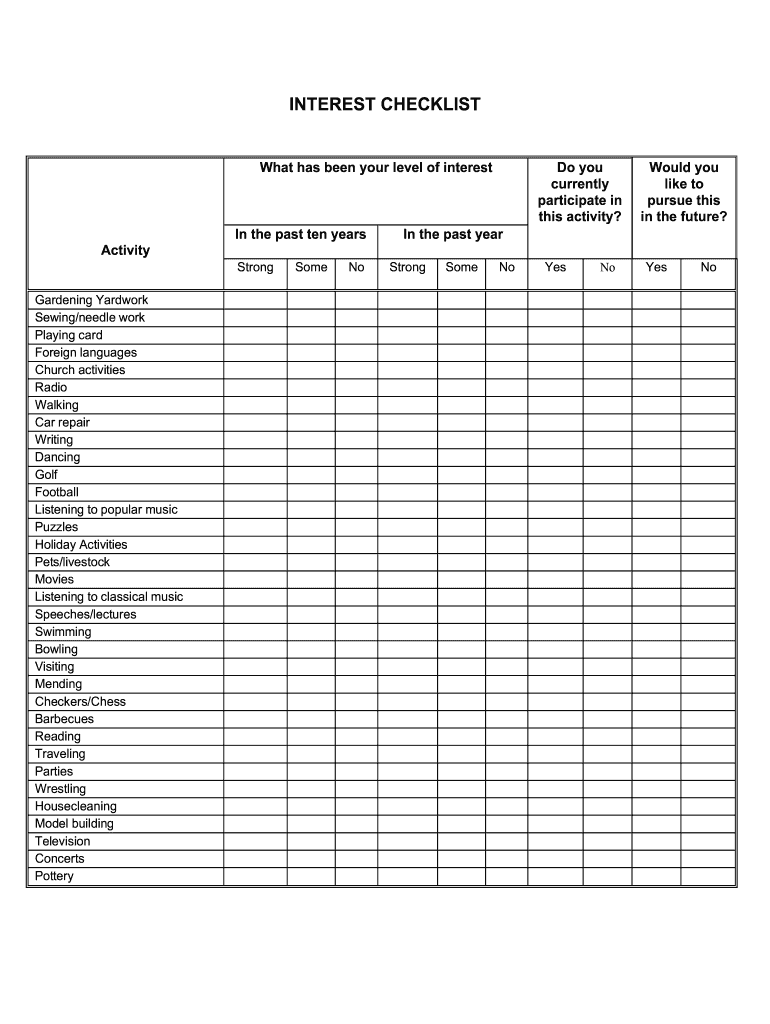







Definition & Meaning of the Interest Checklist
The interest checklist is a structured tool designed to evaluate an individual's interest levels across various activities. It serves as a comprehensive self-assessment, enabling respondents to reflect on their past engagement, current participation, and future aspirations in a broad array of activities, such as gardening, sports, arts, and social events. The checklist typically operates on a simple rating system where individuals can categorize their interest in each activity as 'Strong', 'Some', or 'No'.
Benefits of using the interest checklist include:
- Self-Reflection: Helps individuals identify personal interests and passions.
- Career Guidance: Used by occupational therapists to assist clients in exploring potential career paths based on their interests.
- Engagement Assessment: Useful in reviewing activities to enhance social interactions and overall well-being.
Understanding the definition of the interest checklist provides a solid foundation for its application in personal assessments and therapeutic contexts.
How to Use the Interest Checklist
Utilizing the interest checklist involves several straightforward steps:
- Obtain the Checklist: Access a printable version of the modified interest checklist through reputable sources.
- Review the Activities: Familiarize yourself with the range of activities listed, ensuring you understand each one.
- Rate Your Interests: For each activity, indicate your level of interest as 'Strong', 'Some', or 'No'. This rating reflects both past and present engagement.
- Reflect on Your Choices: After completing the checklist, take time to analyze the activities where you expressed high interest.
- Discuss with Professionals: If using the checklist in an occupational therapy context, bring your completed checklist to therapy sessions for tailored advice.
In practice, the checklist serves as a conversation starter, guiding discussions about possible hobbies, career paths, or social engagements that align with personal inclinations.
Steps to Complete the Interest Checklist
Completing the interest checklist is a systematic process that involves several detailed steps:
- Gather Materials: Ensure you have a copy of the modified interest checklist PDF available, which can be printed or filled out electronically.
- Set Aside Time: Find a quiet space where you can thoughtfully consider each activity without distractions.
- Familiarization: Read through each activity on the checklist. Note any that immediately resonate with you.
- Self-Evaluation: For each activity, evaluate your past, current, and anticipated level of participation.
- Strong: Indicates active enjoyment or regular participation.
- Some: Reflects occasional interest or participation in the past.
- No: Signals a lack of interest in pursuing that activity.
- Review Completed Checklist: Once you’ve rated all activities, take some time to review your selections. Pay special attention to activities rated as 'Strong' for potential exploration.
- Discuss Findings: If applicable, share your completed checklist with a therapist or career counselor for further guidance based on your interests.
Following these steps ensures a thorough evaluation of personal interests, which can later be leveraged in both personal and professional situations.
Key Elements of the Interest Checklist
The interest checklist comprises several key elements critical to its effectiveness:
- Activity Categories: The checklist includes diverse categories to reflect a wide array of interests, from creative pursuits to physical activities.
- Interest Rating System: The 'Strong', 'Some', and 'No' rating system allows for nuanced responses, helping individuals articulate their feelings towards each activity.
- Clear Instructions: Each checklist is often accompanied by straightforward instructions for users, ensuring clarity on how to complete the assessment.
- Targeted Applications: While designed for personal use, the interest checklist has specific applications in occupational therapy, career counseling, and educational settings.
Recognizing these elements helps users fully appreciate the design and purpose of the interest checklist in their assessments.
Who Typically Uses the Interest Checklist
The interest checklist finds utility across a variety of contexts and audiences, notably:
- Occupational Therapists: Used to assist clients in identifying preferences that can inform therapeutic interventions and career choices.
- Career Counselors: Helps clients explore interests related to job opportunities and vocational training pathways.
- Educators: Teachers may use it to better understand student interests to enhance curricular offerings and engagement strategies.
- Individuals Seeking Self-Understanding: Anyone interested in self-discovery or considering new hobbies can benefit from completing the checklist.
- Rehabilitation Programs: Integrated into therapy sessions, particularly where understanding leisure activities can assist in recovery processes.
This broad range of users highlights the versatility and application of the interest checklist in promoting awareness of personal interests.


Important Terms Related to the Interest Checklist
Familiarity with key terminology enhances understanding and application of the interest checklist. Important terms include:
- Modified Interest Checklist: A variant tailored for specific therapeutic contexts, adapting the standard checklist format to better suit particular user needs.
- Occupational Therapy: A therapeutic practice that uses everyday activities to promote health and well-being.
- Assessment: The systematic evaluation of an individual's interests, which the checklist facilitates.
- Leisure Activities: Activities engaged in for enjoyment and recreation, which are often assessed in the context of personal satisfaction.
- Therapeutic Goals: Objectives defined within therapeutic frameworks that can be supported by insights gained from the interest checklist.
Understanding these terms provides clarity to users, improving their ability to navigate the assessment process effectively.




