






Definition & Meaning
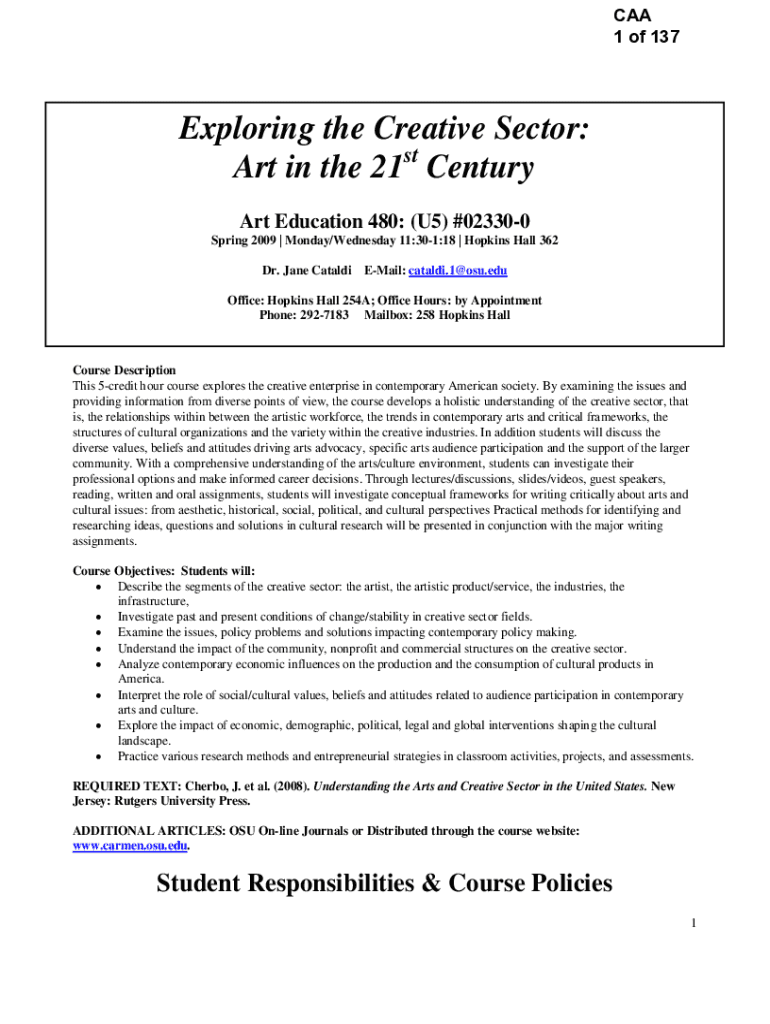
The syllabus, as outlined by the Office of Academic Affairs at The Ohio State University, serves as a structured framework for academic courses offered at the institution. It acts as a comprehensive guide that details the essential components of a course, including objectives, requirements, schedules, and evaluation methods. This document is vital for both instructors and students as it outlines expectations, responsibilities, and the academic roadmap for the duration of the course. A syllabus not only provides a detailed plan for the coursework but also establishes a binding contract between the instructor and students regarding the course conduct.
How to Use the Syllabi
Engaging effectively with the syllabi requires an understanding of its multifaceted components. Students should begin by thoroughly reviewing the course objectives and expected outcomes, which provide insight into the goals of their learning journey. Attention should be paid to the grading criteria to understand how their performance will be evaluated. Additionally, students should familiarize themselves with the schedule to prioritize assignments and prepare for examinations adequately. By aligning their study plans with the syllabus details, students can ensure they meet all course requirements efficiently.
Steps to Complete the Syllabi - Office of Academic Affairs - The Ohio State University
-
Initiate Course Details: Include essential information such as course title, code, instructor information, and contact methods.
-
Define Objectives and Outcomes: Clearly outline what students are expected to achieve upon course completion.
-
Set the Schedule: Detail the timeline of topics, reading assignments, and key dates for exams and project submissions.
-
Outline Grading Criteria: Explain the framework for assessment, including weightage of assignments, participation, examinations, and any alternative assessments.
-
List Required Materials: Provide a comprehensive list of textbooks, software, or other resources required for the course.
-
Establish Policies: Detail policies on academic integrity, attendance, participation, and any specific departmental guidelines.
-
Include Support Services: Mention the available student support services and accommodations for students with disabilities.
Key Elements of the Syllabi
The syllabus for courses at The Ohio State University's Office of Academic Affairs typically comprises several key elements:
- Course Description: A brief overview of the course content and its relevance.
- Learning Objectives: Clearly specified goals that the course aims to achieve.
- Evaluation Methods: Detailing of various assessments like exams, projects, and assignments, along with grading policies.
- Course Schedule: A detailed timeline covering lecture topics, reading assignments, and major deadlines.
- Required Resources: Textbooks, supplementary readings, and any necessary digital media or platforms.
- Instructor Information: Instructor contact details and office hours for student consultation.
- Course Policies: Explicit guidelines around conduct, participation, and integrity.
Important Terms Related to Syllabi
Understanding specific terms related to syllabi is crucial for navigating academic courses effectively:
- Practicum: Hands-on practice within the course structure, often in professional settings.
- Prerequisites: Courses or requirements that students must complete before enrolling.
- Corequisites: Courses that should be taken simultaneously.
- Credits: Units signifying the educational weight of a course.
- Electives: Optional courses allowing students to explore interests outside major requirements.
Legal Use of the Syllabi
The syllabus is recognized legally as a binding agreement between educators and students at The Ohio State University. It should align with institutional policies and serve as a reference for resolving any disputes related to course content and grading. Institutions are required to ensure that syllabi are accessible to all enrolled students and updated in line with any curriculum changes. Any modifications to the syllabus after the commencement of the course are typically limited and must be communicated transparently.
Examples of Using the Syllabi
-
Study Planning: Students can use the syllabus to organize their study schedules by aligning them with assignment deadlines and exam dates.
-
Feedback Mechanism: Instructors can solicit feedback on the course structure, using the syllabus as a basis for discussion and potential future revisions.
-
Policy Reference: In case of any disputes regarding grading or course policies, both students and instructors can refer to the syllabus for clarification and conflict resolution.
Versions or Alternatives to the Syllabi
While the syllabi provided by The Ohio State University are standardized, alternative formats may include digital versions that are interactive, allowing for multimedia elements to aid understanding. Some courses may also offer abbreviated versions or course outlines accessible via the university's learning management system, catering to students who are accustomed to engaging with content online. Additionally, specific courses may offer supplementary documents that expand on certain syllabus sections, such as detailed project guidelines or laboratory safety procedures.