




01. Edit your photo log template online
Type text, add images, blackout confidential details, add comments, highlights and more.

Type text, add images, blackout confidential details, add comments, highlights and more.

Draw your signature, type it, upload its image, or use your mobile device as a signature pad.

Send photo log via email, link, or fax. You can also download it, export it or print it out.
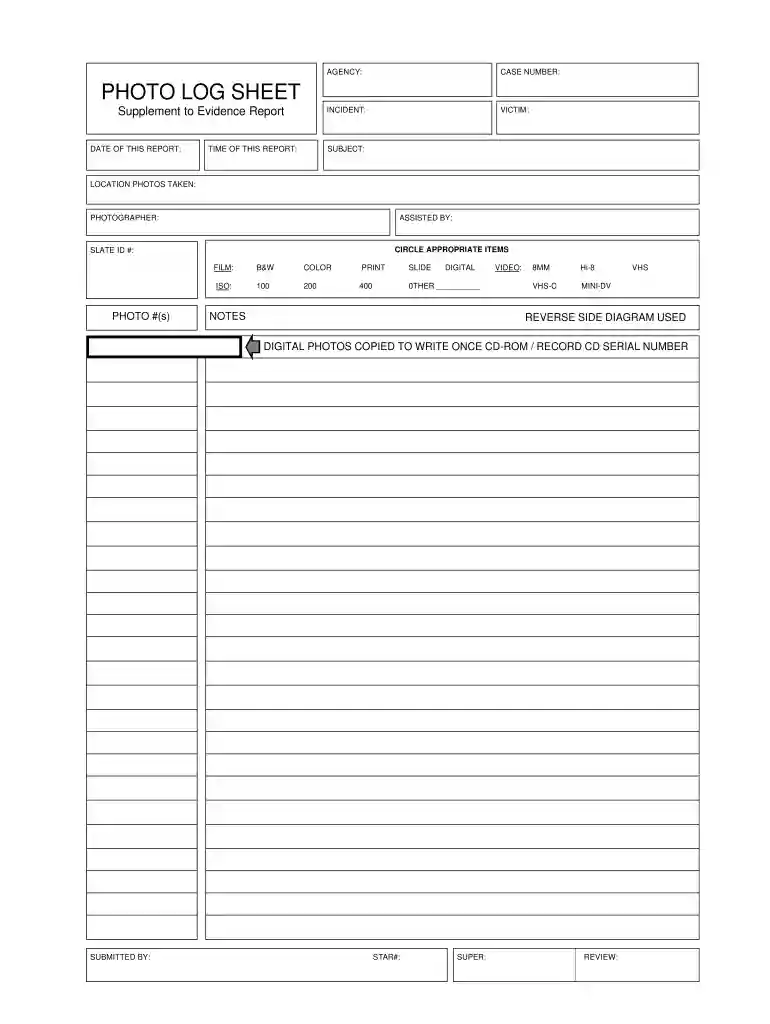
A photo log template is a structured document designed to record and organize photographic evidence in a systematic manner. This tool is commonly used in various fields, including law enforcement, emergency response, and project management. The template typically includes sections for capturing vital information about each photo, such as the date taken, description of the image, location, and the names of individuals who contributed to the documentation.
The primary purpose of a photo log is to ensure thorough documentation of events, actions, or conditions through visual means. By maintaining a well-organized photo log, agencies and organizations can create a reliable record that supports investigations, audits, or project reports. Proper use of a photo log template enhances accountability and transparency in processes where visual evidence is critical.
Using a photo log template involves several steps to ensure comprehensive documentation of photographic evidence. It is essential to adhere to a consistent method to maintain clarity and utility.
Select the Appropriate Template: Choose a photo log template that fits the specific needs of your documentation process. This could be a digital document, a printable form, or a template available in tools like Microsoft Word or Google Docs.
Input Basic Information: Start by filling in foundational data such as the agency name, case number, and the title of the log. This information helps to categorize and identify the log’s content effectively.
Log Each Photo: For every image taken, enter relevant details, including:
Categorize Photos: If applicable, categorize the images based on their context (e.g., incident response, project progress). This organization aids in easier retrieval and analysis later.
Review and Finalize: After documenting each image, review the entries for accuracy and completeness. Ensure all necessary information is captured before finalizing the log for submission or record-keeping.
Acquiring a photo log template can be achieved through multiple sources tailored to meet specific user needs. Depending on the preferred format, users can access:
Online Resources: Many websites provide free or paid downloadable templates in various formats, including Word, Excel, and PDF. A simple search for "photo log template" will yield numerous options.
Document Creation Software: Programs like Microsoft Word or Google Docs often include customizable templates that can serve as photo logs. Users can modify these templates to fit their requirements.
Professional Organizations: Agencies, particularly in law enforcement or emergency services, may have standardized photo log templates available on their websites. Contacting these organizations directly can provide versions used for specific operational needs.
Templates from Document Management Platforms: Services like DocHub offer versatile document management solutions where users can create customized photo log templates tailored to specific projects or requirements.
Completing a photo log template requires systematic attention to detail to ensure that the document effectively represents the content it aims to log. Here are structured steps to follow:
Download or Create a Template: Choose a pre-existing template or create a blank document using a word processor or spreadsheet application.
Input Header Information: At the beginning of the log, enter details such as the agency name, project title, and case number. This initial information serves as a reference point for readers.
Add Photographic Entries: For each photograph:
Include Annotations if Necessary: Depending on complexity, consider adding annotations next to images or within the log to elaborate on the context or significance of the photos. This can be beneficial for legal or compliance contexts.
Save and Share: After completing the log, save the document in an appropriate format for sharing or printing. Ensure a backup copy is stored securely to prevent data loss.
Different professions and industries utilize photo log templates based on their unique documentation needs. Typical users include:
Law Enforcement Agencies: Officers use photo logs to document crime scenes, evidence collection, and incidents, ensuring that visual records complement narratives in reports.
Insurance Adjusters: When assessing claims, adjusters capture images of damaged property and include them in photo logs to provide evidence for evaluation and settlement purposes.
Construction Managers: Project managers document the progress of builds using photo logs, which help in tracking timelines, quality assurance, and compliance with regulations.
Environmental Scientists: Researchers use photo logs to record environmental conditions, changes in landscapes, or documentation of fieldwork, providing visual context to their findings.
Understanding the key users of photo log templates assists in tailoring the creation and application of these logs to suit specific requirements, improving effectiveness and utility.


A well-constructed photo log template should encompass essential elements that enhance its functionality and comprehensiveness. Key elements include:
Header Section: Contains information about the organization, project name, and identifiers like case numbers.
Photograph Entries: Dedicated sections for each photo, which should feature:
Annotations Section: A space for additional notes or clarifications regarding the image, providing clearer insights, particularly for complex images.
Signature or Approval Area: Depending on the usage, including a section for supervisory or managerial signatures can establish accountability and control.
Indexing or Category System: If the log is extensive, including an indexing feature can assist users in quickly locating specific entries. This could involve tags or categorization schemes by topic or relevance.
Ensuring these elements are included in the photo log template maximizes its utility, making it a robust tool for documentation across various fields.
We've got more versions of the photo log template form. Select the right photo log template version from the list and start editing it straight away!
| Versions | Form popularity | Fillable & printable |
|---|---|---|
| 2001 | 4.8 Satisfied (53 Votes) |
At DocHub, your data security is our priority. We follow HIPAA, SOC2, GDPR, and other standards, so you can work on your documents with confidence.
Collections Emergency Image Log. Sheet No: 1 Date: 8/19/2020 Image #. Device. Tracking No. Original No. File Name. Digital StorageRead more
Instructions: This form should be used to document the status of the utilitys systems and facilities immediately after a disaster event.Read more
Apr 6, 2025 This category contains templates related to placing special tags on images.


