







Comprehensive Understanding of the Declaration for Passes & PTOs
Definition and Purpose of the Declaration Form
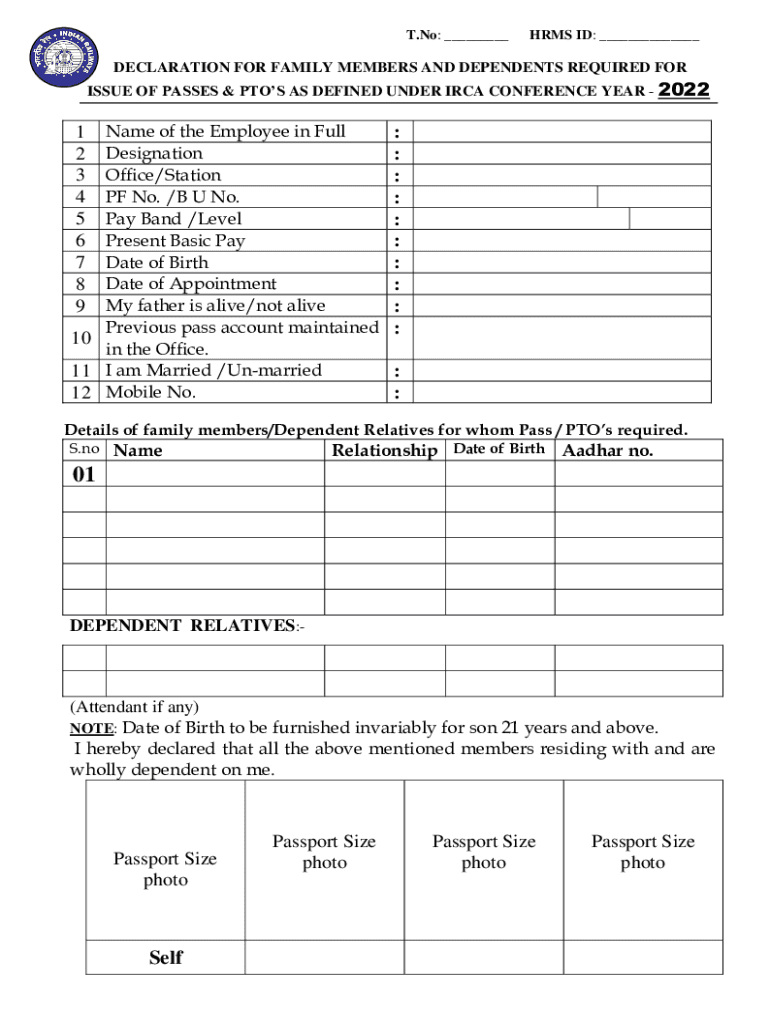
The Declaration for the Passes & PTOs for Family Members Dependents for the Year 200 serves as an official document required by employees to request travel passes or paid time off (PTO) for their family members and dependents. This declaration is crucial for employees who are authorized to include certain relatives in their benefits, ensuring that all necessary information regarding these dependents is formally recorded. The form typically collects personal details about the employee, information on family members, and any relevant declarations that verify the dependency status of these individuals.
Eligibility Criteria for Family Members
Understanding who qualifies as a dependent is essential for accurately filling out the form. The eligibility criteria generally include:
- Spouse: A legally married partner, recognized under state law.
- Children: Generally, this includes biological, adopted, and stepchildren under a specific age or those who are full-time students.
- Dependent Relatives: This may include parents or siblings if they meet the financial dependency requirements, as outlined by the employer.
It is critical to verify the current eligibility guidelines provided by the employer, as they may vary based on specific policy provisions or institutional regulations.

Information Required on the Form
When completing the declaration form, employees need to provide comprehensive information, including:
- Employee Information: Full name, employment ID, and contact information.
- Dependent Details: Names, relationships to the employee, age, and residency status.
- Declaration of Dependency: A statement confirming that the listed individuals meet the dependency criteria set forth by the organization.
Inclusion of accurate and thorough information is vital to avoid delays in processing requests for passes and PTOs.
Steps to Complete the Declaration Form
Filling out the declaration form requires a systematic approach to ensure accuracy and completeness. The steps involved typically include:
- Gather Documentation: Collect necessary documents proving relationships (e.g., marriage certificates, birth certificates).
- Fill Out Employee and Dependent Sections:
- Clearly write down your personal details.
- Provide all required details for each dependent.
- Declare Dependency Status: Carefully check the criteria and declare the relationship to confirm accuracy.
- Submit the Form: Follow the specified submission method (online, mail, or in-person) set forth by the employer.
Proper adherence to these steps aids in minimizing the likelihood of error and subsequent processing issues.
Important Terms Related to the Form
Understanding the jargon surrounding the declaration form can assist employees in navigating its requirements effectively. Key terms may include:
- PTO (Paid Time Off): Benefits allowing employees to take leave while still being compensated.
- Dependencies: Individuals who rely on the employee for financial support, often used for benefits eligibility criteria.
- Verified Declaration: The signed affirmation by the employee confirming the authenticity of the information provided in the form.
Clarification of these terms can help in recognizing the implications associated with the completion and submission of the form.
Legal Considerations of the Declaration Form
The declaration form must adhere to established legal standards. Compliance with local and federal regulations regarding dependency and benefit eligibility is crucial. Employees should be aware of:
- Document Retention: Retaining copies of submitted forms may be necessary for future reference or audits.
- Fraud Consequences: Providing false information can lead to serious repercussions, including loss of benefits or disciplinary action.
These legal considerations highlight the significance of accuracy and transparency when completing the declaration.
Variations and Alternative Forms
While each organization may have its own version of the declaration form, standardization in terminology often exists. Employees should be familiar with:
- Different Versions: Some organizations may have slightly altered forms for unique departmental requirements or benefits.
- Alternative Documentation: In certain cases, supplementary documentation may be required to support the claims made in the declaration.
Staying informed about these variations can further streamline the application and approval process.
Examples of Use Case Scenarios
To illustrate the practical application of the declaration form, consider the following scenarios:
- Scenario 1: An employee submitting a declaration for their spouse and two children, anticipating a family trip requiring passes.
- Scenario 2: An employee seeking PTO to take care of an elderly dependent relative, necessitating the declaration of their dependency status.
These scenarios reflect common situations where the engagement of the declaration form plays a critical role in benefit access.
Summary of Key Points
Recognizing the vital components of the Declaration for Passes & PTOs for Family Members Dependents allows employees to navigate the process efficiently. From understanding eligibility criteria to completing the form accurately, thorough familiarity with its features and legal implications is essential for accessing benefits associated with family members and dependents.




