




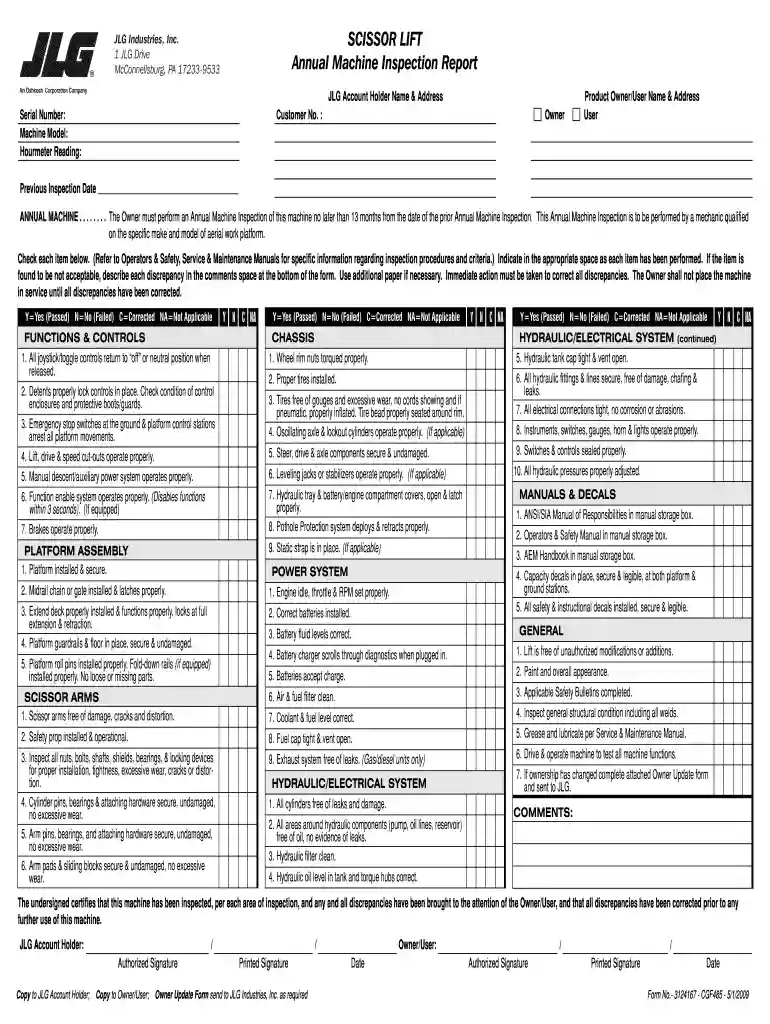
01. Edit your telehandler annual inspection form online
Type text, add images, blackout confidential details, add comments, highlights and more.

Type text, add images, blackout confidential details, add comments, highlights and more.

Draw your signature, type it, upload its image, or use your mobile device as a signature pad.

Send jlg daily inspection checklist pdf via email, link, or fax. You can also download it, export it or print it out.
The JLG daily inspection checklist is a crucial tool for maintaining safety and operational efficiency when using JLG equipment, such as scissor lifts and boom lifts. Proper inspections help identify any potential issues early, ensuring that machinery is safe for operation. Below is a detailed exploration of the essential components of the checklist, providing insights into its application and benefits.
Each section of the checklist is designed to cover specific aspects of the equipment, ensuring a thorough assessment. Here are the major components that operators should evaluate daily:
Safety Features:
Operational Functions:
Physical Condition:
Documentation and Labels:
To use the JLG daily inspection checklist effectively, operators should follow systematic procedures:
Preparation:
Physical Inspection:
Operational Checks:
Record Keeping:
Daily inspections utilizing the JLG checklist have numerous benefits, particularly concerning safety and compliance:
Risk Mitigation:
Regulatory Compliance:
Employee Accountability:
While the JLG daily inspection checklist covers many common scenarios, it’s essential to consider unique situations that may arise:
Adverse Weather Conditions:
Frequent Changes in Machine Use:
Emerging Issues:
The JLG daily inspection checklist is broadly applicable among various industries where aerial lifts and telehandlers are prevalent:
Construction Sites:
Warehousing and Distribution:
Maintenance and Repair Operations:
The JLG daily inspection checklist serves as a preventive measure that enhances equipment longevity and safety compliance. By establishing a reliable routine for inspections, companies can ensure that their fleet of JLG machinery remains safe, efficient, and ready for operation. The comprehensive details captured in daily checklists not only support effective management practices but also create a safer working environment for all personnel involved.
We've got more versions of the telehandler annual inspection form form. Select the right telehandler annual inspection form version from the list and start editing it straight away!
| Versions | Form popularity | Fillable & printable |
|---|---|---|
| 2009 | 4.8 Satisfied (64 Votes) |
At DocHub, your data security is our priority. We follow HIPAA, SOC2, GDPR, and other standards, so you can work on your documents with confidence.
Lift controls shall be tested each day prior to use to determine that such controls are in safe working condition. 1926.453(b)(2)(ii). Only authorized personsRead more
Workplace Inspection - Survey work area for potential hazardous operating conditions prior to lift usage. NOTE: If any item above requires maintenance or repairRead more
Apr 17, 2020 Pre-start inspections must be performed by the operator, must be documented, and must include items on the Pre-start Inspection Checklist. Pre-Read more


