Definition and Meaning of Cancellation of Registration of Fictitious Name
The cancellation of registration of a fictitious name is a formal legal process used by businesses to officially discontinue the use of a fictitious name under which they have been operating. This process is essential when a business decides to no longer use a particular trade name, ensuring that the name is no longer legally associated with the business. This action removes the name from the state's business registry, preventing future use or legal responsibility under that name by the original registrant.
Key Components
- Fictitious Name: This is an alias, trade name, or DBA ("doing business as") that a company registers for operating outside its registered corporate name.
- Registration: Initially involves registering the fictitious name with the appropriate state authority to legally operate under that alias.
- Cancellation: Officially notifying the state to remove the name from records, finalizing the cessation of its usage.
Importance of Cancelling a Fictitious Name
Cancelling the registration of a fictitious name is critical to avoid any legal implications or financial liabilities that may arise if the name remains active in state records. An active fictitious name can imply ongoing operations, leading to misunderstandings or misunderstandings regarding legal responsibilities or tax obligations.
Scenarios Requiring Cancellation
- Ceasing Operations: When a business closes or ceases operations under a fictitious name.
- Rebranding: A business might rebrand under a new name, necessitating the cancellation of the old fictitious name.
- Merger or Acquisition: Incorporating a business under another structure, which might require canceling existing fictitious names for integration under one corporate name.
Steps to Obtain the Cancellation of a Fictitious Name
The steps involved in obtaining the cancellation vary by state but generally include:
- Review State Requirements: Check the specific state guidelines for canceling a fictitious name. Each state may have different procedures.
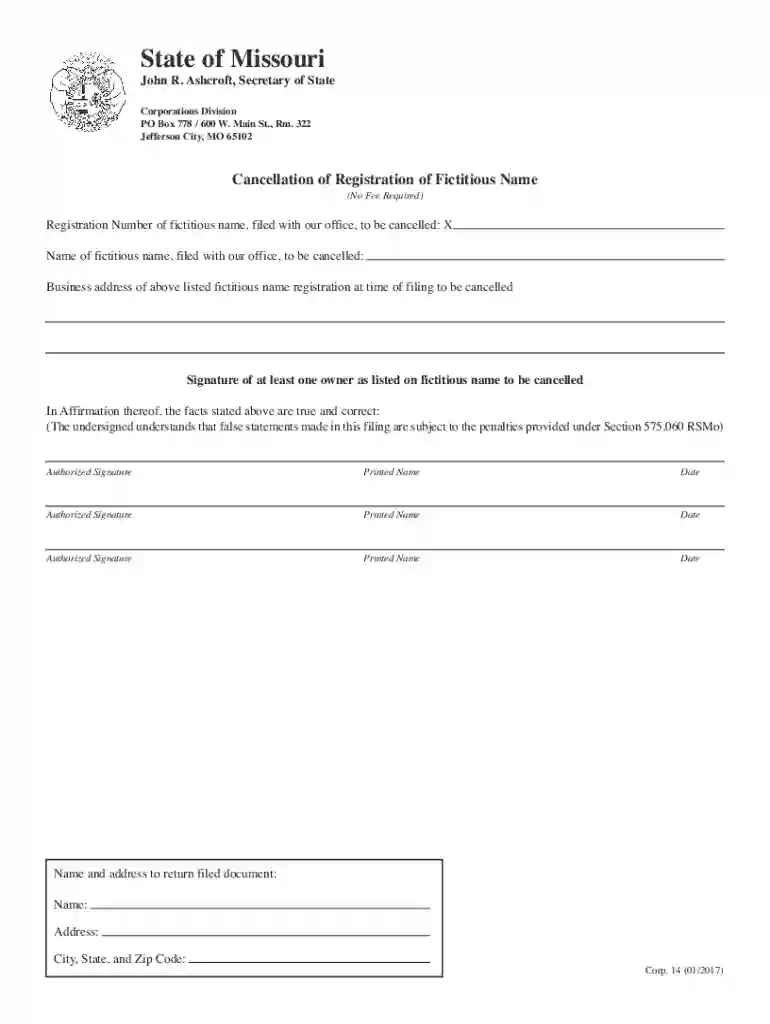
- Complete the Appropriate Form: Fill out the cancellation of registration of fictitious name form, providing details such as the registration number and business address.
- Submit the Form: Depending on the state's requirements, submission can be done online, by mail, or in person.
- Pay Any Required Fees: There might be a nominal fee for processing the cancellation.
- Receive Confirmation: Obtain a confirmation from the state that the name has been officially removed from the registry.
Legal and Compliance Considerations
Potential Penalties for Non-Compliance
Failing to cancel a fictitious name can lead to unnecessary legal complications or financial liabilities. If the name remains active, the business may still be considered operational under state law, leading to issues such as:
- Unpaid Taxes: Liability for taxes under the fictitious name.
- Potential Fraud: Misuse of the name could legally implicate the original registrant.
- Legal Complications: Potential lawsuits or claims filed under the fictitious name against the business.
Business Entity Types
- LLCs and Corporations: Often use fictitious names for branding, marketing, or operation purposes.
- Sole Proprietors and Partnerships: Also use fictitious names, especially if the business wants to operate under a name different from the owner's personal name(s).
Eligibility for Cancellation
Any registered entity with a fictitious name must follow the proper cancellation procedure once the name is no longer in use to ensure accurate state business registry records.
Required Documents for Cancellation
To successfully process the cancellation, specific documents may be required:
- Business Identification: Details like business registration number and full business name.
- Cancellation Form: The official form filled with accurate and complete information.
- Owner's Signature: At least one business owner's signature for verification and authorization.
State-Specific Rules and Variations
Different states have unique rules regarding the process for fictitious name cancellation. Before proceeding, businesses should:
- Consult State Guidelines: Each state's Secretary of State's website typically outlines specific procedures and requirements.
- Understand Submission Methods: Some states allow online cancellations, while others may require physical submissions by mail or in person.
- Consider Timeframes: Processing times can vary state-by-state, affecting when the cancellation comes into effect.
Examples of Cancellation Cases
Practical Instances
- A bakery operating under "Sweet Delights" decides to rebrand its identity to "Gourmet Treats." The cancellation of "Sweet Delights" prevents any future liabilities under that name.
- A consulting firm operating solely under a fictitious name merges with a larger entity and must cancel its fictitious name to operate under the new company's branding.
Filing Deadlines and Important Dates
While the timing for filing cancellations can vary by state, some general considerations include:
- End of Fiscal Year: Often a strategic time for businesses to review and file cancellations of unused fictitious names.
- After Rebranding or Acquisition: Immediately following major branding changes or mergers to align legal records.
- State-Specific Cutoffs: Adhering to any deadline stipulated by the state regulations to prevent penalties.
Through understanding the detailed aspects of the cancellation of registration of a fictitious name, businesses can effectively manage their legal responsibilities and align their operations with state regulatory requirements.