




01. Edit your sample affidavit of marriage relationship by third party pdf online
Type text, add images, blackout confidential details, add comments, highlights and more.

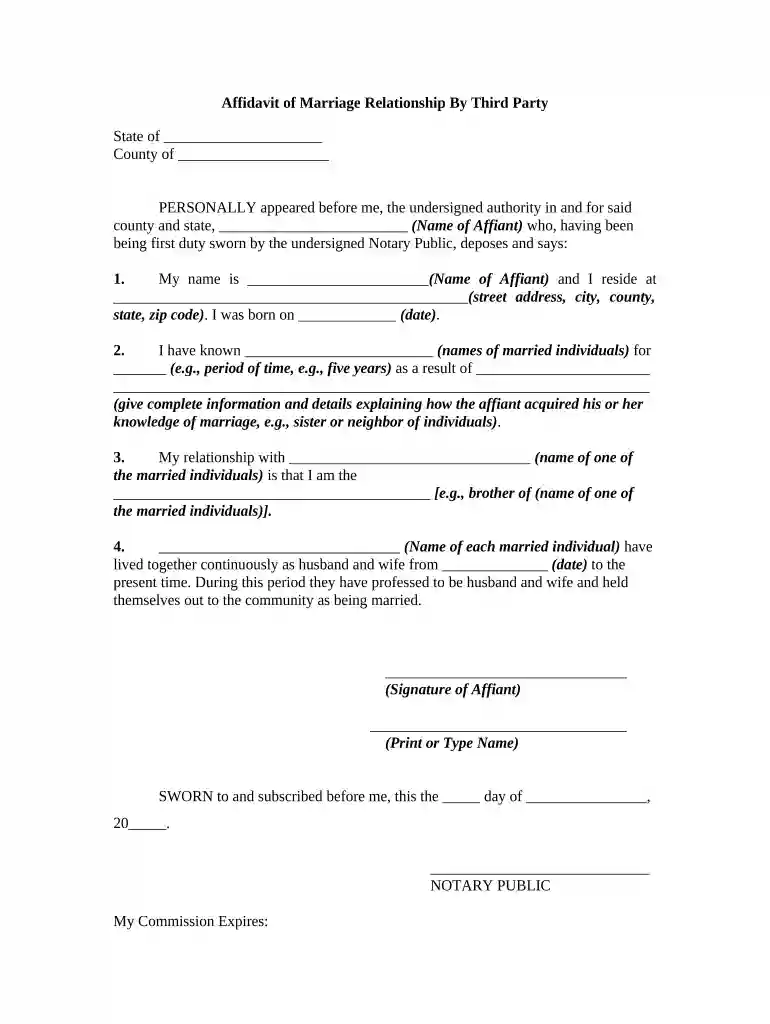
Type text, add images, blackout confidential details, add comments, highlights and more.

Draw your signature, type it, upload its image, or use your mobile device as a signature pad.

Send sample affidavit of marriage relationship by third party pdf free via email, link, or fax. You can also download it, export it or print it out.
An affidavit of marriage is a formal legal document in which an affiant, typically a third party, provides sworn testimony regarding the marriage of a couple. This document serves as proof of a marital relationship, often required in legal contexts such as immigration, insurance claims, or property disputes. The affidavit typically includes specific information about the couple and the nature of the relationship, and may be used in conjunction with other legal documents.
Key components often included in an affidavit of marriage are:
The affidavit can be a crucial component in establishing a bona fide marriage for legal purposes, particularly in immigration proceedings.
Creating an affidavit of marriage involves several straightforward steps to ensure that all necessary information is accurately documented.
When preparing an affidavit of marriage, certain elements must be included to ensure that it serves its intended purpose effectively:
Collectively, these elements help to establish the authenticity and credibility of the affidavit, particularly in situations where it may be scrutinized by legal entities.
Affidavits of marriage are often utilized in various contexts, particularly in legal settings. They can serve multiple purposes, including:
There are various templates available for affidavits of marriage, which can assist in ensuring that all critical elements are included. These commonly feature:
Common templates include itineraries for information such as the names, marriage details, relationship descriptions, and a signature line for notarization.
These structured formats ensure accuracy and comprehensibility, making it easier to create an affidavit of marriage that meets all necessary legal requirements.
At DocHub, your data security is our priority. We follow HIPAA, SOC2, GDPR, and other standards, so you can work on your documents with confidence.
SAMPLE. SINGLE AFFIDAVIT FOR MARRIAGE OF: Jack Edward SMITH, JR the first son/daughter of. Jack Edward SMITHRead more
We have lived together continuously as husband and wife from. to the present time. During this period we have professed to be husband and wife and we have held.Read more


