




01. Edit your respirator fit test card template online
Type text, add images, blackout confidential details, add comments, highlights and more.

Type text, add images, blackout confidential details, add comments, highlights and more.

Draw your signature, type it, upload its image, or use your mobile device as a signature pad.

Send respirator fit test card via email, link, or fax. You can also download it, export it or print it out.
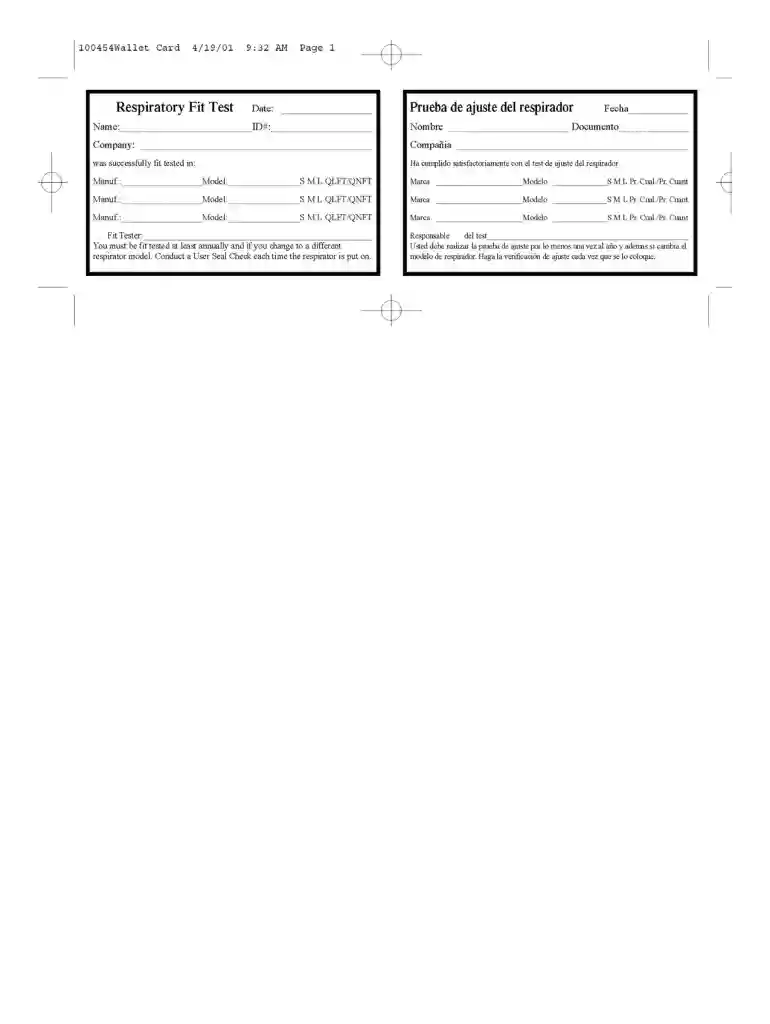
A respirator fit test card template is an official document used to record the results of fit testing for respiratory protection equipment. It provides essential information about the user, including their name, the type of respirator tested, and the results of the fit test. This template is critical for ensuring compliance with occupational safety regulations and for maintaining accurate records of respiratory protection.
Key elements typically included in this card are:
This card serves as a key tool for organizations in ensuring proper respiratory protection for workers and maintaining compliance with safety standards set by regulatory bodies such as OSHA.
Using the respirator fit test card template effectively requires following a structured process to ensure all relevant data is accurately captured.
This approach guarantees that the information is clear, accessible, and compliant with safety regulations.
Completing the respirator fit test card template is a meticulous task that must follow specific steps to ensure accuracy and legal compliance.
Start with Basic Information:
Identify the Respirator:
Select the Testing Method:
Perform the Fit Test:
Record the Fit Test Outcome:
Include Signature and Verification:
Review for Completeness:
Store According to Regulations:
By following these steps, organizations can maintain a reliable record of fit testing, ensuring employee safety and regulatory compliance.
The respirator fit test card template should be comprehensive and contain essential information to ensure effective use and compliance with safety standards. Key elements include:
Employee Details:
Respirator Information:
Testing Information:
Results Section:
Signatures and Credentials:
This detailed documentation helps ensure accountability and enhances workplace safety by providing clear evidence of respiratory protection compliance.
The respirator fit test card template is essential across various sectors, particularly where respiratory protection is critical for worker safety. Key users include:
These diverse applications underscore the importance of maintaining accurate records of respirator fit tests to ensure compliance with health and safety regulations.


The respirator fit test card template serves not only as a record of compliance but also as a legal document ensuring adherence to safety regulations. Key considerations for legal use include:
Understanding these legal implications ensures that employers use the respirator fit test card template appropriately, promoting both safety and compliance in the workplace.
We've got more versions of the respirator fit test card template form. Select the right respirator fit test card template version from the list and start editing it straight away!
| Versions | Form popularity | Fillable & printable |
|---|---|---|
| 2001 | 4.8 Satisfied (276 Votes) |
Electronic document signing demands a software solution that complies with data security and eSignature standards. DocHub is a great tool for that, since it meets all the previously mentioned requirements. Whatever method you prefer to sign your fit test card in DocHub, your eSignature will be legally binding and court-admissible.
When you edit your fit test card template with DocHub, you merely require a stable web connection and virtually any browser installed on your device. No need to install any third-party applications or research guides. Just open a tab with DocHub, drag and drop your file, and modify it on the spot.
At DocHub, your data security is our priority. We follow HIPAA, SOC2, GDPR, and other standards, so you can work on your documents with confidence.
You must be fit tested at least annually and if you change to a different respirator Respiratory Fit Test. Name: Date: ID#:. Company: was successfully fitRead more
by PCI PCI 2011 Cited by 3 The ROC provides details about the entitys environment and the assessment methodology, and documents the entitys compliance status for each PCI DSSRead more
Below are model program templates, safety checklists, logs, and other useful documents in an editable format (MS Word).Read more


