
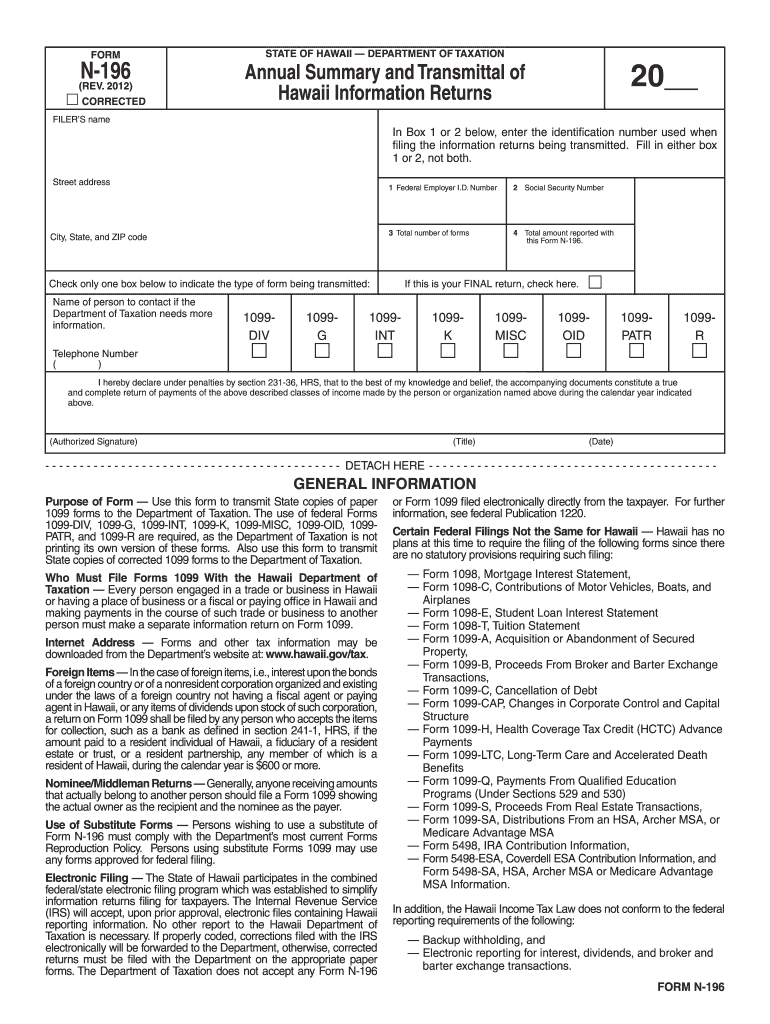







Definition and Purpose of Form N-196
Form N-196 is used for transmitting annual summaries and state copies of various 1099 information returns to the State of Hawaii's Department of Taxation. It fulfills a crucial role in ensuring compliance with state tax reporting requirements. This form collects essential details, including identification numbers, the total count of forms attached, and the amounts reported. Accurate completion is paramount for it to be accepted by the Department.
Steps to Complete Form N-196
-
Gather Required Information: Before filling out the form, compile all necessary details, such as taxpayer identification numbers, the total amount of forms being reported, and financial amounts reported on these forms.
-
Fill Out the Header Section: Enter the filer’s name, address, and identification number. Ensure you use the correct taxpayer identification and verify the entity’s legal name.
-
Detail Specifics of 1099 Forms: Record the types of 1099 forms submitted, accompanied by totals in categories such as rents, royalties, and non-employee compensation.
-
Summarize Total Amounts: Sum all payments reported on the attached 1099 forms and enter the figures in the designated fields.
-
Attach Supporting Documents: Ensure all physical copies of the 1099 forms are correctly attached to Form N-196.
-
Review for Accuracy: Double-check all entries to confirm that information aligns with records and supporting documents before submission.
Who Typically Uses Form N-196
Taxpayers or entities based in Hawaii who issue 1099 forms generally need to file Form N-196. This includes, but is not limited to, businesses paying independent contractors, landlords receiving rental income, and individuals or corporations involved in dividends, interest, or other miscellaneous payments.
How to Obtain Form N-196
Individuals can acquire Form N-196 through several means, including:
- Downloading it from the State of Hawaii's Department of Taxation website.
- Requesting a physical form by contacting the Department directly.
- Consulting with a tax professional or service provider who may have the forms on hand.
Filing Deadlines and Important Dates
The deadline for submitting Form N-196, along with the associated forms, is typically by February 28 of the year following the tax period. It is crucial to adhere to this timeline to prevent any penalties.
Penalties for Non-Compliance
Failure to file Form N-196 accurately and on time may result in penalties imposed by the State of Hawaii. Penalties vary based on the extent of non-compliance, including incomplete filing, late submission, or inaccurate information on the forms.
Legal Use and Compliance Requirements
Compliance with state regulations is mandatory when using Form N-196. Ensure all identifying information and amounts are correct and that state-specific regulations governing the form's use are understood. Misuse or inaccuracies could attract legal scrutiny.
Submission Methods: Online, Mail, or In-Person
- Online Filing: Some taxpayers may have the option to submit the form electronically through the Hawaii Department of Taxation’s web portal for convenience and instant confirmation of receipt.
- Mail Submission: Forms can be mailed to the Department at the specified address, often accompanied by a tracking method to ensure delivery.
- In-Person Submission: Although less common, forms can sometimes be handed in directly at a Department of Taxation office, which may be preferable for those requiring receipt acknowledgment.
Form Variants and Alternatives
While Form N-196 is specific for annual summaries associated with 1099 forms, other forms may serve different functions, like corrections or amendments. Be sure to choose the correct variant that meets your reporting needs.




