
Business Formations
Domain purchase agreement

Texas corporation

California agent
Simple agreement
Nevada llc
Limited partnership
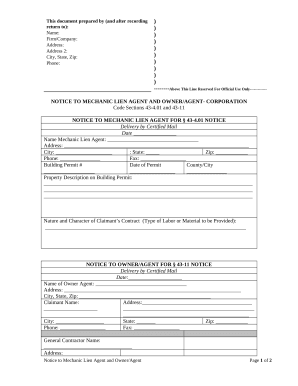
Virginia mechanic lien
Limited Liability Company LLC Operating Agreement - Hawaii
Illinois annual file
Sample transmittal letter template

Delaware annual

Notice meeting members

Resolution llc members
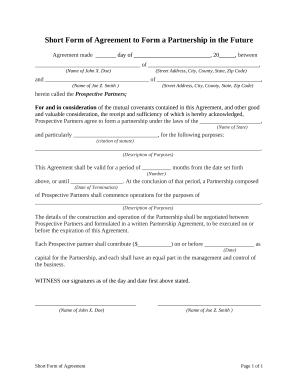
Short form agreement
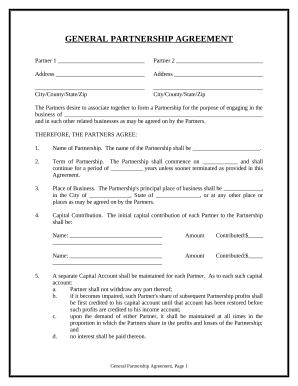
General partnership agreement pdf

Shares resolution

Sample transmittal letter
North carolina annual file
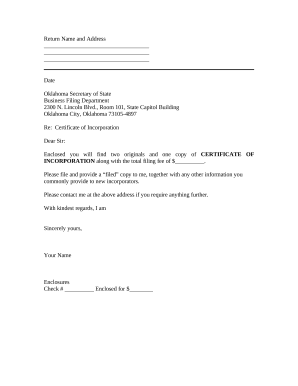
Sample Transmittal Letter for Certificate of Incorporation - Oklahoma
Handle Business Formations easily online
Document managing can overpower you when you can’t locate all the documents you need. Luckily, with DocHub's substantial form library, you can discover everything you need and swiftly take care of it without changing among software. Get our Business Formations and begin utilizing them.
How to use our Business Formations using these basic steps:
- Examine Business Formations and select the form you need.
- Preview the template and click Get Form.
- Wait for it to open in our online editor.
- Alter your form: include new information and images, and fillable fields or blackout certain parts if required.
- Complete your form, save modifications, and prepare it for delivering.
- When ready, download your form or share it with other contributors.
Try out DocHub and browse our Business Formations category with ease. Get a free account right now!
Video Guide on Business Formations management

Commonly Asked Questions about Business Formations
What are the 4 business structures?
The most common forms of business are the sole proprietorship, partnership, corporation, and S corporation. A limited liability company (LLC) is a business structure allowed by state statute. Legal and tax considerations enter into selecting a business structure.
What are the 4 types of business formations?
Types of Business Entities Sole Proprietorship. This is a business run by one individual for their own benefit. PartnershipsGeneral and Limited. Limited Liability Company (LLC) Corporation. Advantages/Disadvantages.
Why are business formations important?
Your business structure affects how much you pay in taxes, your ability to raise money, the paperwork you need to file, and your personal liability. Youll need to choose a business structure before you register your business with the state.
What is the state of formation in business?
The formation state which is also referred to as the state of organization, domestic state, or home state is the state in which you file your formation documents and the state whose corporation or LLC statute will govern your corporation or LLC.
What is the formation of a business?
Business formation is the decisions that need to be made when creating the structure of your business. Choosing between different business structures, such as a sole proprietorship, a partnership, an LLC, a corporation, and a non-profit, will impact the future business decisions youll make for your business.
Overview What is business formation?
Definition of Business Formation It involves the selection of a business structure or type, registration with the appropriate government authorities, and the fulfillment of legal requirements necessary to operate a business in compliance with the law. Business Formation - The Oracle Legal Group theoraclelegalgroup.com glossary business-for theoraclelegalgroup.com glossary business-for
What are types of business formations?
The most common forms of business are the sole proprietorship, partnership, corporation, and S corporation. A limited liability company (LLC) is a business structure allowed by state statute.
What are the four 4 types of business?
Typically, there are four main types of businesses: Sole Proprietorships, Partnerships, Limited Liability Companies (LLC), and Corporations. Before creating a business, entrepreneurs should carefully consider which type of business structure is best suited to their enterprise.
How do you explain the formation of the company?
Company formation is the process of incorporating (registering) a business in the form of a limited company. When a company is registered, it becomes a separate legal entity, a person that is completely distinct from its owners and responsible for its own finances, assets, and liabilities.
Related Templates

Local and State Forsyth mayor, council take office - Georgia
The document reports on the swearing-in of new Forsyth Mayor Tye Howard and several council members, highlighting their ...

Topic 3: Tax Tables Withholding Control Information Processing
The PCGenesis Payroll System Operations Guide provides detailed instructions for updating payroll tax tables, pension ta ...

HEARING OFFICER'S MANUAL - Georgia Department of Revenue - etax dor ga
The document is the Hearing Officer's Manual from the State of Georgia's Department of Revenue, outlining the role, scop ...

LC 28 6063ERS hcs - Georgia General Assembly
House Bill 636 proposes the incorporation of the City of Ashford in DeKalb County, Georgia. It outlines the city's chart ...

MINUTES OF THE MEETING OF THE GEORGIA STUDENT - gsfc
The document contains the minutes of three meetings held on May 6, 2003, by the Georgia Student Finance Commission, Geor ...

IN THE SUPREME COURT OF THE STATE OF HAWAI#I ---o0o--- ALPHONSO D
The document is a Supreme Court opinion regarding the appeal of Alphonso D. Rivera against the Department of Labor and I ...

Name Change
The document is an affidavit form from the Idaho State Board of Accountancy for individuals seeking to change their name ...

Sanchez Order on Petition for Review doc CECReportFY2004 - dhr idaho
The document is a decision and order from the Idaho Personnel Commission regarding a petition for review involving Kelly ...