
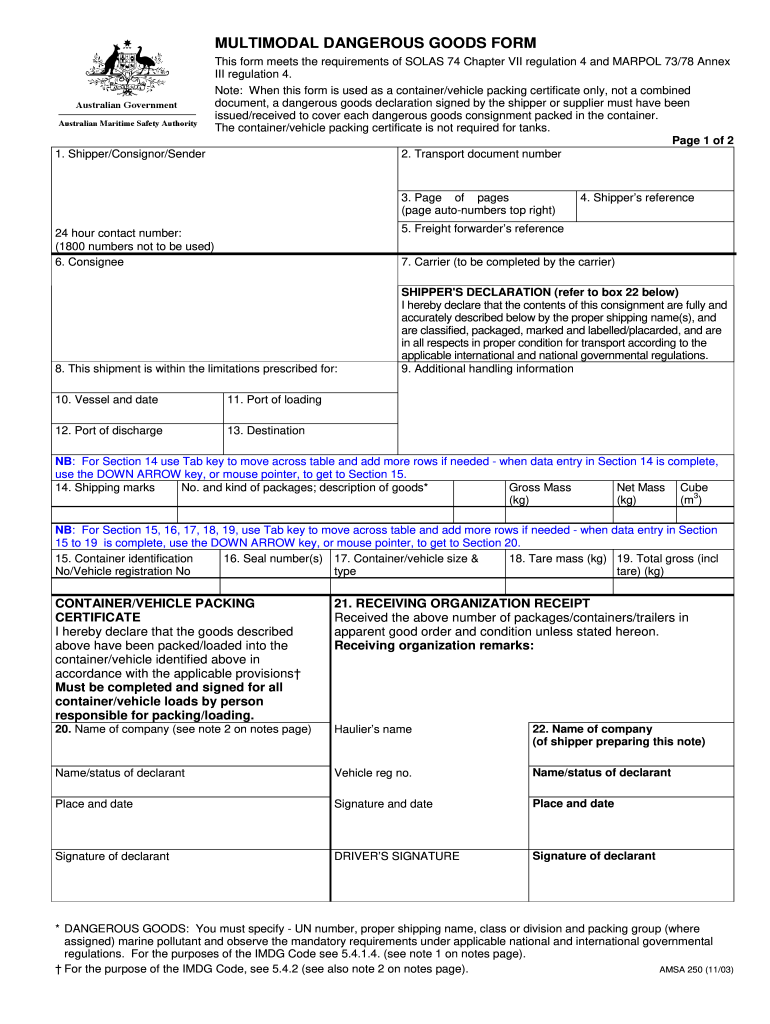







Understanding the MO41 Form: Definition and Importance
The MO41 form, also known as the Multimodal Dangerous Goods Form, is an essential document for the transportation of hazardous materials. It serves as a declaration that complies with international maritime regulations, specifically SOLAS and MARPOL. The MO41 form must include comprehensive details about the shipment, such as the shipper and consignee information, a precise description of the goods being transported, and necessary compliance declarations. Proper completion of this form is vital to ensure the safe and lawful transport of dangerous goods across various modes of transportation.
- Key Requirements of the MO41 Form:
- Shipper and Consignee Information: Clear and accurate data pertaining to both the sender and recipient of the goods.
- Dangerous Goods Description: Specific classification of the material, including UN number, proper shipping name, and hazard class.
- Packaging and Labeling Compliance: Ensures that all dangerous goods are packaged according to regulations, with appropriate labeling to inform handlers of the risks involved.
The MO41 form is largely utilized by companies involved in the shipping of hazardous materials, ensuring all parties maintain awareness of the potential risks during transit.
How to Complete the MO41 Form: Step-by-Step Guide
Filling out the MO41 form correctly is vital to mitigate risks associated with the transportation of dangerous goods. Here is a step-by-step process for completing the MO41 form accurately.
-
Gather Required Information:
- Collect details about the shipment, including the sender’s and recipient’s addresses and contact details.
- Obtain specific information regarding the dangerous goods, including their classification and quantity.
-
Fill in Shipper and Consignee Details:
- Input the full name and address of both the shipper and consignee.
- Ensure contact numbers are included for both parties, as this facilitates communication in case of emergencies or questions about the shipment.
-
Describe the Goods:
- Clearly state the proper shipping name and the UN number associated with each item being transported.
- Include the type and quantity of packaging used, along with the weight of the materials.
-
Compliance Declarations:
- Confirm that the goods are packaged according to relevant safety regulations and include any necessary handling instructions.
- Declare whether the goods meet legal requirements for transport.
-
Signature and Date:
- The form must be signed by the shipper, affirming that all provided information is accurate to the best of their knowledge.
- Date the form appropriately to ensure chronological integrity for shipment records.
Following this systematic approach to completing the MO41 form helps streamline the process and ensures compliance with transportation laws.
Essential Elements of the MO41 Form
The MO41 form consists of several critical sections that aid in the accurate transport of dangerous goods. Understanding these sections ensures all necessary information is included to comply with regulations.
-
Identification of the Cargo:
- Includes all pertinent details for hazardous materials, such as technical names, classifications, and quantities. This ensures all parties handle the materials with appropriate caution.
-
Packaging Information:
- This section details the packaging types used (e.g., drums, crates) and indicates whether they meet regulatory standards for transporting hazardous materials.
-
Risk Management Information:
- Lists precautions and safety measures that should be adhered to during transport. This may include notes on temperature control, exposure risks, and emergency measures in case of an incident.
-
Transport Modes:
- The form allows the user to indicate the modes of transport (road, rail, sea, etc.) planned for the shipment. Different regulations may apply depending on how the goods are transported.
Collectively, these elements ensure that the MO41 form provides comprehensive safety and compliance information regarding dangerous goods.
Legally Binding Signatures on the MO41 Form
Electronic and physical signatures on the MO41 form hold significant legal weight. Understanding the legal implications of signing this form is crucial for all parties involved in the transportation process.
-
Who is Authorized to Sign:
- Typically, authorized personnel from the shipping company or organization responsible for the dangerous goods can sign the MO41 form. This person should be well-informed about the shipment details to confirm accuracy.
-
Legitimacy of Signatures:
- Signatures on the form serve as a declaration that the information provided is complete and compliant with pertinent regulations. Any inaccuracies can result in legal penalties or shipment delays.
-
Record Keeping:
- It is important to maintain copies of the signed MO41 form for record-keeping and to provide evidence of compliance if questioned by authorities.
Proper attention to the legal aspects of signing this form ensures accountability and enhances shipping integrity.
Common Uses of the MO41 Form in Business
Various industries routinely utilize the MO41 form in their operations, particularly those that involve the transport of hazardous materials. Here are some key sectors:
-
Chemical and Pharmaceutical Companies:
- Frequently transport dangerous substances that must be properly documented per safety guidelines.
-
Agricultural Producers:
- Ship agricultural chemicals that require compliance documentation during transit, particularly when crossing state or national borders.
-
Manufacturing and Industrial Operations:
- Use the MO41 form for raw materials and finished goods classified as hazardous, ensuring safe handling during logistics.
In each sector, adherence to the MO41 form regulations is vital for compliance with federal and international transport laws.
Insights into MO41 Form Variants and Templates
The MO41 form has variants that cater to specific shipping scenarios and needs. Understanding these differences helps ensure compliance across various contexts.
-
MO41 Template Australia:
- Tailored specifically for Australian regulations, this variant ensures all local safety and documentation requirements are met.
-
Customized MO41 Examples:
- Industries may create tailored templates that incorporate additional fields specific to their operations, helping streamline the documentation process based on their needs.
-
Considerations for Variability:
- Different countries may have unique requirements; thus, it is essential to reference the appropriate version of the MO41 form relevant to the shipping routes involved.
Utilizing the correct form variant ensures that all regulatory requirements are fulfilled, promoting safety and compliance during the transportation of dangerous goods.




