
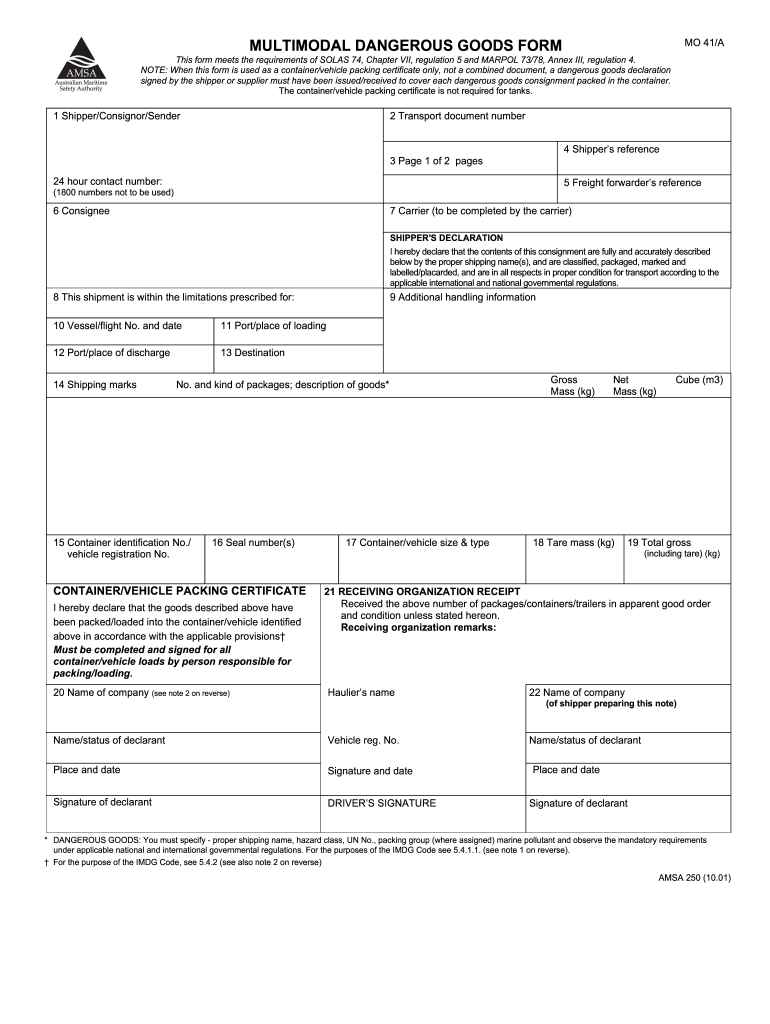







Definition and Meaning of MO 41 A Dangerous Goods Form
The MO 41 A Dangerous Goods Form is a critical document used in the maritime and multimodal transportation sector. It is issued by the Australian Maritime Safety Authority (AMSA) and is compliant with international guidelines for the safe transport of hazardous materials. The form doubles as a packing certificate and a shipper's declaration, ensuring that dangerous goods are properly described, adequately packaged, and classified according to set standards. This guarantees that the materials are in a fit state for handling and transport.
Importance in Global Trade
In the context of international trade, the MO 41 A is indispensable for ensuring safety and compliance with regulatory requirements. It helps prevent mishaps by allowing freight handlers, carriers, and customs officials to ascertain the nature of the cargo and handle it with the necessary precautions. The document plays a role in safeguarding all parties involved in the logistics chain and helps minimize delays in shipping due to incomplete or incorrect documentation.
Steps to Complete the MO 41 A Dangerous Goods Form
Filling out the MO 41 A Dangerous Goods Form with accuracy is crucial for successful and compliant transport. Here is a structured approach to completing the form:
-
Shipper Details:
- Enter the full name and address of the shipper. This should include all contact information to ensure quick communication if required.
-
Consignee Information:
- Provide the complete name and address of the consignee. This section ensures the receiving party is correctly identified.
-
Description of Goods:
- Clearly describe the goods being shipped, including the UN Number, proper shipping name, class or division, and any subsidiary risks. Accurate classification is key to compliance.
-
Certification and Declaration:
- This section requires a statement certifying the accuracy of the information on the form. The shipper must sign and date the form, confirming adherence to safety standards and regulations.
-
Packaging and Handling Instructions:
- Include details about the packing group, packaging method, and any specific handling instructions. This ensures safe and compliant transport throughout the journey.
Common Mistakes to Avoid
- Omitting critical details such as UN numbers or incorrect classification can lead to delays or fines.
- Ensure that the consignee information matches exactly with the shipping details to prevent delivery issues.
Key Elements of the MO 41 A Dangerous Goods Form
Shipper and Consignee Information
This element includes the foundational data about the sender and recipient of the dangerous goods. Accurate and thorough contact information ensures all parties are identifiable and reachable, minimizing the risk of miscommunication or misplacement during shipment.
Description and Classification
Detailed information about the dangerous goods, such as chemical names, UN Number, and hazard classification, must be accurately recorded. This ensures the handler is fully aware of the nature of the goods and the associated risks, thus adhering to safety and compliance standards.
Packaging Certification
This part certifies that the goods are packaged in accordance with international standards suitable for dangerous goods. It is the shipper's responsibility to ensure the integrity of the packaging to prevent leaks or spills, maintaining safety during storage and transit.
Legal Use of the MO 41 A Dangerous Goods Form
The MO 41 A Dangerous Goods Form is legally required for the transportation of dangerous goods and is recognized internationally. Completing the form accurately is vital to adhering to the Australian Maritime Safety Regulations and the International Maritime Dangerous Goods Code (IMDG).
Compliance and Enforcement
Failure to comply with the form's requirements can result in severe penalties, including fines and shipment delays. Compliance is monitored by port authorities and other regulatory agencies, which have the authority to inspect shipments and validate the accuracy of the documentation provided.
International Regulations
Internationally recognized, the form aids in streamlining cross-border trade by ensuring uniform standards for the transport of hazardous materials. It helps maintain safety and security across global supply chains by mandating that shipments comply with established safety protocols.
Practical Examples of Using the MO 41 A Dangerous Goods Form
Case Study: Chemical Industry
A chemical manufacturer uses the MO 41 A to ship industrial solvents internationally. The form is filled out with detailed information about the chemical properties and packaging. This ensures that all safety precautions are adhered to, preventing any hazardous incidents during the transport process.
Scenario: Emergency Response
In the event of a cargo spill, the information on the MO 41 A is used by emergency responders to understand the nature of the spilled material and inform the response strategy. This allows for a coordinated and effective management of hazardous incidents, mitigating potential harm to people and the environment.
State-Specific Rules for MO 41 A Dangerous Goods Form
Although the MO 41 A is an internationally recognized document, different jurisdictions may have specific adaptations or additions to its requirements to address localized logistics and environmental concerns. For example, some regions might mandate additional documentation for highly sensitive materials or require specific training for handlers.
Understanding Regional Variations
Operators should be familiar with any regional modifications or additional requirements when transporting goods interstate or internationally. Awareness of these variations can prevent legal entanglements and ensure smoother logistics operations.
Digital vs. Paper Version
As technology evolves, the MO 41 A Dangerous Goods Form is available in both paper and digital formats. The choice between these versions can depend on preference, regulatory advice, and logistical needs.
Advantages of Digital Forms
- Efficiency: Digital forms can be filled out faster and are easier to update or correct errors.
- Storage and Retrieval: Electronic records are easier to store, search, and retrieve, aiding in compliance audits or inspections.
- Environmental Impact: Reduces paper waste and supports sustainability goals.
Considerations for Paper Forms
Some organizations or regulators may still prefer or require paper versions due to archival practices, or digital access limitations. Choosing the right format should consider both legal compliance and operational compatibility.




