




01. Edit your restraining order online
Type text, add images, blackout confidential details, add comments, highlights and more.

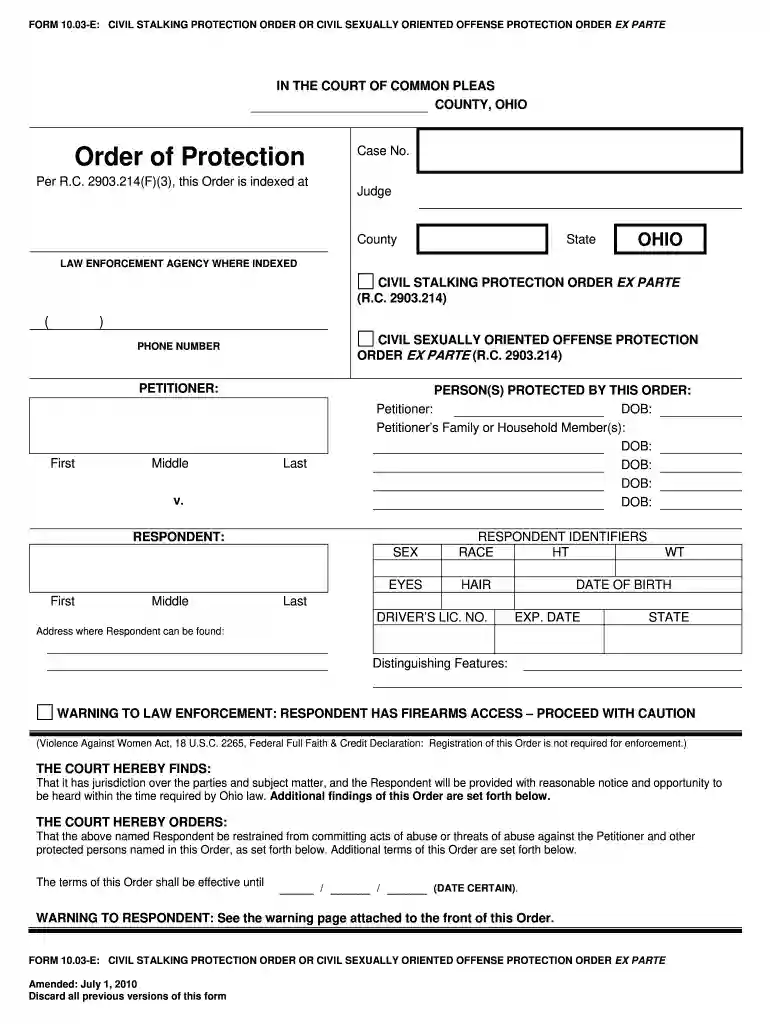
Type text, add images, blackout confidential details, add comments, highlights and more.

Draw your signature, type it, upload its image, or use your mobile device as a signature pad.

Send what is a protection order via email, link, or fax. You can also download it, export it or print it out.
A restraining order in Ohio serves as a legal safeguard against harassment, stalking, or threats. This legal document, officially known as a Civil Protection Order (CPO), may be issued by the court to protect an individual from another person who poses a threat. A restraining order restricts the respondent— the person being restrained—from contacting or coming within a specific distance of the petitioner, who is the individual seeking protection.
Typically, Ohio courts can issue various types of protection orders, including those related to domestic violence and civil stalking. The forms contain all necessary details outlining the specific incidents that led to the request, restrictions placed upon the respondent, and instructions for law enforcement to ensure compliance with the order. Understanding the underlying legal framework is crucial for anyone considering filing a restraining order in the state of Ohio.
Filling out the restraining order Ohio form requires careful attention to detail to ensure all relevant information is accurately captured. The following steps outline the process:
Each section of the form is crucial, as missing or unclear information can delay the process or result in the dismissal of the order.
Understanding the legal terminology associated with restraining orders is essential for effectively navigating the process. Key terms include:
Familiarity with these terms will facilitate clearer communication with legal professionals and enhance understanding of the implications of the protection order.
The legal use of the restraining order Ohio form hinges on several factors that determine its validity and enforceability. The applicant must demonstrate a credible threat of harm or harassment that justifies the need for protective measures. The form must be completed in accordance with Ohio's legal standards, which require specific information and clarity regarding the incidents justifying the request.
Once the form is filed, a court date will be scheduled where both parties can present their case. It is critical for petitioners to substantiate their claims with evidence, such as police reports, witness testimony, or documentation of prior incidents. Failure to comply with court procedures or provide compelling evidence may result in dismissal of the order.
The restraining order Ohio form is typically used by individuals who feel threatened or harassed by another person, including:
Using the form provides a structured method for individuals to assert their rights and seek legal recourse against harassment or violence.


The restraining order Ohio form consists of several critical elements necessary for proper legal processing. These include:
Completing each of these elements accurately is essential for a successful application process.
Timeliness is crucial in obtaining a restraining order. Key deadlines include:
Missing these timing requirements could jeopardize the effectiveness of the protective measures. Awareness of these timelines ensures that individuals can take appropriate legal actions promptly.
When filing a restraining order Ohio form, there are several methods of submission to consider:
Understanding these submission methods empowers individuals to choose the most convenient option that aligns with their circumstances.
We've got more versions of the restraining order form. Select the right restraining order version from the list and start editing it straight away!
At DocHub, your data security is our priority. We follow HIPAA, SOC2, GDPR, and other standards, so you can work on your documents with confidence.
5.1 in a court of law or equity and the Officer hereby consents to the imposition of an injunction or a temporary restraining order or such other equitableRead more
A No Contact Directive directs the student to have no contact with you in any way, whether through in-person contact orRead more
Domestic Violence Protection Order 10-C: Warning Concerning the Attached Protection Order or Consent Agreement 10-D: Notice to Respondent or Defendant AboutRead more


