






Definition and Purpose of the D1 Form
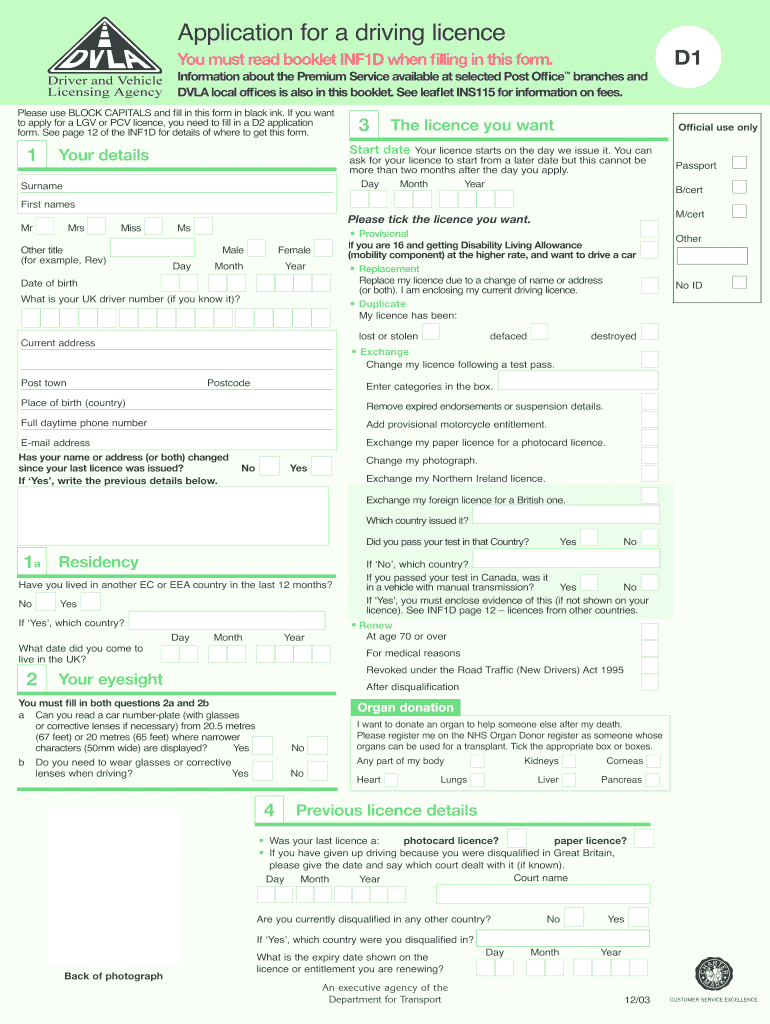
The D1 form is a crucial document in the application process for obtaining a driving licence in the United Kingdom, specifically managed by the Driver and Vehicle Licensing Agency (DVLA). This form serves multiple purposes including the application for a provisional driving licence, updating personal details, or renewing an existing licence. Understanding and accurately completing the D1 form is essential for compliance with legal requirements surrounding driving privileges.
Key functions of the D1 form include:
- Application for a Provisional Licence: Essential for learners who wish to begin their driving education.
- Renewal of an Existing Licence: Maintaining an up-to-date driving status and ensuring validity for legal driving.
- Updating Personal Information: Informing DVLA of changes to address or personal details.
By completing the D1 form correctly, applicants ensure they meet UK driving regulations, which aids in enhancing road safety and compliance with legal standards.
How to Obtain the D1 Form
The D1 form can be obtained through several convenient methods, ensuring accessibility for all potential applicants. It is important to use legitimate channels to avoid confusion or delays in the application process.
Ways to access the D1 form include:
- Online Download: The DVLA website provides an option to download a PDF version of the D1 form, allowing users to print it at their convenience.
- Post Office: The form is available at local Post Office branches, often situated in service areas where additional guidance can be provided.
- Order by Mail: Applicants can request the D1 form to be sent to them by completing an online request specified for driving licence forms on the DVLA website.
By offering multiple ways to obtain the D1 form, the DVLA ensures that all individuals have the opportunity to follow the necessary steps towards their licensing needs.
Steps to Complete the D1 Form
Completing the D1 form involves following a series of precise steps to ensure all required information is accurately filled out. This process may seem straightforward, but attention to detail is crucial for a successful application.
- Gather Required Information: Prior to completing the form, ensure you have all necessary documentation, including identification and proof of address.
- Complete Personal Details Section: Fill in your name, address, date of birth, and any former names. Accuracy is vital to avoid any issues with processing.
- Select Application Type: Indicate whether you are applying for a provisional licence, renewing, or updating details. This helps the DVLA direct your application appropriately.
- Pay the Applicable Fee: Payment details must be noted if applicable. Be aware of the accepted methods of payment as specified on the form.
- Review and Check for Errors: Before submission, carefully review the entire form to ensure all sections are completed and accurate.
Following these steps will contribute to a smoother application process, reducing the likelihood of delays caused by incomplete or incorrect information.
Important Documents Required with the D1 Form
When submitting the D1 form, it is mandatory to include specific supporting documents to verify eligibility and personal information. Ensuring all required documents are attached is critical to avoid processing delays.
Documents typically needed include:
- Proof of Identity: A valid passport or birth certificate.
- Proof of Address: Utility bills, bank statements, or official correspondence dated within the last three months.
- Photographs: Recent passport-sized photographs adhering to DVLA specifications, which support your application.
By including these key documents, applicants facilitate a more efficient processing time, helping to ensure they can receive their driving licence without unnecessary hurdles.
Legal Use of the D1 Form
The legal implications surrounding the D1 form are significant, as this form represents an official application for driving privileges under UK law. Understanding these legalities is crucial for anyone submitting the form.
Key legal aspects include:
- Compliance with the Road Traffic Act: The D1 form must be completed in accordance with laws governing driving licences, ensuring the applicant meets legal eligibility.
- Legally Binding Information: Providing false information on the D1 form can lead to penalties including fines or disqualification from driving privileges.
- Secure Handling of Personal Data: The DVLA adheres to data protection laws, safeguarding the information provided on the D1 form, which emphasizes the importance of accurate and honest disclosures.
Understanding these legal underpinnings helps applicants recognize the significance of the D1 form in their driving journey and the associated responsibilities.
Examples of Using the D1 Form
The D1 form serves various scenarios related to driving licences, demonstrating its versatility and importance in the licensing process. Multiple examples highlight the typical use cases for this form.
Scenario 1: First-Time Applicants
- A new driver completes the D1 form to apply for a provisional driving licence, enabling them to learn to drive legally.
Scenario 2: Updating Personal Information
- An individual recently moved to a new residence and needs to use the D1 form to update their address, which is a legal requirement to maintain the validity of their licence.
Scenario 3: Renewing an Expired Licence
- A driver whose licence has expired must fill out the D1 form to renew their licence, ensuring continuous legal driving privileges.
By showcasing these real-world applications, individuals better understand how the D1 form fits into their lives and responsibilities as drivers.
Summary of Key Elements in the D1 Form Application Process
Understanding the main components and steps involved in the D1 form application process ensures that all potential applicants are prepared and knowledgeable before submission. Familiarity with these key elements enhances the likelihood of a successful application.
Essential components include:
- Personal Information: Accurate entry of personal details is paramount for identification purposes.
- Application Type: Clarification of whether the application is for a new, renewed, or updated licence.
- Supporting Documents: Completing the checklist for required documents ensures a smooth submission process.
Awareness of these critical elements will facilitate a more informed and streamlined experience when pursuing a driving licence through the D1 form.