



Definition & Meaning
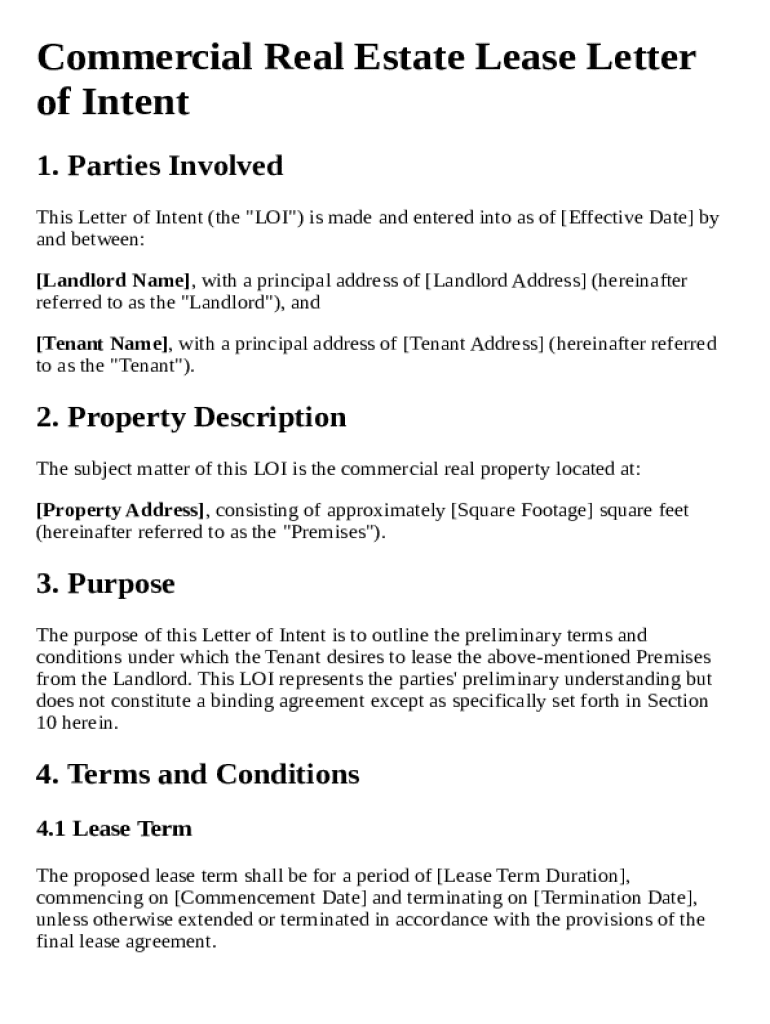
A Commercial Real Estate Lease Letter of Intent Template is a preliminary document that outlines the fundamental terms and conditions under which a tenant intends to lease a commercial property from a landlord. This template serves as a non-binding agreement, providing a basis for negotiation before committing to a legally binding lease. It details key aspects such as lease duration, rental rates, tenant and landlord responsibilities, and other essential provisions that both parties need to consider.
This document is essential in establishing an initial understanding between the tenant and landlord. While not legally binding in most cases, it reflects the parties' intents and aids in aligning their expectations before deciding on a formal lease agreement. It helps streamline communication and ensures that both sides clearly understand the primary lease terms before proceeding further.
How to Use the Commercial Real Estate Lease Letter of Intent Template
To effectively utilize the Commercial Real Estate Lease Letter of Intent Template, follow these steps:
-
Review the Template: Begin by understanding the structure and sections of the template. Familiarize yourself with its components, including tenant and landlord details, property description, financial terms, and other significant clauses.
-
Customize for Your Needs: Tailor the template to reflect specific details pertinent to your situation. This includes inserting accurate information regarding the property, proposed lease terms, duration, and any special conditions or requirements.
-
Negotiate Terms: Use the customized template as a starting point for negotiations with the other party. Discuss and agree on critical aspects, such as rent amount, lease tenure, and maintenance responsibilities.
-
Draft the Final Version: Once terms are agreed upon, create a final version of the letter of intent reflecting all negotiated points. Ensure both parties review and agree to the final document.
-
Sign and Distribute: While typically non-binding, both parties may choose to sign the letter of intent to formalize their preliminary agreement. Distribute copies to ensure each party has a record for reference during lease negotiations.
Steps to Complete the Commercial Real Estate Lease Letter of Intent Template
The process of completing the Commercial Real Estate Lease Letter of Intent Template involves several key steps:
-
Fill in Basic Information: Begin by inserting tenant and landlord names, contact information, and the property's legal address.
-
Define Lease Terms: Clearly state proposed rent, payment schedule, lease duration, and renewal options if applicable.
-
Specify Responsibilities: Detail maintenance and repair obligations, utility responsibilities, and any shared costs or services.
-
Include Special Conditions: Note any special clauses, such as tenant improvement allowances, subleasing policies, or termination options.
-
Review and Revise: Ensure all information is complete and accurate. Seek input from legal or real estate professionals to validate terms.
-
Agreement and Signing: Both parties should review and agree to the contents. Although primarily non-binding, signing the document can reinforce mutual understanding.
Key Elements of the Commercial Real Estate Lease Letter of Intent Template
A comprehensive Commercial Real Estate Lease Letter of Intent Template includes:
- Basic Information: Names and contact details of tenant and landlord, property address.
- Lease Term: Proposed start and end dates, including renewal options.
- Rent Details: Exactly how much rent is proposed, payment intervals, any initial deposits.
- Property Description: Specifics about location and space being leased.
- Responsibilities: Outlined obligations for maintenance, repairs, and utilities.
- Special Clauses: Conditions like tenant improvements or exclusivity agreements.
Legal Use of the Commercial Real Estate Lease Letter of Intent Template
The letter of intent serves as a preliminary agreement that helps parties negotiate the terms of a commercial lease without committing to any legal obligations. While generally non-binding, it can include certain binding provisions, such as confidentiality agreements or exclusivity periods. Consult legal counsel to determine which aspects, if any, may have binding implications.
Examples of Using the Commercial Real Estate Lease Letter of Intent Template
Consider several examples:
-
Retail Business Expansion: A growing retail chain uses the template to outline lease terms for a new store location, including customization of the space for branding purposes.
-
Office Space Leasing: A technology startup negotiates terms for renting office space in a shared building, detailing rent concessions during initial setup.
-
Industrial Warehouse Lease: A logistics company uses the letter to secure a large warehouse, specifying storage requirements and lease incentives based on future expansion.
Important Terms Related to the Commercial Real Estate Lease Letter of Intent Template
When dealing with the Commercial Real Estate Lease Letter of Intent Template, it's essential to understand various terms:
- Non-Binding Provisions: Elements of the letter meant to outline terms without establishing a legal obligation.
- Binding Clauses: Specific provisions that create enforceable rights and duties, often related to confidentiality or exclusivity.
- Maintenance Obligations: Responsibilities of either party to maintain and repair the leased premises.
- Rent Abatement: Temporary reduction of rent in consideration of certain conditions being met.
Versions or Alternatives to the Commercial Real Estate Lease Letter of Intent Template
In addition to this template, there are several variations tailored to specific needs:
- Short-Form Letters: Concise versions that focus on the most critical terms, ideal for quick negotiations.
- Detailed LOIs: Comprehensive documents covering more extensive terms and contingencies, suitable for complex leasing scenarios.
- Digital Templates: Electronic versions optimized for online collaboration and integration with document management systems.
These variations offer flexibility, allowing parties to select the format that best matches their negotiation strategy and complexity of the lease agreement involved.