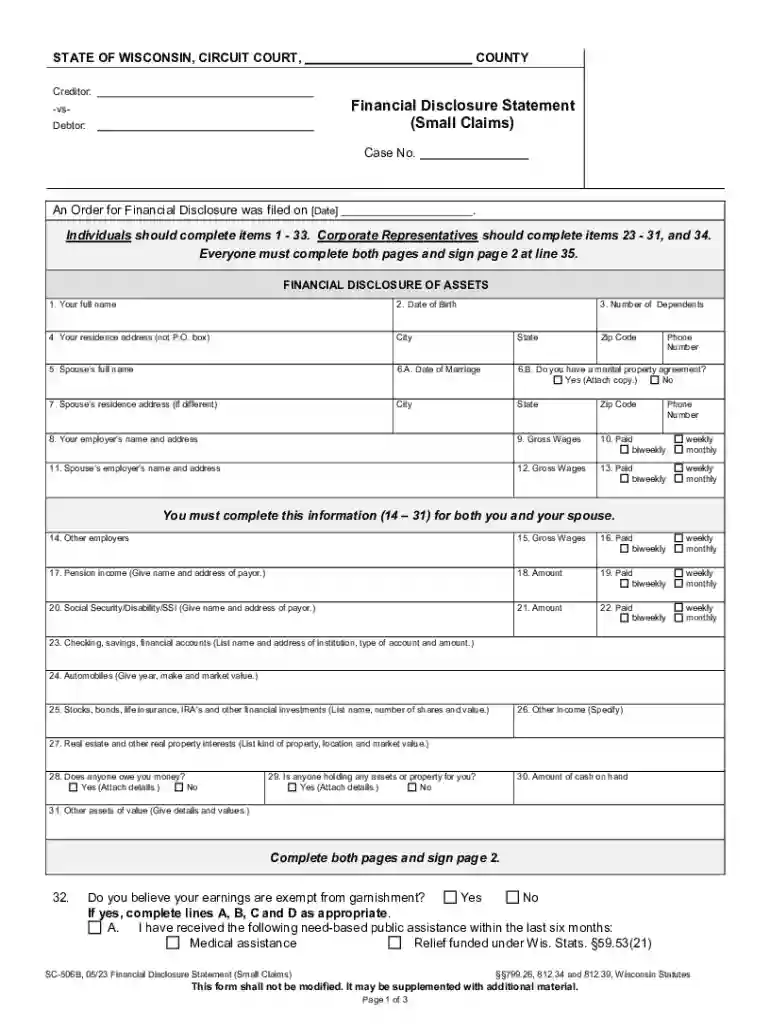
Definition and Purpose of the SC-506: Financial Disclosure Statement
The SC-506: Financial Disclosure Statement is a legal document required in the state of Wisconsin for small claims proceedings. It provides a detailed snapshot of an individual's or corporation's financial status. The primary goal of this form is to aid in the fair resolution of financial disputes by ensuring complete transparency regarding income, assets, and liabilities. The document must be filled out with accuracy as it directly influences legal outcomes related to garnishment, judgment execution, or financial settlements.
Key Elements of the SC-506: Financial Disclosure Statement
The SC-506 form includes several critical sections that must be completed in detail:
- Personal Information: This section requires the disclosure of basic personal data, such as the individual's name, address, and contact information or details about the corporation.
- Income Sources: Enter the primary and secondary sources of income, specifying amounts and frequency. This can include wages, business profits, or pensions.
- Asset Declaration: A comprehensive list of assets, including real estate, vehicles, savings, and investments.
- Liabilities and Debts: Outlines existing debts, such as loans, mortgages, and other financial obligations.
- Exemptions and Exclusions: Information regarding any assets or income that may be exempt from garnishment under Wisconsin law.
Steps to Complete the SC-506: Financial Disclosure Statement
Filling out the SC-506 form requires meticulous attention to detail:
- Download the Form: Obtain the form from the court website or your legal representative.
- Gather Documentation: Collect all necessary financial documents, such as pay stubs, account statements, and tax returns.
- Fill Out Personal Details: Accurately complete your personal or corporate information.
- List Income: Provide detailed information about all sources of income.
- Declare Assets and Liabilities: Report all tangible and intangible assets, along with outstanding debts.
- Review Exemptions: Ensure compliance with state exemptions to identify properties shielded from legal claims.
- Sign and Date the Form: Confirm the accuracy of the information and provide legal attestation.
Important Terms Related to the SC-506
- Garnishment: A legal mechanism by which a portion of your earnings is withheld by your employer for direct payment to a creditor.
- Judgment Execution: Legal proceedings that enforce the payment of a court judgment.
- Exemptions: Specific assets or income sources not subject to creditor claims according to Wisconsin statutes.
Legal Use of the SC-506: Financial Disclosure Statement
The SC-506 form's meticulous completion ensures compliance with Wisconsin’s small claims procedures. It is legally binding and subject to court review in disputes involving monetary claims.
State-Specific Rules Governing the SC-506
Wisconsin mandates specific prerequisites for financial disclosure in small claims:
- Filing: Form SC-506 must be filed within a designated timeframe following a court order.
- Accuracy: False reporting can lead to penalties, including court sanctions or dismissal of claims.
- Confidentiality: While the form itself is public, sensitive information may be protected from disclosure upon request.
Who Typically Uses the SC-506: Financial Disclosure Statement
The SC-506 form is utilized by:
- Individuals: Those involved in personal disputes requiring financial transparency.
- Corporations: Companies engaged in small claims litigation needing to reveal financial standings.
- Legal Representatives: Attorneys representing clients in financial dispute cases.
Examples of SC-506 Form Usage
- Divorce Settlements: Used to clarify financial standings of the involved parties.
- Debt Collection: Creditors requiring court-ordered financial disclosures from debtors.
- Small Claims Resolution: Individuals or entities in dispute over payment or compensation.
Penalties for Non-Compliance
Failing to file or providing inaccurate information on the SC-506 can result in significant legal repercussions:
- Court Sanctions: Potential fines or limitations on court claims for inaccurate or untimely reporting.
- Dismissal of Claims: Non-compliance may lead to the dismissal of a case in favor of the opposing party.
- Legal Penalties: Possible criminal charges if fraudulent information is discovered in the disclosure.
Form Submission Methods
The SC-506 can be submitted through several methods:
- Online Filing: Via the Wisconsin court’s digital platform if available.
- Mail: Sending through the U.S. Postal Service to the appropriate court office.
- In-Person Submission: Delivering directly to the court to ensure immediate processing.
Software Compatibility and Digital Versions
The SC-506 form can be efficiently managed using digital document editing and signing platforms like DocHub, which facilitates:
- Digital Editing: Modify form fields, add electronic signatures, and share completed documents without physical printing.
- Integration with Cloud Services: Store and retrieve the SC-506 from cloud storage services like Google Drive.
- Security Features: Protect sensitive information with password protection and encryption.
This comprehensive overview of the SC-506: Financial Disclosure Statement arms users with essential knowledge for proper completion and submission, ensuring all legal and procedural guidelines are met effectively.