






Definition and Meaning
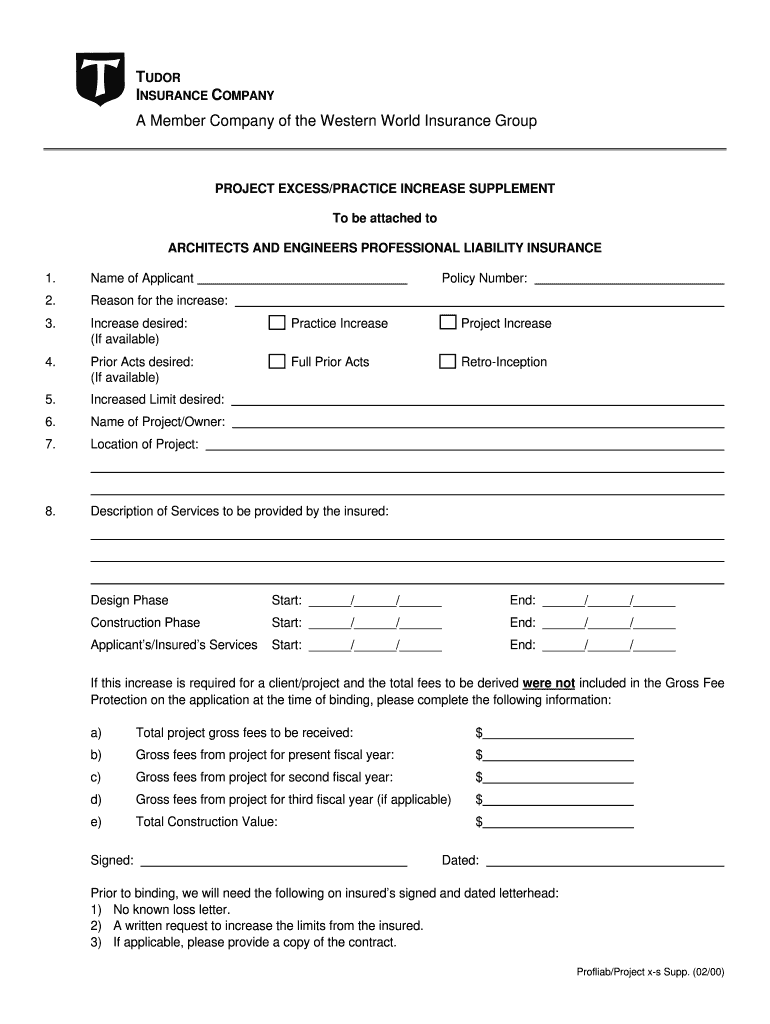
The "PROJECT EXCESS PRACTICE INCREASE SUPPLEMENT" is a specific form utilized by architects and engineers when seeking to increase their professional liability insurance coverage with the Tudor Insurance Company, a part of the Western World Insurance Group. This supplementary document is essential in providing detailed information about ongoing or upcoming projects, required increases in coverage limits, and financial projections related to these projects. The form ensures that applicants meet specific criteria and submit essential prerequisites to qualify for enhanced coverage.
Key Concepts
- Project Details: Includes comprehensive information about the project in question, such as scope, timeline, and objectives.
- Coverage Limits: Specifies desired increases in professional liability insurance limits, crucial for protecting against potential claims.
- Financial Projections: Provides expected financial outcomes related to the project, assisting insurers in risk assessment.
How to Use the PROJECT EXCESS PRACTICE INCREASE SUPPLEMENT
To effectively use the supplement form, professionals must follow a detailed procedure that ensures thorough completion of all necessary sections.
- Gather Information: Prior to completing the form, gather all required project data, current insurance details, and supporting financial documentation.
- Read Instructions: Familiarize yourself with any provided instructions or guidelines, which help clarify specific requirements or ambiguities in the form.
- Complete Sections: Methodically fill out each section, ensuring that all fields are populated accurately and thoroughly.
- Review and Verify: Double-check all entries for accuracy and completeness to prevent delays or requests for additional information.
Tips for Effective Completion
- Include as much detail as possible regarding the project to provide a clear picture to the insurer.
- Make use of the provided annotation tools for adding supporting comments or explanations directly within the form sections.
- Utilize electronic signatures for efficiency and compliance with legal standards.
Steps to Complete the PROJECT EXCESS PRACTICE INCREASE SUPPLEMENT
Completing the supplement involves following a series of calculated steps to ensure all requirements are met, leading to successful form submission and processing.
- Initial Preparation: Collect all necessary documents, including project plans and financial forecasts, before beginning the form.
- Fill Out Personal and Company Details: Start by entering your basic information, including name, company, and contact details.
- Describe the Project: Provide an exhaustive description of the project, capturing its scope, significance, and expected outcomes.
- Specify Insurance Needs: Clearly state the increased coverage limits desired and justify these needs with project-related risks and financial analyses.
- Attach Supporting Documents: Include supplementary documentation as required, such as no known loss letters or limit increase requests.
- Finalize and Submit: After completing all sections, review your entries, apply your electronic signature, and submit the form through designated channels.
Required Documents
Submitting the "PROJECT EXCESS PRACTICE INCREASE SUPPLEMENT" necessitates accompanying documents that support the request for increased coverage.
- Current Insurance Verification: A document detailing existing coverage limits and policy status.
- No Known Loss Letter: A statement affirming the absence of any claims or incidents related to existing coverage.
- Written Request for Limit Increases: A formal letter detailing the reasons and necessity for requesting increased coverage.
- Project Financials: Comprehensive financial statements and forecasts associated with the project.
Key Elements of the PROJECT EXCESS PRACTICE INCREASE SUPPLEMENT
A thorough understanding of the core elements is central to completing the form accurately, facilitating smoother processing and approval.
Primary Components
- Applicant Information: Captures essential details related to the insured party or applying entity.
- Project Information: In-depth exploration of the project's nature, impacts, and planned execution.
- Desired Coverage: Specification of the excess coverage amount being sought and a rationale for its necessity.
- Financial Considerations: Insights into project-related financial metrics serving as evidence for the request.
Who Typically Uses the PROJECT EXCESS PRACTICE INCREASE SUPPLEMENT
Predominantly, the form is utilized by professionals within architecture and engineering firms looking to secure enhanced liability protections for large or high-stakes projects.


Typical Users
- Architectural Firms: Seeking to extend coverage during complex design projects that involve significant risk exposure.
- Engineering Companies: Engaging in projects with potential liability implications requiring higher coverage limits for assurance.
- Consultancy Agencies: Managing multiple client projects where increased coverage is advantageous due to varied exposure levels.
Legal Use of the PROJECT EXCESS PRACTICE INCREASE SUPPLEMENT
In the U.S., the legal foundation for utilizing this supplement stems from ensuring adequate liability coverage in accordance with professional standards and regulations.
Compliance Requirements
- Adherence to ESIGN Act: Electronic submissions and signatures must align with federal electronic transaction regulations.
- Insurance Contract Obligations: Aligns coverage increases with contractual obligations, safeguarding against potential enforcement issues.
Examples of Using the PROJECT EXCESS PRACTICE INCREASE SUPPLEMENT
Real-world applications illustrate the form's critical role in managing business risk and liability in professional projects.
- High-Risk Construction Projects: An engineering firm secures increased limits for a skyscraper project involving advanced technology and significant public interaction, necessitating robust coverage.
- Cross-Border Architectural Design Initiatives: An architectural firm partakes in international project collaborations requiring more comprehensive insurance due to diverse regulatory landscapes and increased potential liabilities.