






Definition & Meaning
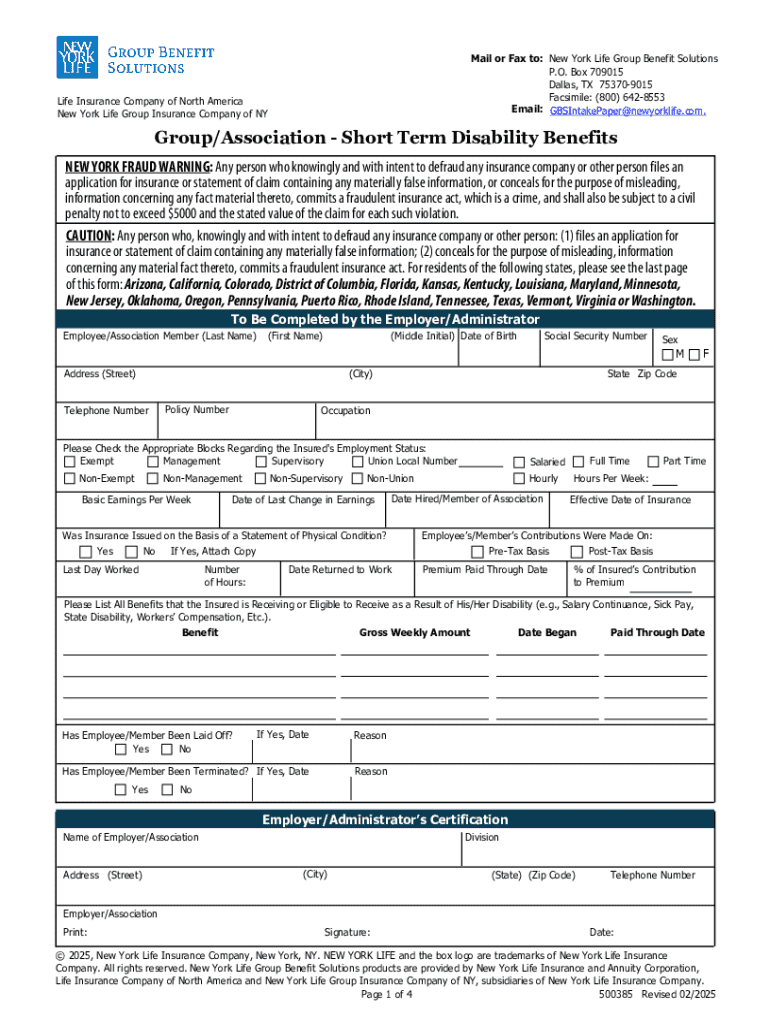
Understanding the disability claim form is essential for anyone seeking to file for short-term disability benefits. This type of form is a structured document used to gather information necessary for insurance providers, such as New York Life Insurance Company, to evaluate and process disability claims. Typically, it requires personal data, employment details, and medical information. Its primary purpose is to ascertain an individual's eligibility for benefits in situations where they are unable to work due to a temporary disability.
Steps to Complete the Disability Claim Form
Completing a disability claim form involves a series of methodical steps to ensure all required information is provided.
-
Gather Personal and Employment Data: Start by collecting basic personal details, including your name, address, and contact information. Next, fill out any employment-related queries, such as your current employer's details, your position, and your employment status.
-
Provide Medical Information: Include a detailed medical report or certification from your healthcare provider. This should outline the nature of your disability and any relevant medical history that supports your claim.
-
Review Fraud Warning Notices: Be aware of any fraud warnings on the form, which highlight penalties for providing false information. These warnings vary by state and are crucial for legal compliance.
-
Submit Employer Certification: Ensure your employer completes the necessary sections concerning your role and the impact of your disability on your job performance.
-
Final Check and Submission: Review the form for accuracy and completeness before submitting it via your desired method, whether online, by mail, or in-person.
Required Documents
Certain documentation is necessary to accompany the disability claim form to verify claims and prevent fraud.
- Medical Certification: A formal statement from a healthcare provider diagnosing your condition and predicting the duration of disability.
- Employment Verification: A statement from your employer commenting on your status, average hours worked, and any earned wages or compensation.
- Personal Identification: Valid ID documents may be required to confirm your identity.
Legal Use of the Disability Claim Form
Using the disability claim form legally ensures claimants adhere to applicable laws and regulations. Claimants must truthfully report all required details to avoid penalties. The claims process often includes state-specific legal notices indicating penalties for false claims. Awareness of these legal stipulations helps ensure compliance and integrity of the submitted information.
State-specific Rules for Filing a Claim
Different states may have unique rules or regulations impacting how disability claims are filed.
- Penalties for False Statements: Some states impose severe penalties for submitting fraudulent claims, including fines or imprisonment.
- Processing Times: Regulatory variances may influence the period insurance companies have to process and respond to claims.
Understanding your particular state's rules helps navigate the process smoothly.
Eligibility Criteria for Disability Claims
Eligibility for filing a disability claim often hinges on specific criteria that vary by insurer and regulatory body.
- Employment Status: Typically, you must be actively employed, or on a qualifying leave of absence when the disability begins.
- Medical Condition: The disability must hinder your ability to perform your job, requiring proof from a healthcare provider.
- Service Period: A minimum employment duration with the current employer is often required to be eligible.
Meeting these criteria significantly influences the likelihood of a successful claim.


Who Typically Uses the Disability Claim Form
A variety of individuals might need to use the disability claim form:
- Employees on Medical Leave: Workers temporarily unable to perform job duties due to injury or illness.
- Recent Surgery Patients: Individuals recovering from medical procedures requiring extended recovery time.
- Expectant Mothers: Women experiencing pregnancy-related complications impairing their work capability.

Penalties for Non-Compliance
Non-compliance with the guidelines for filing a disability claim can attract penalties. Claimants may face consequences such as denial of benefits, restitution demands, or legal prosecution. Adhering to truthful and accurate reporting when submitting forms and accompanying documentation is critical to avoid these penalties.
Key Elements of the Disability Claim Form
Several key elements comprise the disability claim form and dictate the kind of information required:
- Personal Details: Includes claimant’s personal and contact information.
- Employer Information: Features details provided by the employer validating employment status and history.
- Medical Information: Pertains to health condition that incapacitates the claimant.
- Legal Notices: Provides warnings about the penalties of fraudulent claims.
Understanding these components is crucial for a complete and accurate submission.