



Definition & Meaning of the Bulgarian Tenancy Agreement
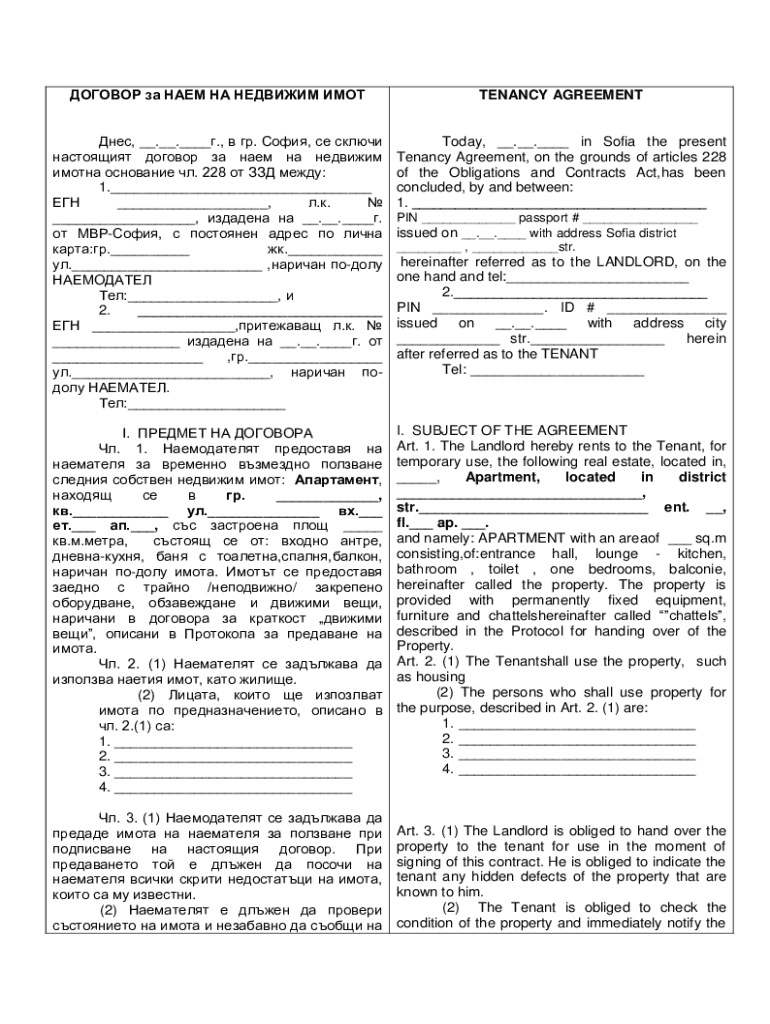
The Bulgarian Tenancy Agreement is a legally binding contract that outlines the terms and conditions between a landlord and tenant. Its primary purpose is to regulate the rental relationship, specifying details such as rental amount, payment schedules, duration of tenancy, and the rights and responsibilities of each party. Typically, this document serves to protect both parties and ensure a clear understanding of obligations.
Key Functions
- Rent Specifications: Defines the monthly rent amount and due dates.
- Tenant and Landlord Responsibilities: Details who is responsible for maintenance and repairs.
- Lease Duration: States the start and end dates of the tenancy, including renewal terms.
- Security Deposit: Includes information on the deposit amount and conditions for its return.
Key Elements of the Bulgarian Tenancy Agreement
Understanding essential clauses can prevent disputes. These elements provide a comprehensive view of what should be included:
- Parties Involved: Identifies the landlord and tenant.
- Property Description: Offers a detailed description of the rental property.
- Payment Terms: Clarifies the payment method and schedule.
- Termination Conditions: Outlines conditions under which the lease can be terminated early.
- Pet Policy: Specifies if pets are allowed and any related conditions.
Who Typically Uses the Bulgarian Tenancy Agreement
This agreement is applicable to a range of renters and landlords with different needs and is crucial for ensuring clarity and compliance with Bulgarian rental laws.
- Residential Landlords: Use it to establish terms with residential tenants.
- Property Management Companies: Leverage the contract to manage multiple properties efficiently.
- Tenants: Ensure their rights are outlined and protected under Bulgarian law.

Steps to Complete the Bulgarian Tenancy Agreement
Completing the Bulgarian Tenancy Agreement requires attention to detail to ensure all parties understand their obligations. Here's a step-by-step guide:
- Gather Required Information: Collect details about the tenant, landlord, and property.
- Draft the Agreement: Include all necessary terms and conditions.
- Review Legal Requirements: Ensure compliance with Bulgarian laws related to tenancy.
- Sign the Agreement: Both parties must review and sign.
Additional Considerations
- Consult Legal Advice: It may be beneficial for both parties to consult with a legal expert to finalize the document.
- Keep Copies: Both parties should retain signed copies for their records.
Legal Use of the Bulgarian Tenancy Agreement
The legal framework for tenancy agreements in Bulgaria sets specific obligations and rights for both landlords and tenants, protecting their interests while ensuring compliance with national laws.
Obligations of Landlords
- Maintenance: Landlords are typically responsible for major repairs and maintenance.
- Compliance with Safety Regulations: Must ensure the property meets safety standards.
Tenants' Rights
- Habitability: Ensures that tenants receive a habitable living condition.
- Privacy: Tenants have the right to expect privacy during their tenancy.
How to Obtain the Bulgarian Tenancy Agreement
Obtaining this contract involves several steps to ensure both parties are prepared and compliant with legal requirements.
- Download from Legal Websites: Known platforms provide templates aligned with Bulgarian law.
- Consult Real Estate Agents: Professionals can supply customized forms.
- Use Digital Platforms: Some online services offer digital document solutions compatible with Bulgarian standards.
Important Terms Related to the Bulgarian Tenancy Agreement
Key terms within the tenancy agreement clarify roles and reduce potential for conflict. Understanding these terms helps in comprehending the contract:
- Security Deposit: A sum paid in advance to cover potential damages.
- Lease Term: The period for which the agreement is valid.
- Subletting: Conditions under which a tenant may rent the property to another person.
Examples of Using the Bulgarian Tenancy Agreement
Real-world scenarios illustrate the diverse applications and benefits of this agreement:
- Long-Term Residential Use: A family leasing a property for living purposes, outlining child safety requirements.
- Short-Term Rental: An agreement for a six-month stay with provisions for early termination.
- Commercial Leases: A company's use of a property for business, with special clauses for equipment installation.