






Definition & Meaning
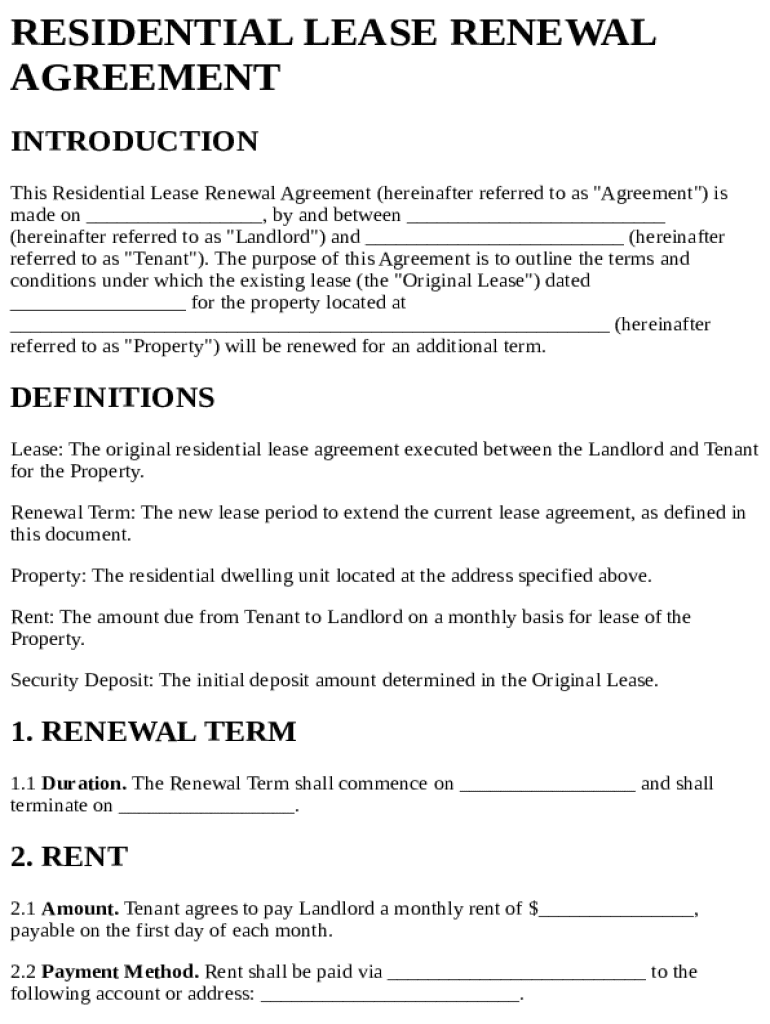
A residential lease renewal agreement is a legal document that extends the term of an existing residential lease, allowing the tenant to continue occupying the property under specific terms and conditions. Typically, this agreement is entered into when both the landlord and tenant are satisfied with their current arrangements and wish to extend the lease. It primarily outlines the duration of the extension, any new terms or amendments to the original lease, and stipulates the responsibilities of both parties during the renewal period. This form’s significance lies in its ability to provide legal continuity to the leasing relationship, averting potential conflicts and misunderstandings.
How to Use the Residential Lease Renewal Agreement
Using a residential lease renewal agreement involves several steps to ensure both parties' interests are protected. First, review the current lease to identify any clauses or terms that either party might want to amend. Discuss these potential changes with the other party to reach a mutual understanding. Next, draft the renewal agreement, ensuring it accurately reflects any amendments or new terms, such as changes in rent or maintenance responsibilities.
Both parties should carefully read the agreement before signing. In practice, using this form might require a tenant to inform the landlord of their intent to renew, typically around 60 to 90 days before the original lease ends. The signed renewal agreement should become an essential part of the original lease documentation, maintaining the continuity of the legal agreement between the tenant and landlord.
Steps to Complete the Residential Lease Renewal Agreement
Completing a residential lease renewal agreement requires careful attention to detail to ensure all relevant information is accurately recorded.
-
Review Existing Lease: Start by reviewing the existing lease agreement to understand the current terms and identify any that might require updates or changes.
-
Negotiate Terms: Discuss any desired changes with the other party, such as rent adjustments, lease term length, or additional tenant responsibilities.
-
Draft Agreement: Include all agreed-upon changes. Ensure that critical information, such as tenant and landlord names, property address, and new lease term dates, are correct.
-
Add Signature Blocks: Ensure there is space for both parties to sign and date the document, confirming their agreement to the terms.
-
Review and Finalize: Both parties should review the document to ensure all details are correct and understood.
-
Sign and Store Copies: Once signed, each party should retain a copy for their records to avoid future disputes.
Key Elements of the Residential Lease Renewal Agreement
The residential lease renewal agreement should incorporate several key elements to ensure clarity and enforceability:
- Parties Involved: Clearly state the names and contact information of both the landlord and the tenant.
- Property Address: Include the full address of the property being leased.
- Term of Renewal: Specify the start and end dates of the renewal period, detailing how long the lease extension is intended to last.
- Rental Terms: Indicate any changes to the rent amount or payment schedule, including due dates and acceptable payment methods.
- Additional Terms: Note any alterations to the original lease terms, such as maintenance duties or utility responsibilities.
- Signature Block: Provide space for all parties to sign and date, confirming their acceptance of the terms.
Important Terms Related to Residential Lease Renewal Agreement
Understanding certain terms within a residential lease renewal context can prevent misinterpretations:
- Renewal Clause: A part of the original lease that outlines the conditions under which a tenant can renew the lease.
- Extension Option: Provides the tenant with the right, but not the obligation, to extend the lease.
- Amendment: A formal change or addition to the lease's terms included in the renewal agreement.
- Notification Period: The timeframe within which the tenant or landlord must declare their intent to renew the lease.
Legal Use of the Residential Lease Renewal Agreement
In the United States, the legal use of a residential lease renewal agreement serves to formalize the continuation of a tenant's occupation of a rental property. This document must comply with state landlord-tenant laws, covering issues like the maximum allowable rent increases and tenants’ rights to privacy. Before signing, both parties should confirm that all lease terms abide by local and state regulations. Legal advice may be beneficial if there are complex amendments or when either party is uncertain about the contract’s implications.
State-Specific Rules for the Residential Lease Renewal Agreement
Each state may have unique rules governing residential lease renewals, and compliance with these rules is critical. For example, in California, landlords must adhere to strict procedures for advising tenants of rent increases, while New York mandates specific disclosure requirements regarding property conditions. Some states might require additional notices or stipulations within a renewal agreement. Consequently, both landlords and tenants are encouraged to familiarize themselves with their state's specific regulations or consult a local attorney to ensure their agreements are legally sound.
Examples of Using the Residential Lease Renewal Agreement
Practical scenarios highlight the usefulness of the residential lease renewal agreement:
-
A landlord appreciates having a reliable tenant they wish to retain after the initial lease term's favorable arrangement. Utilizing a renewal agreement allows both parties to maintain a stable renting relationship while efficiently codifying any updated terms or new agreements.
-
Conversely, a tenant benefits from a renewal agreement by securing predictable housing conditions, especially crucial during housing market fluctuations. Renewals often provide tenants with reliable housing security without the hassle and cost of relocating.
By efficiently addressing ongoing housing needs for both landlords and tenants, a residential lease renewal agreement serves as a practical tool for ensuring continual tenancy under favorable terms.