






Definition and Meaning of Assignment of Rents
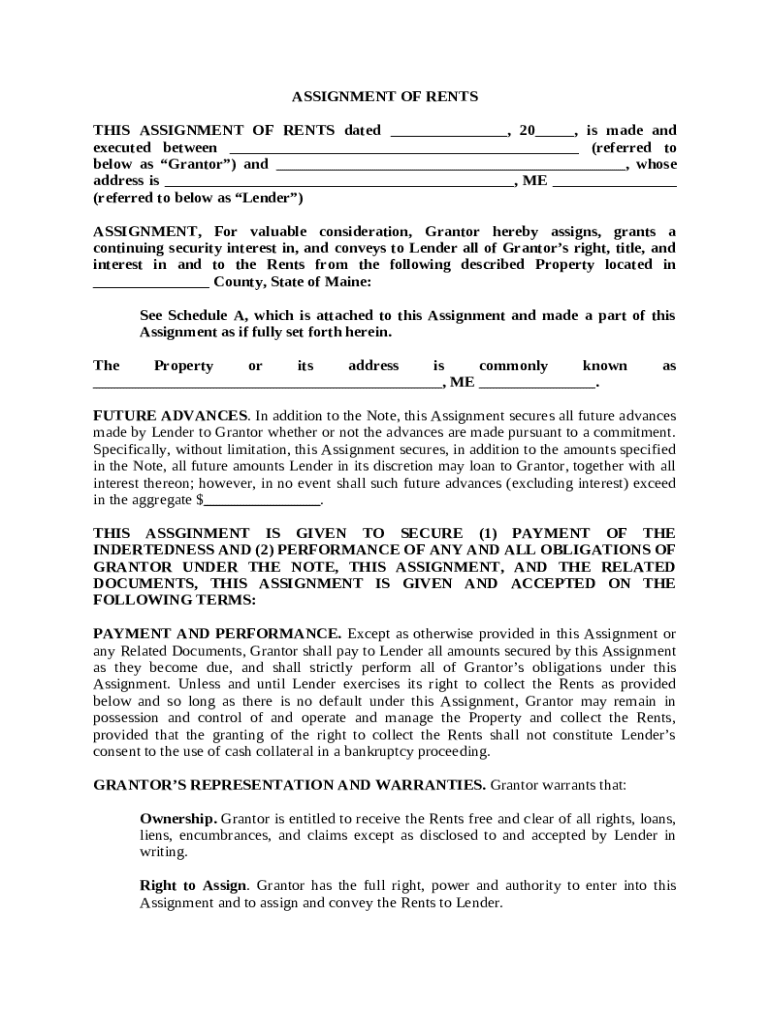
The Assignment of Rents is a legal agreement that establishes a lender's security interest in the rental income generated from a specified property. Commonly utilized in real estate and lending transactions, it enables the lender, often a mortgagee, to collect rents directly from tenants if the borrower, referred to as the grantor, defaults on loan obligations. This arrangement effectively acts as collateral to ensure that mortgage obligations are met. In essence, it transfers the rights to rental income to the lender under certain conditions, thereby offering an additional layer of financial security in cases of borrower default.
Key Elements of Assignment of Rents
An Assignment of Rents document typically includes several essential components:
- Identification of Parties: Clearly defines the grantor (property owner/borrower) and the lender.
- Description of Property: Details about the specific property whose rental income is assigned.
- Terms and Conditions: Includes obligations of the grantor to maintain the property and the terms that trigger the lender's rights to collect rents.
- Security Interest Clause: Establishes the lender's rights over the rental income.
- Default Conditions: Specifies what constitutes a default event that activates the lender's right to collect rents.
- Remedies: Details the actions the lender can take in the event of a default, such as notifying tenants to pay rent directly to the lender.
How to Use the Assignment of Rents
Implementing an Assignment of Rents involves several procedural steps:
- Drafting the Agreement: Prepare a document that accurately reflects the terms agreed upon by the grantor and lender.
- Review and Signatures: Both parties must review and sign the agreement. Legal consultation may be advisable to ensure compliance with relevant laws.
- Recording the Document: Depending on jurisdictional requirements, the document may need to be recorded with a local authority to be enforceable.
- Notifying Tenants: In the event of default, tenants should be notified of the change in rent payment direction.
Employing an Assignment of Rents can streamline the process of securing real estate investments by ensuring that lenders have an effective mechanism to mitigate risks associated with borrower default.
Steps to Complete the Assignment of Rents
Completing an Assignment of Rents efficiently requires careful attention to procedural details:
- Gather Necessary Information: Collect all relevant information, including property details, rental agreements, and lender requirements.
- Legal Drafting: Engage professional legal assistance to draft the agreement, ensuring all terms are carefully articulated.
- Sign and Execute: Have both parties sign the agreement in the presence of a notary if required by state laws.
- Record the Agreement: File the document with the local recorder's office if necessary to ensure legal enforceability.
- Default Response: In case of default, have a pre-defined protocol for notifying tenants of the need to pay rents to the lender.
These steps ensure clarity and legality in implementing an Assignment of Rents, providing both parties with a clear understanding of their rights and responsibilities.
Why Use an Assignment of Rents
An Assignment of Rents serves as a crucial financial tool in real estate transactions, offering several benefits:
- Risk Mitigation: Provides lenders with a direct line to rental income, reducing the risk of loss associated with borrower defaults.
- Financial Security: Acts as additional security for lenders, enhancing the overall creditworthiness of the borrower.
- Efficiency in Collections: Simplifies the process for lenders to collect rents in the event of a default, ensuring a steady cash flow.
- Protection for Borrowers: Can provide favorable loan terms by offering the lender increased security.
These factors make the Assignment of Rents an attractive mechanism for both lenders and borrowers in real estate financing.
Who Typically Uses an Assignment of Rents
The Assignment of Rents is commonly used by various stakeholders in real estate and lending markets:
- Lenders and Banks: Often require this agreement as part of the loan security package to secure rental income as collateral.
- Real Estate Developers: Use it to enhance financing terms by providing additional security to lenders.
- Property Investors: Employ it to align with financing conditions that ensure investment protection.
- Borrowers: Engage in these agreements for favorable lending terms and to protect their assets.
Knowledge of who typically engages in Assignment of Rents is critical to understanding its role and importance in real estate financing.
Legal Use of the Assignment of Rents
The Assignment of Rents is a legally binding document subject to various regulations and requirements:
- State Laws: Vary widely and dictate the enforceability and specific provisions of such assignments.
- Recording Requirements: Often need to be recorded in local government offices to be legally binding.
- Default Conditions: Defined by both agreement terms and statutory provisions.
- Judicial Interventions: In some cases, courts may become involved in disputes regarding the execution of the agreement.
Understanding the legal framework governing the Assignment of Rents is essential for both grantors and lenders to ensure compliance and enforceability.
State-Specific Rules for Assignment of Rents
Different states may have distinct regulations and requirements for the Assignment of Rents:
- Enforceability: Some states require registration for enforcement, while others may recognize oral agreements.
- Tenant Notifications: Specific procedures for notifying tenants of assignment may vary by state.
- Additional Provisions: State laws may include extra provisions related to property management and tenant rights.
It is crucial for parties involved in an Assignment of Rents to be fully informed about and comply with their state's specific rules and regulations for the agreement to be valid and enforceable.