






Definition and Purpose of the Unaccompanied Housing Inspection Checklist
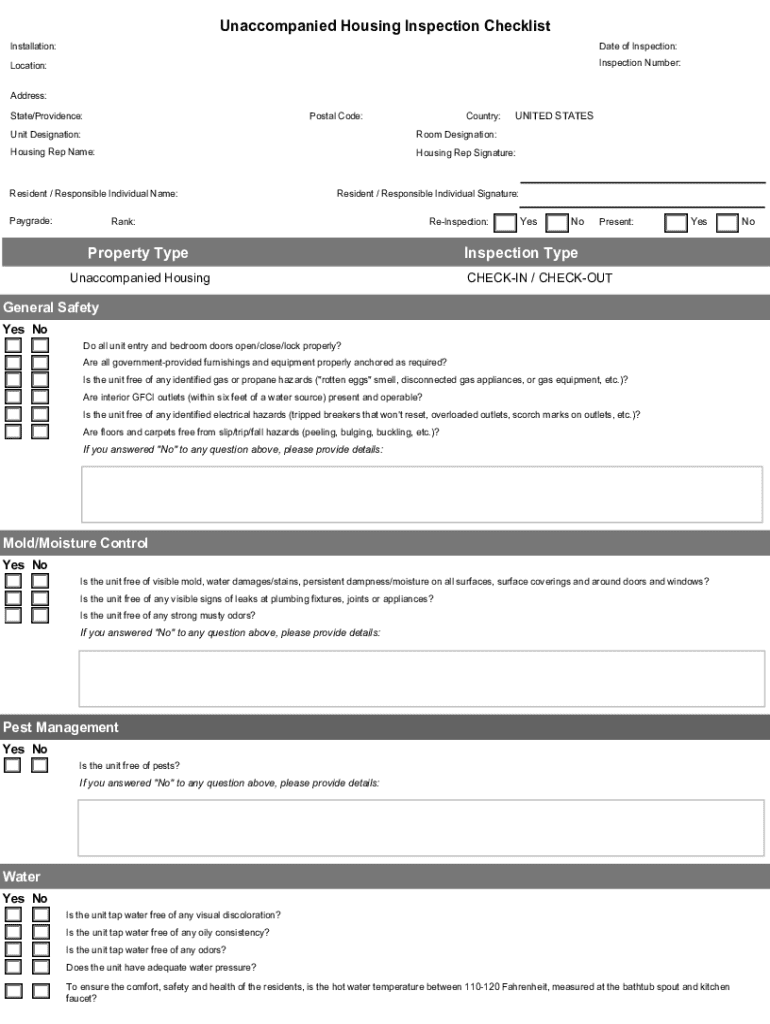
The Unaccompanied Housing Inspection Checklist serves as a detailed guide for assessing the safety and condition of housing units designated for individuals living without family members. This checklist is essential for ensuring that living accommodations meet specific safety, health, and maintenance standards. It covers various aspects of housing inspections, such as general safety, structural integrity, and the functioning of essential systems and appliances.
Key Components of the Checklist
- General Safety Standards: Evaluates the overall safety of the premises, including secure locking systems, emergency exits, and proper lighting in common areas.
- Structural Integrity: Checks for any visible damage or deterioration of the building’s structure, such as cracks in walls or ceilings, and issues with foundations.
- HVAC Systems: Ensures heating, ventilation, and air conditioning systems are operating efficiently and safely, providing adequate temperature control.
- Appliance Functionality: Reviews the condition and operation of essential household appliances, confirming they meet safety standards and function as intended.
Importance of Completing the Checklist
Regular inspections using the Unaccompanied Housing Inspection Checklist help in maintaining high living standards and preventing potential issues that could compromise inhabitants' safety and comfort. This process aids in the early identification of problems that could escalate into costly repairs or hazards.
Steps to Complete the Unaccompanied Housing Inspection Checklist
Successfully completing the Unaccompanied Housing Inspection Checklist involves following a systematic approach to ensure thorough assessment and documentation of the housing unit’s condition. Here is a step-by-step guide:
- Initial Preparation: Gather necessary tools and equipment, such as a flashlight, camera, and notepad, to record observations and findings.
- Inspection of Safety Features: Start by checking smoke detectors, carbon monoxide detectors, and fire extinguishers to ensure they are present and operational.
- Structural Assessment: Inspect walls, ceilings, and floors for any signs of damage or water intrusion, which might indicate underlying issues.
- System Checks: Test electrical outlets and switches, plumbing fixtures for leaks, and ensure that the HVAC system is functioning correctly.
- Appliance Review: Operate all installed appliances to verify their performance and safety compliance.
- Completion and Reporting: Document findings, including any issues that require attention, and compile a comprehensive report for review and action.
Key Elements of the Unaccompanied Housing Inspection Checklist
The Unaccompanied Housing Inspection Checklist encompasses several critical areas that need assessment during the inspection process. Each element ensures the dwelling's suitability for occupancy:
- Moisture and Mold Control: Assess areas for signs of moisture accumulation or mold, which can adversely affect air quality and health.
- Pest Management: Look for evidence of pest infestations and ensure measures are in place to prevent them.
- Water Quality: Verify that water supplies are clean and meet health standards.
- Smoke and Carbon Monoxide Detection: Confirm that detectors are correctly located and functional.
Who Uses the Unaccompanied Housing Inspection Checklist
This checklist is primarily utilized by housing inspectors, property managers, and maintenance personnel responsible for the quality and safety verification of individual living quarters. It's a critical tool in ensuring that housing provided by institutions, such as military bases, educational campuses, and multi-unit residential properties, adheres to established guidelines.
Typical Users Include:
- Military Housing Officials: Inspect accommodations for service members to ensure compliance with military housing standards.
- University Housing Staff: Evaluate dormitories for students to maintain a safe living environment on campus.
- Property Management Companies: Conduct regular inspections for consistent property upkeep and tenant satisfaction.
Examples of Using the Unaccompanied Housing Inspection Checklist
Real-world scenarios demonstrate the checklist’s applicability across different contexts in the United States:
- Military Installations: Military housing inspectors use this checklist to ensure barracks and single-occupancy units meet rigorous safety and operational standards.
- University Dormitories: Facility managers employ the checklist to conduct quarterly inspections across student housing, identifying maintenance needs and potential upgrades.
- Apartment Complexes: Proprietors of large apartment buildings might use this checklist during annual inspections to adhere to local housing regulations and maintain property value.
State-Specific Rules and Differences
While the Unaccompanied Housing Inspection Checklist provides a comprehensive framework, specific regulations may vary by state. It is crucial for users to understand local laws and standards that impact inspection protocols and reporting requirements.
Considerations for State Variations:
- Building Codes: Check for any updates in state-specific building codes that affect structural inspections.
- Health and Safety Regulations: Stay informed about differences in health and safety laws that might influence inspection criteria.
- Environmental Compliance: Be aware of regional environmental guidelines that pertain to water and air quality assessments.
Legal Use of the Unaccompanied Housing Inspection Checklist
Complying with legal standards when using the Unaccompanied Housing Inspection Checklist is vital for legitimizing the inspection process. The checklist ensures that housing inspections align with legal obligations, providing a documented trail that supports accountability and adherence to regulatory requirements.
Legal Implications:
- Documentation: Maintain accurate records of inspections to support legal compliance in case of disputes.
- Regulatory Adherence: Align inspections with federal, state, and local regulations to avoid penalties or fines.
- Liability Protection: Use completed checklists to demonstrate due diligence in maintaining safe living conditions.
Employing the Unaccompanied Housing Inspection Checklist effectively requires a clear understanding of its benefits, structured processes, and legal implications, thereby ensuring that housing inspections are thorough, compliant, and beneficial for all parties involved.