






Definition & Meaning
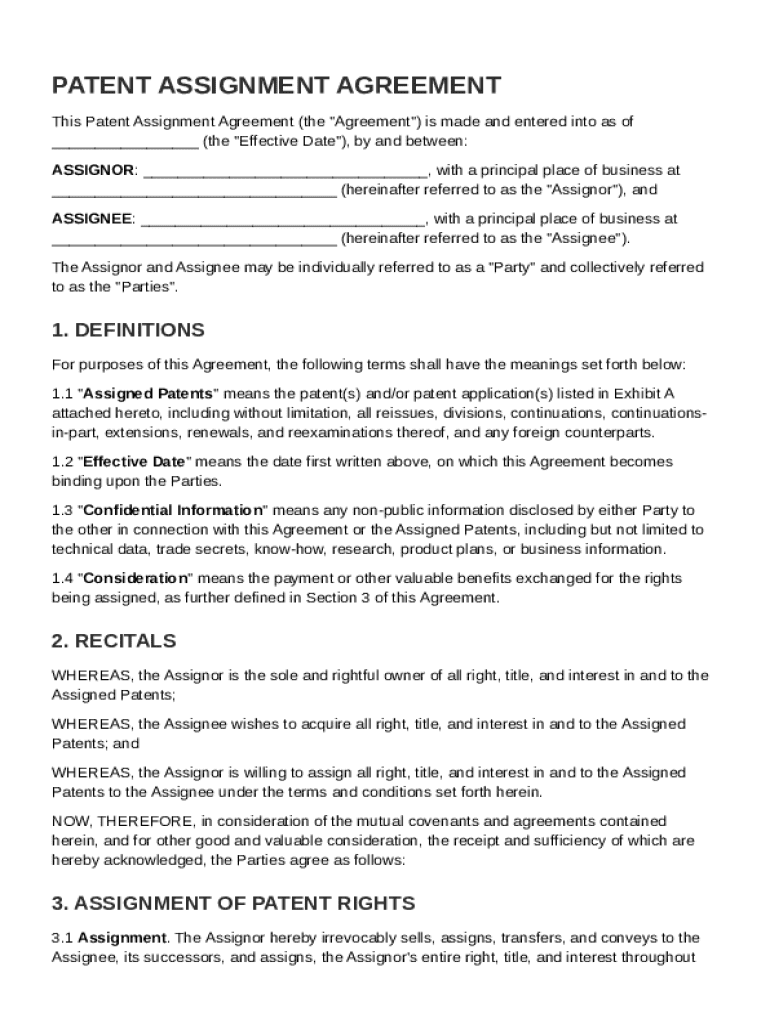
A Patent Assignment Agreement is a legally binding document that facilitates the transfer of patent rights from one party, known as the "Assignor," to another party, the "Assignee." This agreement is crucial in the realm of intellectual property rights, ensuring that the ownership and associated rights of patents are clearly delineated between parties. The agreement typically includes critical clauses detailing the scope of the transfer, the patents involved, and any compensation or royalties that are part of the transaction. This form is essential for maintaining the legal integrity of a patent transaction and safeguarding the interests of both parties involved.
Components of the Agreement
- Key Terms Definition: Clearly defines legal terms used within the agreement, ensuring common understanding between parties.
- Transfer of Rights: Specifies which patents are transferred and the nature of those rights.
- Compensation and Consideration: Details any financial terms such as lump sum payments or ongoing royalties.
- Warranties and Representations: Includes assurances provided by the Assignor about the status and validity of the patents.
How to Use the Patent Assignment Agreement Template
Leveraging a template for patent assignment can streamline the drafting process significantly. The template provides a pre-structured format that guides users in including all necessary information, thus reducing the risk of missing important details.
Step-by-Step Usage
- Identify the Parties: Clearly detail the Assignor and Assignee, including full names and contact information.
- Detail the Patents: List each patent being assigned, including patent numbers and descriptions.
- Customize the Terms: Adjust the template terms to fit the specific deal, including compensation or royalty agreements.
- Review Legal Clauses: Ensure that the template’s legal clauses align with the jurisdictions and needs of both parties.
- Consult with Legal Counsel: Before finalizing, it’s advisable for both parties to consult legal professionals to review the document’s legal completeness and correctness.
Key Elements of the Patent Assignment Agreement Template
The template must encompass specific elements to be effective and legally compliant. Missing any critical components could render the agreement void or expose parties to legal disputes.
Crucial Sections to Include
- Transfer Details: Clearly articulate the terms of the transfer, including any limits on use.
- Compensation and Payment Terms: Must outline how any payment or consideration will be made.
- Representations and Warranties: Provides assurances about the patent’s integrity and the Assignor’s ability to transfer it.
- Indemnification: Protects the Assignee from potential legal claims or disputes over the patent post-transfer.
Steps to Complete the Patent Assignment Agreement Template
Completing the template thoroughly is critical to ensure a smooth and legally binding patent transfer process.
Detailed Completion Steps
- Gather Information: Collect all pertinent details about both parties and the patents involved.
- Fill Out Template Sections: Enter the information into the relevant sections of the template.
- Clarify Payment Terms: Specify any financial obligations clearly and ensure mutual understanding.
- Add Necessary Signatures: Obtain signatures from both Assignor and Assignee, as well as from any witnesses if required.
- Finalize and Store: Ensure all parties have copies and the document is stored securely to serve as a legal record.
Legal Use of the Patent Assignment Agreement Template
Understanding the legal implications and applications of this agreement ensures that parties abide by intellectual property laws and minimize potential disputes.
Legal Considerations
- Compliance with Patent Laws: Ensure the document adheres to all relevant local and international patent laws.
- Governing Law: The agreement should specify which jurisdiction’s laws will govern any disputes.
- Conflict Resolution: Include methods for resolving disputes, such as mediation or arbitration, to avoid costly litigation.
Who Typically Uses the Patent Assignment Agreement Template
This template is utilized by a wide range of entities involved in patent transactions, from individual inventors to large corporations.


Typical Users
- Inventors and Entrepreneurs: Individuals who wish to monetize their patents or seek partners for development.
- Corporations and Businesses: Companies looking to expand their patent portfolio or divest specific technologies.
- Technology Transfer Offices: University or institutional departments managing the commercialization of patents.
Important Terms Related to the Patent Assignment Agreement Template
Familiarity with key terms used throughout the agreement ensures a comprehensive understanding and more informed consent.
Common Terms
- Assignor: The party transferring ownership rights.
- Assignee: The party receiving the patent rights.
- Consideration: The compensation for transferring the patent.
- Indemnification Clause: Protects the Assignee from third-party claims regarding patent ownership.
State-Specific Rules for the Patent Assignment Agreement Template
Patent laws can vary significantly from state to state within the U.S., affecting how agreements are structured and enforced.
Variations by State
- Recording Requirements: Some states may require the agreement to be recorded with the state’s patent office for legal recognition.
- Governing Laws Differences: Each state might have unique provisions related to intellectual property rights that need to be incorporated into the agreement.
- Enforcement Practices: Varying enforcement procedures across states can influence how disputes are handled.