






Definition and Purpose of a Paymaster Agreement
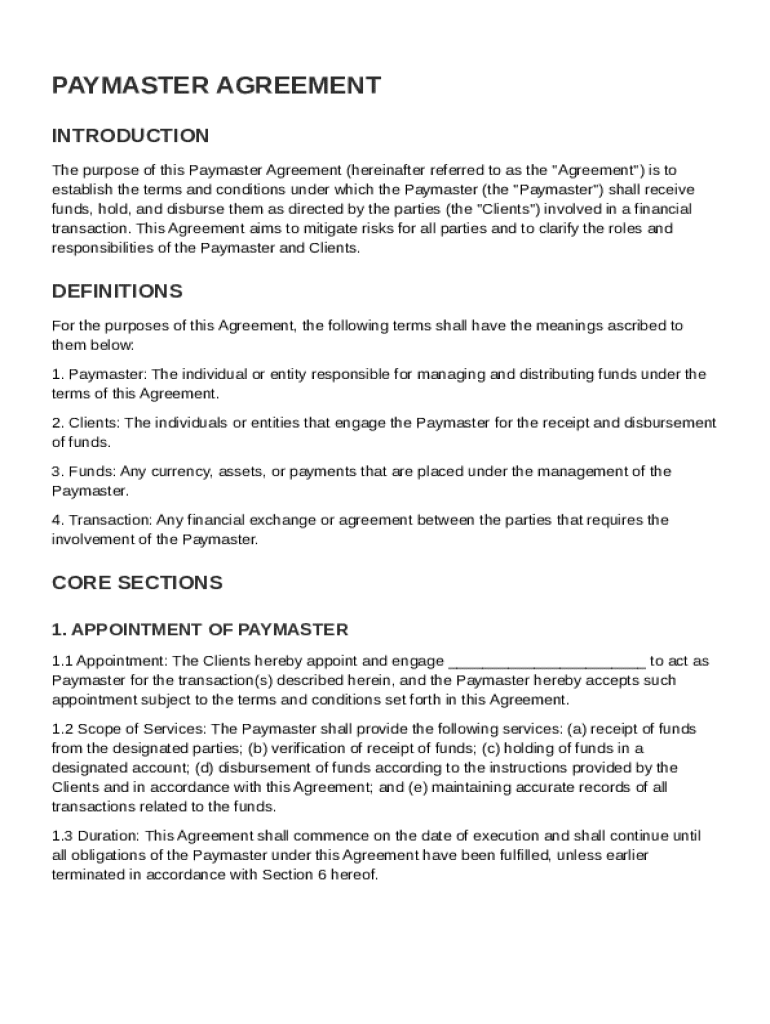
A Paymaster Agreement is a legal contract that outlines the roles and responsibilities of a Paymaster, who acts as a neutral third party to manage, hold, and disburse funds on behalf of clients involved in financial transactions. This agreement ensures all parties understand the terms under which the Paymaster operates, including fee structures and liability limitations. It serves as a safeguard against potential disputes and misunderstandings that may arise during the handling of funds. By clearly defining expectations, the agreement helps mitigate risks and provides a structured framework for handling funds compliantly and securely.
How to Use the Paymaster Agreement Template
Using the Paymaster Agreement Template effectively involves several steps to ensure it meets the specific needs of your transaction. Start by identifying all parties involved in the agreement, including the Paymaster and clients. Customize sections of the template to reflect the details of the transaction, such as the nature of the funds, disbursement conditions, and fee arrangements. Define the roles of each party clearly to avoid any ambiguity. Finally, review all contract terms for legal compliance and ensure that both parties sign the document to formalize the agreement.
Steps to Complete the Paymaster Agreement Template
- Identify Parties Involved: Specify who will act as the Paymaster and who the clients are.
- Define Transaction Details: Include specifics about the funds, transaction type, and any related financial data.
- Outline Roles and Responsibilities: Clearly define what each party is responsible for and ensure mutual understanding.
- Set Fee Structure: Document the agreed-upon compensation for the Paymaster's services.
- Establish Disbursement Conditions: Detail how and when the funds will be distributed to respective parties.
- Ensure Legal Compliance: Verify that the agreement aligns with applicable laws and regulations.
- Review and Sign: Have all parties review the agreement for accuracy and sign to make the agreement legally binding.
Key Elements of the Paymaster Agreement Template
- Parties: Identifies the Paymaster and clients involved in the transaction.
- Fund Management: Details how funds will be managed and under what conditions.
- Confidentiality: Sets conditions for how sensitive information will be protected.
- Fees and Liabilities: Outlines the payment structure for the Paymaster and any limitations on their liability.
- Termination: Provides conditions under which the agreement can be terminated.
- Communication Protocols: Establishes how parties will communicate throughout the transaction.
Legal Use of the Paymaster Agreement Template
The Paymaster Agreement Template is used to ensure that financial transactions are securely managed and compliant with the law. It includes provisions for confidentiality, fund management, and liability, helping protect all parties legally. It is crucial for the agreement to be drafted and reviewed by legal professionals to ensure it meets jurisdictional requirements and adequately addresses all potential legal implications.
State-Specific Rules for the Paymaster Agreement Template
Certain states may have specific rules and requirements governing the activities and obligations of a Paymaster. Variations can include notary requirements, specific clause mandates, and different liability limitations. It's pivotal to consult state-specific regulations or a legal advisor to ensure that the drafted agreement complies with the relevant state laws where the agreement will be implemented.
Who Typically Uses the Paymaster Agreement Template
The Paymaster Agreement Template is commonly used by businesses involved in large financial transactions, real estate deals, or international trade. It is also utilized by legal firms and financial institutions requiring neutral third-party management of funds. Individuals participating in joint ventures or mergers can benefit from such agreements to ensure financial transparency and order.


Important Terms Related to the Paymaster Agreement Template
- Disbursement: The process of paying out the funds as agreed in the contract.
- Neutral Third Party: The Paymaster acts as an impartial entity with no vested interest.
- Fiduciary Duty: The legal obligation of the Paymaster to act in the best interest of the parties involved.
- Escrow: Funds held by the Paymaster until compliance with the transaction terms is met.
- Termination Clause: Conditions under which the agreement can be ended earlier than originally planned.