







Definition and Meaning
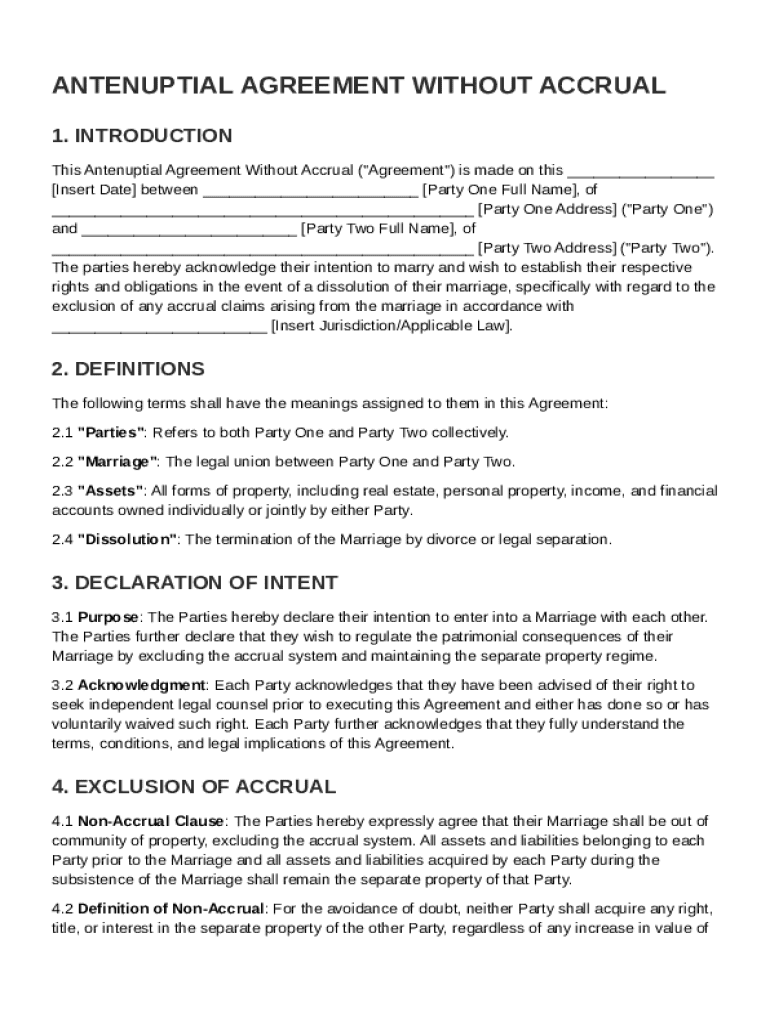
An Antenuptial Without Accrual Contract is a legally binding agreement entered into by two individuals intending to marry. This contract details the rights and obligations of each party regarding their property, explicitly excluding any accrual claims from the marriage. Essentially, it ensures that each party retains ownership of their separate assets and liabilities, both prior to and during the marriage, thus defining clear financial boundaries.
Key Components
- Exclusion of Accrual: The contract explicitly states that no shared marital estate will accrue during the marriage.
- Asset Ownership: Each party maintains ownership over personal assets and liabilities.
- Jurisdictional Governance: The contract specifies which state laws will govern its terms and enforceability.
How to Use the Antenuptial Without Accrual Contract Template
Utilizing a template provides a streamlined approach to drafting this complex legal document. Here’s how:
- Customize the Template: Adjust predefined sections to suit personal details and specific conditions.
- Add Required Information: Input full disclosure of current assets and liabilities.
- Include Amendments and Termination Processes: Clarify how changes can be made to the agreement in the future.
Benefits
- Time-Efficient: Templates save significant drafting time while ensuring a comprehensive contract.
- Legal Precision: Standard templates include all necessary legal components.
Key Elements of the Antenuptial Without Accrual Contract Template
An Antenuptial Without Accrual Contract should include several critical elements to ensure its enforceability and clarity:
Disclosure of Assets
- Detailed Inventory: Clearly list all pre-marital assets for each party.
- Valuation Details: Include approximate value for transparency.
Debt Responsibility
- Individual Liabilities: Assign responsibility for existing debts.
- Debt Accumulation Clause: Specify how debts acquired during marriage are managed.
Signature and Witness Requirements
- Parties’ Signatures: Both parties must sign the agreement.
- Witnesses: Depending on state rules, one or more witnesses may be necessary for validation.
Steps to Complete the Antenuptial Without Accrual Contract Template
Effectively completing the form involves a step-by-step approach:
- Gather Information: Collect details on all personal assets and liabilities.
- Draft the Agreement: Use the template to draft initial terms.
- Review Legal Terminology: Ensure all terms comply with state laws.
- Seek Legal Advice: Consult with an attorney to review the draft.
- Finalize and Sign: Both parties should sign in the presence of witnesses if required.
Who Typically Uses the Antenuptial Without Accrual Contract Template
This contract template is commonly used by:


Couples Planning Marriage
- High Net-Worth Individuals: Protecting significant assets from marital claims.
- Entrepreneurs: Safeguarding business interests during marriage.
Legal Practitioners
- Family Law Attorneys: Using templates for client agreements to ensure legal soundness.
Legal Use of the Antenuptial Without Accrual Contract Template
These contracts must be compliant with legal standards:
Jurisdiction Considerations
- State-Specific Laws: Adapting the template to comply with specific state requirements is crucial.
- Legal Enforceability: Ensures the contract is recognized by courts.
Amendments and Termination
- Process Clarification: Details on how changes and contract cancelations can be executed legally.
Important Terms Related to the Antenuptial Without Accrual Contract Template
Understanding critical legal terms is vital:
- Accrual System: Refers to the sharing of assets and liabilities accrued during marriage.
- Separate Property: Assets owned individually and not subject to division upon divorce.
- Full Disclosure: Legal obligation to reveal all financial assets and liabilities.
State-Specific Rules for the Antenuptial Without Accrual Contract Template
Each state may have unique rules affecting these contracts:
Notable Variations
- Witness Requirements: Some states mandate witness signatures for validity.
- Timing for Execution: Certain jurisdictions require the contract to be signed a minimum number of days before the wedding.
Understanding these nuances ensures the contract’s enforceability and legal protection for both parties involved, highlighting the importance of tailoring the document to specific legal contexts.




