




Definition & Meaning
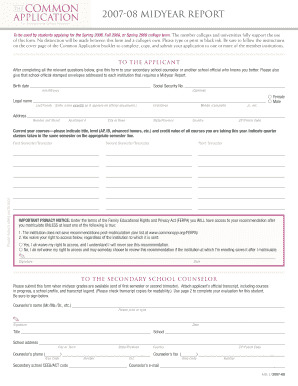
The Transcript Release Form is a crucial document used to authorize the release of a person's educational records from an institution, typically a school or university. This form ensures that the educational information is disclosed in compliance with privacy laws such as the Family Educational Rights and Privacy Act (FERPA). It serves as formal consent from the student or former student, allowing the educational institution to share their academic records with specified parties. Understanding the definition and purpose of the Transcript Release Form is essential for effectively managing academic records.
How to Use the Transcript Release Form
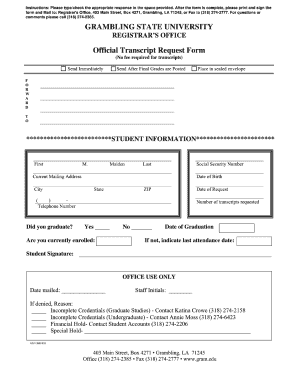
To use the Transcript Release Form, start by obtaining the form from your educational institution, either in digital or paper format. Once you have the form, fill in your personal information, including your full name, student ID, and contact information. Specify the academic records you wish to release and identify the recipient of these records. Common recipients may include potential employers, other educational institutions, or scholarship committees. Finally, sign and date the form to validate your consent and submit it per the instructions provided by your institution, either online or through the mail.
Steps to Complete the Transcript Release Form
- Obtain the Form: Acquire the form from your institution's registrar's office or website.
- Fill Out Personal Information: Include your name, student ID, and contact details.
- Specify Records to Release: Clearly state which academic records will be released.
- Identify Recipient: Name the individual or organization receiving the records.
- Provide Signature: Sign and date the form to grant permission.
- Submit the Form: Follow the submission instructions which might involve mailing, emailing, or handing it in person.
These steps ensure the form is accurately completed for processing.
Why You Should Use the Transcript Release Form
Using the Transcript Release Form is essential for controlling access to your educational records and complying with privacy regulations. By filling out this form, you safeguard your personal information while allowing specific parties to access needed academic records for evaluation or verification purposes. This form is instrumental for applying to new educational programs, securing employment, or qualifying for scholarships. It maintains your right to privacy while enabling pertinent entities to assess your educational qualifications.
Who Typically Uses the Transcript Release Form
The Transcript Release Form is commonly used by:
- Students and Alumni: For purposes of transferring schools, applying for jobs, or competing for scholarships.
- Educational Institutions: To manage and process records requests.
- Employers and Scholarship Committees: To verify academic credentials and qualifications.
Different stakeholders rely on this form to ensure the legal and efficient handling of educational information.


Key Elements of the Transcript Release Form
The Transcript Release Form typically includes:
- Personal Information Section: For the applicant’s details, such as name and student ID.
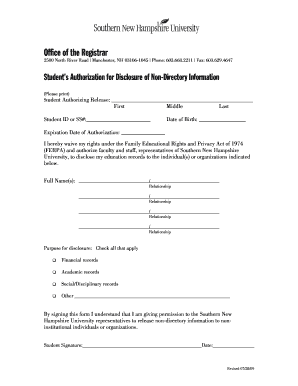
- Consent Declaration: Statement authorizing the release of transcripts.
- Recipient Information: Details about who will receive the transcripts.
- Signature Field: To verify consent and authenticity.
- Instructions for Submission: Directions on how to submit the completed form.
These components ensure the form covers all necessary information for effective processing.
Legal Use of the Transcript Release Form
The legal use of the Transcript Release Form is governed by privacy laws, primarily FERPA. This act mandates that students' educational records can only be released with their explicit consent through this form. Utilizing the form legally protects both the institution handling the records and the student by ensuring compliance with privacy regulations. Filling out and submitting this form correctly is vital to avoid potential legal issues and to ensure that educational records are shared appropriately and lawfully.
State-Specific Rules for the Transcript Release Form
While FERPA establishes a federal standard, state-specific rules may further dictate how the Transcript Release Form is handled. Some states might have additional requirements or protections concerning the release and privacy of educational records. Therefore, it is crucial to confirm any specific state regulations that might impact the use of the Transcript Release Form, particularly if the request involves cross-state educational institutions or organizations.
Understanding these nuances ensures compliance and avoids any administrative delays in processing the request.