01. Edit your form online
Type text, add images, blackout confidential details, add comments, highlights and more.

Type text, add images, blackout confidential details, add comments, highlights and more.

Draw your signature, type it, upload its image, or use your mobile device as a signature pad.

Send it via email, link, or fax. You can also download it, export it or print it out.
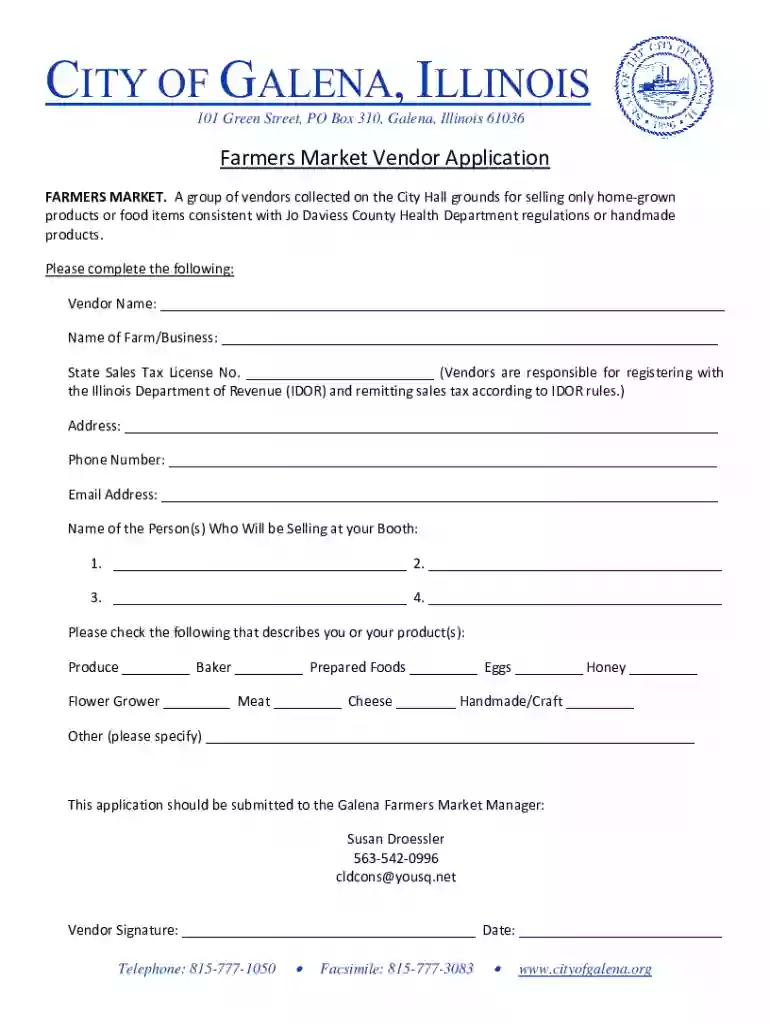
The Farmers Market Vendor Application is a pivotal document designed for individuals and businesses wishing to participate in local farmers markets. It serves as a formal application for vendors to secure the rights to sell their home-grown or handmade products at these markets. This form typically includes details such as vendor name, contact information, a description of the products being sold, and any necessary licenses or permits. By requiring vendors to complete this application, local authorities ensure compliance with regulations, maintain quality standards, and foster a safe and organized market environment.
This application ensures that each vendor meets local guidelines and contributes positively to the market's diversity and quality.
Securing a Farmers Market Vendor Application is generally straightforward. The application is often available through the city's official website or the market's management office. Interested parties can follow these steps:
Understanding the submission timeline is crucial, as applications are often accepted only during specific periods leading up to market season.
Completing the Farmers Market Vendor Application requires careful attention to detail to ensure all necessary fields are accurately filled. Here is a step-by-step guide:
Utilizing the Farmers Market Vendor Application is vital for both vendors and market organizers. It establishes a formal framework for participation, ensuring that only qualified and compliant vendors partake in the market. By standardizing vendor applications, markets maintain consistent quality and regulatory compliance.
For organizers, it provides a streamlined system to vet and manage vendor participation efficiently.
The primary users of the Farmers Market Vendor Application include small-scale farmers, artisans, and local business owners interested in selling their products at farmers markets. These vendors usually produce:


While farmers and artisans form the bulk of applicants, the form also attracts small business entrepreneurs looking to expand their market reach and engage with local communities.
Vendors must provide several key documents alongside their application to ensure compliance with local regulations:
These documents help protect both the vendor and the market from possible legal and health-related issues.
The legal compliance aspect of the Farmers Market Vendor Application is crucial for ensuring that all market activities adhere to local and state guidelines. This includes maintaining public health and safety standards and ensuring lawful business practices among vendors.
By following these legal guidelines, vendors contribute to a reliable and trustworthy market atmosphere for consumers and regulatory bodies alike.
Understanding and meeting filing deadlines is critical for vendors wishing to participate in the market season. These deadlines ensure that all applications are processed in a timely manner, allowing markets to plan effectively.
Vendors should mark these dates clearly in their calendars to avoid missing the opportunity to participate in the market.
We've got more versions of the Farmers Market Vendor Application form. Select the right Farmers Market Vendor Application version from the list and start editing it straight away!
| Versions | Form popularity | Fillable & printable |
|---|---|---|
| 2021 | 4.4 Satisfied (36 Votes) |
At DocHub, your data security is our priority. We follow HIPAA, SOC2, GDPR, and other standards, so you can work on your documents with confidence.