
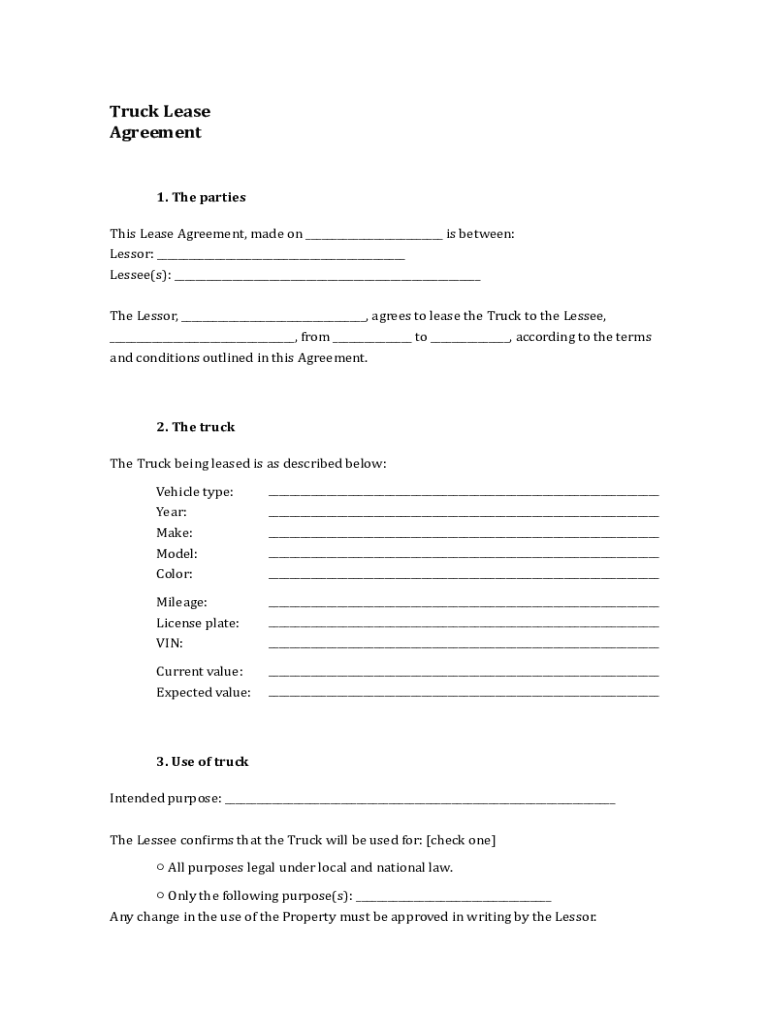







Definition & Meaning
A Truck Lease Agreement is a comprehensive legal document between a lessor (the truck owner) and a lessee (the person or entity leasing the truck). It outlines the terms and conditions under which the vehicle is leased. This agreement covers various aspects, including payment schedules, maintenance responsibilities, and the duration of the lease. By signing the lease, both parties agree to adhere to the outlined terms, which helps prevent legal disputes and ensures mutual understanding and benefit.
Key Elements of the Truck Lease Agreement
The fundamental components of a Truck Lease Agreement include:
- Contact Information: Full names, addresses, and contact details of both the lessor and the lessee.
- Vehicle Description: Comprehensive details about the truck, such as make, model, year, VIN, and condition at the lease's inception.
- Lease Duration: Specifies the start and end date of the lease term.
- Payment Terms: Detailed breakdown of payment amounts, frequency (monthly, quarterly), and acceptable payment methods.
- Use of Vehicle: Guidelines on how the truck is to be used, including any restrictions on geographical areas or types of goods to be transported.
- Maintenance and Repairs: Defines who is responsible for routine maintenance and unexpected repairs, and the process for handling these issues.
- Insurance Requirements: Minimum insurance coverage requirements necessary for the duration of the lease.
- Termination Clauses: Conditions under which the lease can be terminated early, both by the lessor and lessee, and any associated penalties.
- Security Deposit: Amount required in advance as a security measure and conditions under which it might be refunded or forfeited.
How to Use the Truck Lease Agreement
Using a Truck Lease Agreement involves several key steps:
- Review the Terms: Both parties should thoroughly review all terms and conditions set out in the agreement to ensure clarity and mutual agreement.
- Negotiate Clauses: Parties may negotiate specific clauses to cater to particular requirements or circumstances before signing.
- Sign the Agreement: Once both parties agree on terms, they sign the document. Ensure all necessary details, such as witness signatures, are included where required.
- Secure Copies: Each party should maintain a signed copy of the agreement for their records, safeguarding against future disputes.
- Adhere to Terms: Both the lessor and lessee must adhere to the agreed terms throughout the lease duration, fulfilling their respective obligations.
Legal Use of the Truck Lease Agreement
This agreement serves several legal purposes:
- Binding Contract: It is a legally binding document that holds both parties accountable for their commitments.
- Protection Against Disputes: Clearly defined terms can mitigate misunderstandings and disputes over vehicle use or lease conditions.
- Proof of Lease: In the event of legal disputes, it serves as concrete proof of the lease terms accepted by both parties.
Who Typically Uses the Truck Lease Agreement
Truck Lease Agreements are commonly used by:
- Trucking Companies: Often engage in lease agreements to expand their fleets without immediate large capital investment.
- Independent Truck Drivers: Use these agreements to acquire trucks for personal business operations.
- Logistics Companies: Engage in leases for operational flexibility to handle varying cargo amounts throughout the year.
- Small Business Owners: May lease trucks temporarily to meet seasonal demand or special project requirements without purchasing a vehicle.


Important Terms Related to Truck Lease Agreement
- Lessor: The owner of the truck who leases it to the lessee.
- Lessee: The individual or company that leases the truck from the lessor.
- Residual Value: The estimated value of the truck at the end of the lease period.
- Mileage Limits: A set limit on how many miles the truck can be driven annually; exceeding this may result in additional fees.
- Depreciation: The decrease in the truck’s value over the lease term, which is taken into account when setting lease terms.
Steps to Complete the Truck Lease Agreement
Completing this agreement involves multiple steps:
- Gather Required Information: Collate details about both parties, the truck, and lease specifics.
- Draft the Agreement: Include essential components such as payment terms, maintenance responsibilities, and insurance requirements.
- Review and Revise: Both parties review the draft, discuss concerns, and amend the document as necessary.
- Sign the Agreement: Finalize by signing along with any witnesses required.
- Archive: Safely store the signed agreement for reference throughout the lease period.
Why Use a Truck Lease Agreement
- Operational Flexibility: Facilitates quick scalability of transport operations without significant upfront investment.
- Financial Management: Helps manage budget constraints by spreading out the cost of using the truck over time.
- Risk Management: Transfers certain risks such as maintenance to the lessor, depending on negotiated terms.
- Legal Assurance: Protects both parties by clearly setting expectations and providing legal recourse if necessary.
State-Specific Rules for the Truck Lease Agreement
Truck Lease Agreements may be subject to state-specific regulations that affect:
- Taxation: Different tax implications depending on state laws regarding leased equipment or vehicles.
- Insurance: Minimum insurance coverage may vary based on state requirements.
- Legal Enforceability: Certain clauses may need adjustments to comply with state-specific contract laws.
Ensure compliance by consulting with a legal professional familiar with the jurisdiction in which the truck will operate.




