






Definition and Meaning of the PFDI-20
The Pelvic Floor Distress Inventory-20 (PFDI-20) is a comprehensive questionnaire used to evaluate symptoms related to pelvic floor disorders, which can include bowel, bladder, or pelvic symptoms. This tool is specifically designed to quantify the severity and impact of these symptoms on a patient’s daily life, thereby aiding healthcare professionals in making informed clinical decisions.
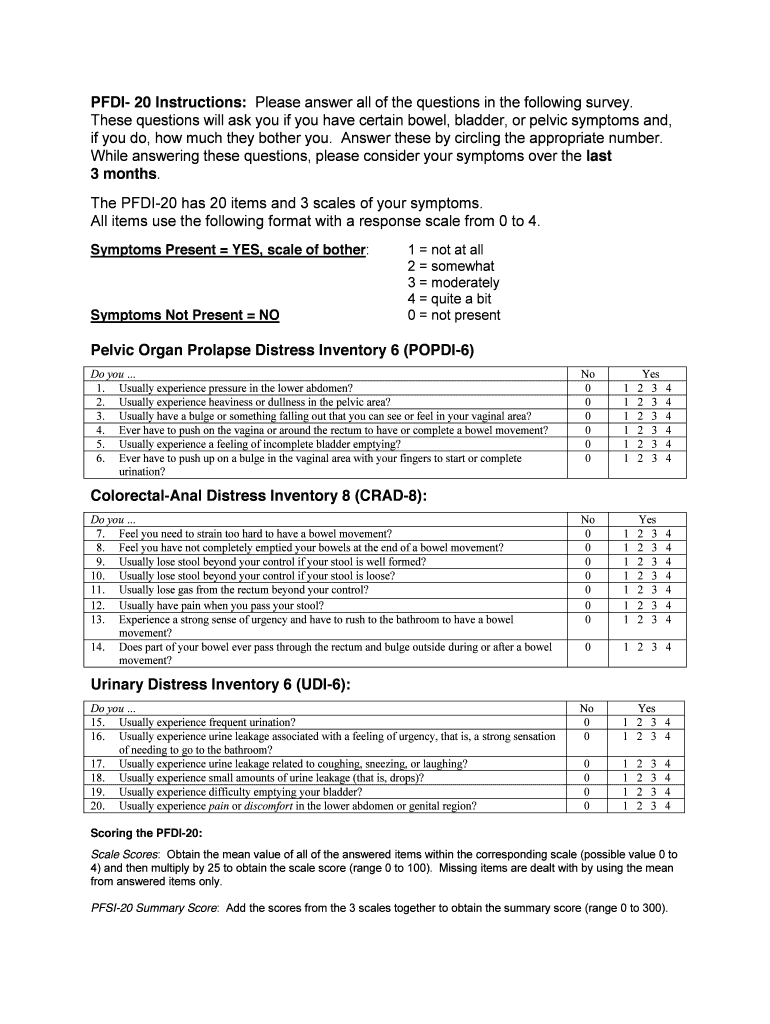
The PFDI-20 consists of 20 items that are divided into three distinct scales, each targeting a different aspect of pelvic floor dysfunction:
- Pelvic Organ Prolapse Distress Inventory (POPDI-6): Focuses on the symptoms related to pelvic organ prolapse.
- Colorectal-Anal Distress Inventory (CRADI-8): Addresses symptoms associated with colorectal and anal disorders.
- Urinary Distress Inventory (UDI-6): Concerns urinary symptoms.
By incorporating these scales, the PFDI-20 offers a nuanced understanding of how pelvic floor issues affect various domains of health.
How to Use the PFDI-20
The use of the PFDI-20 involves several steps to ensure an accurate assessment of symptoms. Patients are required to respond to each item based on the frequency and impact of their symptoms.
- Frequency Scale: Patients rate symptoms based on how often they occur.
- Impact Scale: Each symptom is also evaluated on how bothersome it is, providing insight into daily life disruptions.
The results from these scales can guide treatment plans and track symptom progression or improvement over time. It is essential for healthcare providers to explain the form clearly to patients, ensuring accurate and honest responses.
Steps to Complete the PFDI-20
Completing the PFDI-20 is straightforward, but accuracy is crucial. The following steps outline the process:
- Read Each Question Carefully: Understand what each question asks before responding.
- Rate Frequency: For each symptom, choose how often it occurs, ranging from 'never' to 'always'.
- Assess Impact: Indicate how much each symptom bothers you using a scale from 'not at all' to 'quite a bit'.
- Review Responses: Ensure all questions are answered to the best of your ability for a complete assessment.
Key Elements of the PFDI-20
Understanding the key elements of the PFDI-20 helps maximize its utility. Important components include:
- Comprehensive Symptoms Coverage: Addresses a wide range of pelvic floor symptoms.
- Three Scales: Provides targeted insights into specific areas of pelvic health.
- Reliable Scoring System: Offers a quantitative method for tracking symptom progression.
Examples of Using the PFDI-20
The PFDI-20 is utilized in various clinical settings, offering numerous applications:
- Pre- and Post-Surgery Evaluation: Assesses improvements in symptoms after surgical interventions.
- Chronic Condition Management: Aids in the management of ongoing conditions by identifying changes in symptom severity.
- Research Studies: Commonly used in research to gather data on the prevalence and impact of pelvic floor disorders.
Digital vs. Paper Version
The PFDI-20 can be administered in either digital or paper format, each offering distinct advantages:
- Digital Version: Enables quick data collection and automatic scoring, reducing errors and time spent on processing.
- Paper Version: May be more accessible in settings without digital infrastructure but requires manual scoring.
Eligibility Criteria and Who Typically Uses the PFDI-20
The PFDI-20 is generally intended for women experiencing symptoms of pelvic floor disorders. Common users include:
- Healthcare Providers: Physicians and specialists who incorporate the PFDI-20 into routine assessments for pelvic health issues.
- Researchers: Those conducting clinical studies focused on pelvic floor dysfunctions.
Eligibility typically includes adult patients who have identified symptoms related to the bladder, bowel, or pelvic region.


Important Terms Related to the PFDI-20
Familiarity with terms related to the PFDI-20 can improve the assessment process:
- Prolapse: The descent or drooping of pelvic organs, often causing discomfort or dysfunction.
- Distress Inventory: A collection of questions designed to quantify the discomfort or impact of certain symptoms.
- Pelvic Floor Dysfunction: A condition where the pelvic floor muscles do not function correctly, leading to symptoms such as incontinence or pain.
In summary, the PFDI-20 is a valuable tool in the assessment and management of pelvic floor disorders, providing targeted insights and supporting improved patient outcomes.