






Definition and Meaning
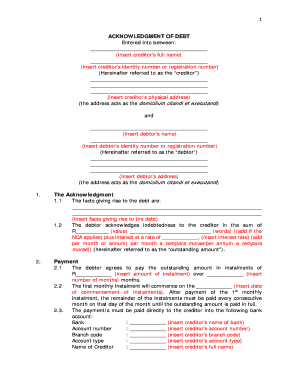
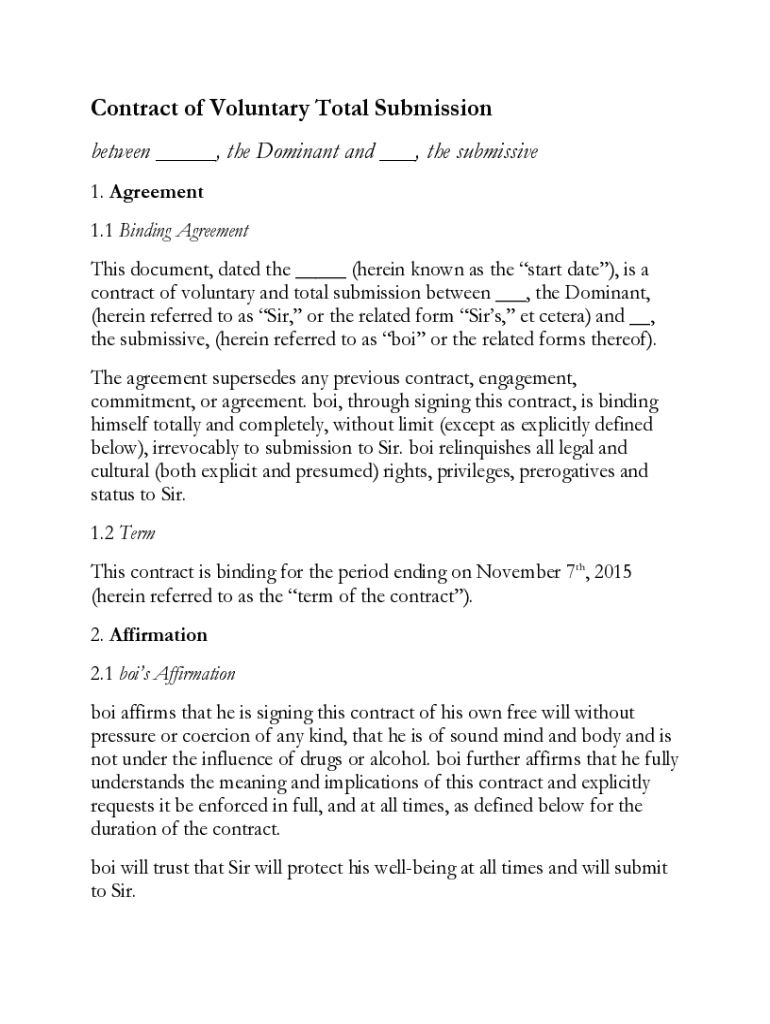
A BDSM contract is a formal agreement between consenting adults entering into a Dominant and submissive relationship. This document outlines the expectations, responsibilities, and boundaries within the dynamic. Typically, the Dominant party assumes responsibility for decision-making and direction, while the submissive party agrees to surrender specific levels of control in various aspects of their relationship, as defined in the contract. It's essential to recognize that both parties must mutually agree to the terms laid out in the document, which prioritizes safety, consent, and communication.
Key Components of a BDSM Contract
- Roles and Responsibilities: Clearly define the roles of each participant, i.e., Dominant and submissive, along with their respective responsibilities.
- Boundaries and Limits: Outline any hard or soft limits to ensure each party's comfort and safety.
- Duration and Review Periods: Establish how long the contract is valid and set intervals for reviewing and revising the terms.
- Safe Words or Signals: Set specific safe words or non-verbal cues to pause or stop activities if needed.
- Consent and Autonomy: Reaffirm that all activities are consensual and describe conditions under which autonomy can be revoked or re-exercised.
How to Use the BDSM Contract
The BDSM contract serves as a foundation for a structured relationship, promoting transparency and consent. Both parties should sit down together to draft the document, engaging in open communication about their desires, limits, and expectations. This collaborative process fosters trust and mutual understanding.
- Initial Discussions: Begin with candid conversations to understand shared goals and boundaries.
- Drafting the Contract: Outline terms that align with both parties' wishes, ensuring that each section of the contract has been discussed thoroughly.
- Review and Consultation: Consider seeking advice from communities or professionals experienced in BDSM practices to stress-test the contract’s robustness.
- Finalization and Signing: Once both parties agree on the contents, sign the document. It’s advisable to periodically revisit the contract to adapt to evolving needs and circumstances.
Key Elements of the BDSM Contract
The BDSM contract encompasses several crucial elements ensuring clarity and shared understanding between parties:
- Safety Measures: Detail protocols for physical and emotional safety, safe words, and check-in routines.
- Privacy and Confidentiality: Discuss how both parties will protect personal information and any stipulations for disclosing relationship details to third parties.
- Commitments and Rituals: Specify any rituals or commitments to solidify the dynamic, such as regular meetings or specific ceremonies.
- Consequence Management: Establish agreed-upon protocols for addressing any breaches of the contract terms, including potential punishments or corrective measures.
- Ownership and Property: If relevant, detail any symbolic or literal ownership aspects, while respecting all legal boundaries.
Steps to Complete the BDSM Contract
Completing a BDSM contract involves several deliberate steps to ensure the document is comprehensive and respects both parties' boundaries and comfort levels:
- Preparation: Collect all necessary information, including personal boundaries and limits.
- Collaboration: Work together to draft each aspect of the agreement, focusing on mutual respect and understanding.
- Verification: Cross-check each part of the document to confirm alignment with both parties’ intentions and limitations.
- Documentation: Once settled, both individuals should review and sign the contract, potentially with witnesses for extra validity.
- Amendments: Plan for regular intervals to revisit and amend the contract as necessary, adapting to any changes in circumstances or desires.
Legal Use of the BDSM Contract
While BDSM contracts are not legally binding in the way traditional contracts between businesses are, they serve an essential role in documenting informed consent and communicating intentions between parties in a BDSM relationship. The contract emphasizes the importance of consent, potentially providing an evidentiary foundation if questions of consent arise in more serious legal matters.
Legal Considerations
- Consent Validation: Always ensure the contract reflects the consent of both parties at all times.
- Boundaries within Law: Ensure that all activities mentioned in the contract are legal in the jurisdiction where the parties reside.
- Communication Records: Keep a record of discussions around contract creation to offer fuller context of consent.
Important Terms Related to BDSM Contract
Understanding particular terms is vital for drafting an effective BDSM contract. Here are some essential ones:
- Dominant ('Dom') and Submissive ('sub'): Key roles in BDSM dynamics, with different but complimentary responsibilities.
- Hard Limits: Non-negotiable boundaries that must never be surpassed for safety and comfort.
- Soft Limits: Flexible boundaries that might be explored under the right conditions.
- Protocol: Specific rules dictating conduct within the relationship.
- Safe Word: A pre-agreed word that signals to stop or pause the activity immediately when needed.
Who Typically Uses the BDSM Contract
BDSM contracts are generally used by individuals engaging in Dominant/submissive or other BDSM-oriented relationships that seek to formalize their interactions. The contracts tend to be utilized more frequently by those wishing to explore more structured or intense forms of BDSM play, helping to foster a safe and consensual environment.


Common Users
- Experienced Practitioners: Individuals familiar with the BDSM lifestyle looking to stipulate specific arrangements.
- New Enthusiasts: Beginners exploring boundaries and safety for the first time.
- Long-Distance Couples: Partners who are apart geographically and need clear rules for remote interactions.

State-Specific Rules for BDSM Contracts
Although BDSM contracts are not necessarily legally binding, participants should be aware of state laws that might impact their agreements. Different states have varying stances on issues related to consent, assault laws, and sexual conduct that might intersect with activities outlined in a BDSM contract.
Considerations by State
- Variances in Consent Laws: Know whether state law recognizes consent given in BDSM contexts as legitimate.
- Public Vs. Private Distinctions: Some states have different regulations for BDSM activities depending on whether they occur in private or public spaces.
- Potential Legal Consequences: Be aware of state positions on pursuing legal action in cases of injury resulting from BDSM practices.