A Guide to making an application for permission to appeal 2026

Get Form
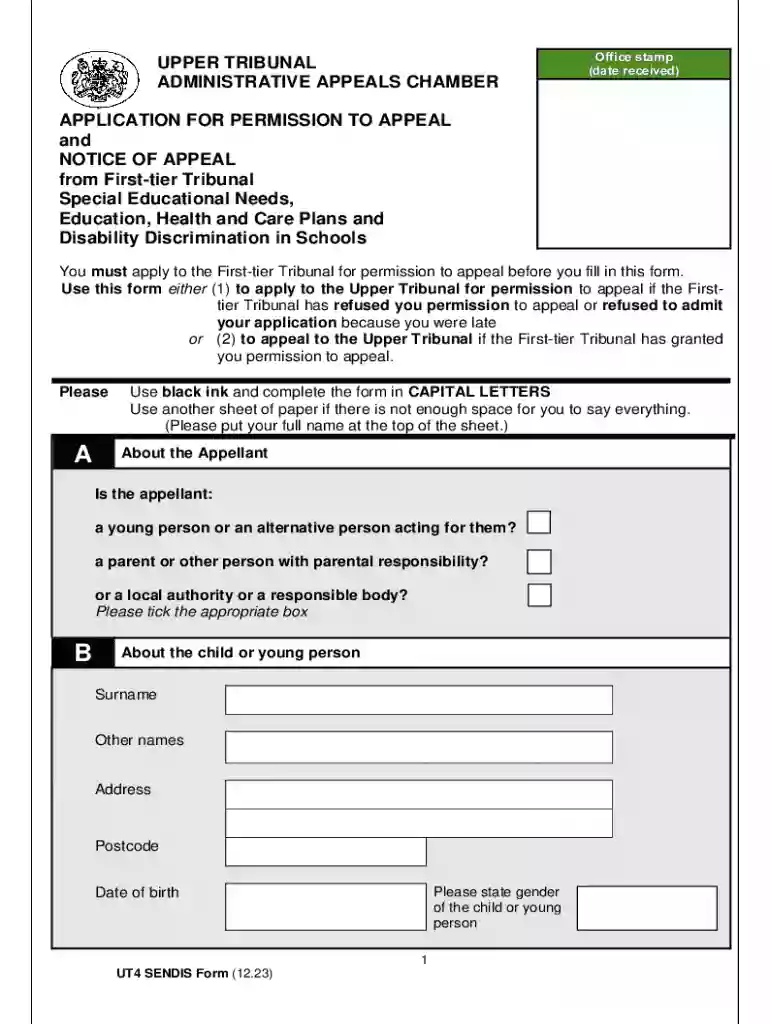
ut4 form Preview on Page 1

Here's how it works

01. Edit your ut4 form online
Type text, add images, blackout confidential details, add comments, highlights and more.

02. Sign it in a few clicks
Draw your signature, type it, upload its image, or use your mobile device as a signature pad.

03. Share your form with others
Send it via email, link, or fax. You can also download it, export it or print it out.

Definition and Purpose of the Guide to Making an Application for Permission to Appeal

The "Guide to Making an Application for Permission to Appeal" serves as an essential resource for individuals seeking to challenge a decision made by the First-tier Tribunal. This guide is particularly focused on appeals related to Special Educational Needs, Education, Health and Care Plans, and Disability Discrimination in Schools. It provides a structured framework for appellants to submit comprehensive applications, detailing the necessary information and procedural requirements. The guide ensures appellants understand the expectations and standards required for a successful application while outlining the legal context in which these appeals are made.

How to Use the Guide Effectively

To utilize the guide efficiently, appellants should follow these steps:

  1. Familiarize with the Structure: Begin by understanding the overall layout of the guide, ensuring you can navigate through different sections effortlessly.

  2. Collect Required Information: Gather all relevant details about the child or young person involved, as well as information about parents, guardians, and any representatives.

  3. Identify Grounds for Appeal: Use the guide to articulate clear and concise grounds for appealing the tribunal's decision, supported by factual evidence.

  4. Complete Relevant Sections: Fill out each section of the form as advised by the guide, paying attention to detail to avoid missing critical information.

  5. Submit with Compliance: Make sure all procedural requirements are met before submitting the application to ensure it is accepted for review.

Steps to Complete the Application Form

Adhering to the following steps will aid in thoroughly and accurately completing the application:

  1. Provide Personal and Case Details:

    • Include full names, contact information, and roles (e.g., appellant, guardian).
    • Specify the decision date and the relevant tribunal reference number.
  2. State Grounds for Appeal:

    • Clearly articulate the legal or factual grounds that justify the appeal.
    • Support claims with concrete evidence and references to specific tribunal errors.
  3. Insert Additional Information:

    • Address reasons for any delays in filing the appeal.
    • Highlight any special considerations related to the case.
  4. Review and Sign:

    • Double-check all entries for accuracy and completeness.
    • Sign the form in the designated area to affirm its veracity.

Key Elements of the Application Form

The form consists of several critical sections, each requiring specific information to be filled out accurately:

  • Contact Information: Precise details about all involved parties.
  • Case Reference Number: Essential for tracking and identification.
  • Detailed Grounds for Appeal: A comprehensive section requiring thoughtful input.
  • Reasons for Delay: Necessary if filing beyond standard timelines.

Each element plays a crucial role in constructing a solid appeal application, designed to maximize the likelihood of success upon review.

Legal Use and Compliance

The legal framework surrounding this application is stringent, demanding careful adherence to guidelines outlined in the form:

  • Substantive and Procedural Accuracy: Each section must be completed in compliance with legal standards to avoid dismissal.
  • Deadline Adherence: Respect filing deadlines to maintain the validity of your application.
  • Supporting Documentation: Attach all requested documents to substantiate your claims within the application.

Eligibility Criteria for Applicants

Not everyone can appeal a First-tier Tribunal decision; specific eligibility criteria must be met:

  • Direct Involvement: Typically, individuals directly affected by the tribunal's decision can apply.
  • Timeliness: Applicants must submit within the designated timeframe unless justified exceptions apply.
  • Grounds for Appeal: Must be based on legal grounds, with a clear rationale supporting the appeal.

Understanding these criteria is essential for determining your standing to file an appeal.

decoration image ratings of Dochub

Required Documents for Application

A range of documents are necessary to support the application. These might include:

  • Copy of Tribunal Decision: To provide context and reference for the appeal.
  • Evidence Supporting Grounds for Appeal: Any documentation that substantiates the basis of your appeal.
  • Proof of Identity: Valid identification documents for appellent verification.

Ensuring the completeness of your document set is fundamental to avoiding unnecessary delays in processing.

Form Submission Methods

Several options are available for submitting the completed form, and choosing the most suitable one depends on your individual preferences and resources:

  • Online Submission: Offers speed and convenience for tech-savvy applicants, with features like real-time updates on submission status.
  • Mail Submission: Recommended for those preferring traditional methods, although it demands efficient postal services.
  • In-Person Visits: Certain jurisdictions may offer the option to deliver forms directly, providing a hands-on approach to submission.

Consider the merits and challenges of each method to select the best fit for your situation.

be ready to get more

Complete this form in 5 minutes or less

Get form

Got questions?

We have answers to the most popular questions from our customers. If you can't find an answer to your question, please contact us.
Contact us
When appealing against a guilty verdict a defendant might say: there was something unfair about the way their trial took place. a mistake was made in their trial. the verdict could not be sustained on the evidence.
An error of law is the strongest type of ground for appeal because the appellate court reviewing the case does not have to give any weight to what the trial court judge did. The appellate court will look at the law that was supposed to be applied and decide whether or not the trial court judge made a mistake.
The first couple of sentences should clearly state the purpose of the letter. I am writing to appeal my current dismissal status I am writing to request a review of a recent decision. Include factual detail but avoid dramatizing the situation.
What to include in an appeal letter Your professional contact information. A summary of the situation youre appealing. An explanation of why you feel the decision was incorrect. A request for the preferred solution youd like to see enacted. Gratitude for considering your appeal. Supporting documents attached, if relevant.
After a Decision is Issued Step 1: File the Notice of Appeal. Step 2: Pay the filing fee. Step 3: Determine if/when additional information must be provided to the appeals court as part of opening your case. Step 4: Order the trial transcripts. Step 5: Confirm that the record has been transferred to the appellate court.

Security and compliance

At DocHub, your data security is our priority. We follow HIPAA, SOC2, GDPR, and other standards, so you can work on your documents with confidence.

Learn more
ccpa2
pci-dss
gdpr-compliance
hipaa
soc-compliance

People also ask

How to appeal your case Figure out if you can appeal. Make sure youre allowed to appeal and that youve met the deadlines. File the notice of appeal. Designate the record and other filings. Prepare and file a brief. Oral argument. Get the appellate court decision. After the appellate courts decision.
I am writing to appeal my current disciplinary status, and to apologize for my involvement in the floor crawl which led to my being placed on notice. I realize that what seemed harmless fun to me was actually a danger to my health and the health of others. I sincerely regret my actions that night.

Related links