






Definition and Meaning
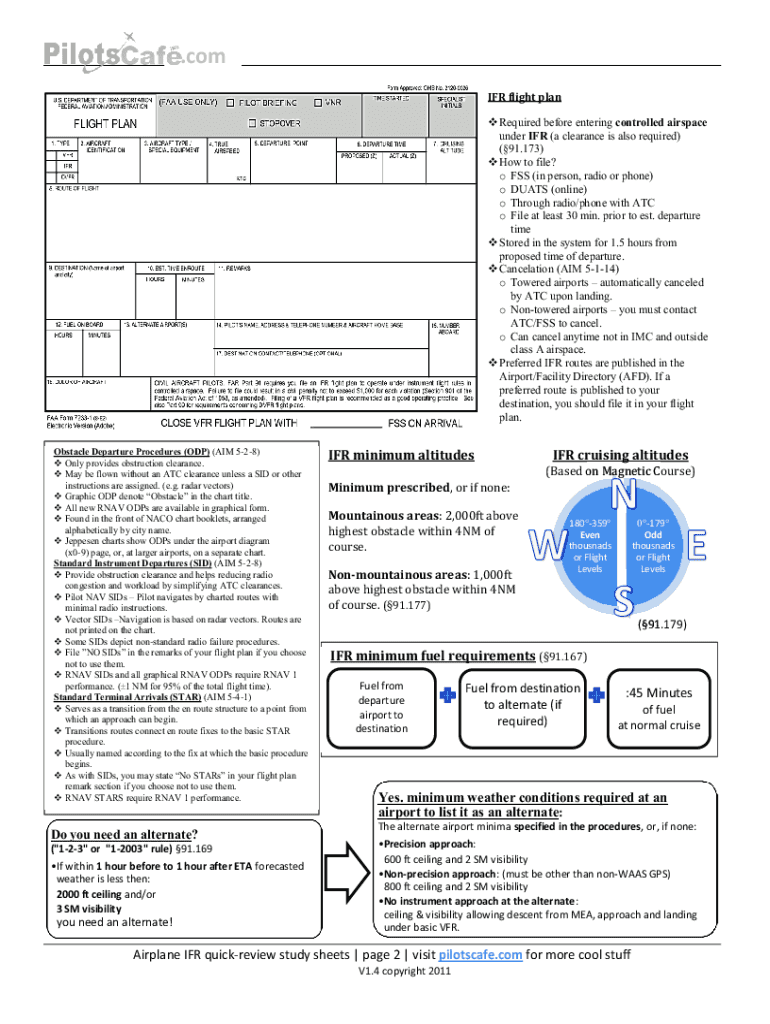
The "airplane IFR quick-review sheets" are comprehensive guides designed to streamline the understanding and execution of Instrument Flight Rules (IFR) for pilots. These sheets serve as a critical resource, consolidating essential information pilots need to operate safely under IFR conditions. They typically include key data points and procedural checklists crucial for pre-flight planning, navigation, communication, and compliance with regulatory requirements.
Importance of Quick-Review Sheets
- Consolidation of Information: They provide an organized summary of IFR procedures, reducing the need for extensive manual searches through multiple documents.
- Enhances Safety: By having crucial information at hand, pilots can quickly reference necessary protocols, reducing the risk of errors.
- Efficiency in Training: These sheets are invaluable for students and instructors during training sessions, making complex procedures easier to understand and memorize.
How to Use the Airplane IFR Quick-Review Sheets
To effectively use the airplane IFR quick-review sheets, pilots should integrate them into their pre-flight and in-flight procedures.
Pre-Flight Planning
- Checklist Review: Use the sheets to go through pre-flight checklists, ensuring all necessary equipment and documents are on board.
- Weather Considerations: Check summarized weather guidelines to determine if conditions are IFR compliant.
- Navigation Prep: Review navigation system settings and confirm waypoints.
In-Flight Reference
- Communication Protocols: Quick access to radio frequency information and communication standards ensures clear and compliant transmissions.
- Reporting Requirements: Utilize the sheets to remember mandatory reports to Air Traffic Control.
- Altitude and Fuel Management: Verify minimum altitude and fuel requirements to comply with safety regulations.
Steps to Complete the Airplane IFR Quick-Review Sheets
Completing the quick-review sheets involves ensuring all sections are up to date with the latest regulatory requirements and personal aircraft data.
Updating Information
- Verify Current Regulations: Cross-check the sheet’s content with the latest FAA regulations to ensure compliance.
- Include Aircraft-Specific Data: Tailor sections like performance metrics and instrumentation checks to the specific aircraft being flown.
- Review for Completeness: Regularly revise the information to incorporate updates from recent flights or training experiences.
Practical Use Cases
- Training Flights: The sheets should be completed before and reviewed during each training flight to reinforce procedural knowledge.
- Certification Exams: Utilize them as a study aid when preparing for IFR certification or ratings tests.
Key Elements of the Airplane IFR Quick-Review Sheets
The quick-review sheets are typically divided into several key sections that detail crucial aspects of IFR flying.
Core Sections
- Navigation Systems: Includes information on VOR, NDB, GPS operations, and usage instructions.
- Risk Management Guidelines: Outlines techniques to assess and manage flight risks.
- Weather Briefing Summary: Highlights critical weather conditions that could impact IFR flight.
Additional Features
- Emergency Procedures: Quick reference to actions required during in-flight emergencies.
- Fuel Calculation Log: Ensures accurate tracking of fuel consumption and reserves.
Legal Use of the Airplane IFR Quick-Review Sheets
The legal use of IFR quick-review sheets is governed by FAA regulations, ensuring that they enhance rather than replace mandatory pilot knowledge and documentation.
Compliance and Regulation
- FAA Standards: Sheets must align with current FAA standards and guidelines.
- Supplementary Tool: They should be used as a supplementary guide, not as a substitute for official training and certification requirements.
Documentation
- Record Maintenance: Ensure that any entries or notes made on the sheets are kept as part of the flight records if they are used for training or certification purposes.
- Authorization: Avoid using unauthorized or outdated quick-review sheets during official operations.
Who Typically Uses the Airplane IFR Quick-Review Sheets
These quick-review sheets are utilized by a range of aviation professionals and enthusiasts.


Primary Users
- Certified Pilots: To reinforce knowledge and ensure procedural compliance during flights.
- Flight Instructors: As a teaching aid during IFR training sessions.
- Student Pilots: For study and preparation for IFR ratings and exams.
Supporting Users
- Airline Operators: As part of their operational manuals for crew training.
- Flight Schools: Integrated into the curriculum for IFR certification courses.
Important Terms Related to Airplane IFR Quick-Review Sheets
Understanding key terminologies is crucial for effective utilization of quick-review sheets.
Notable Terms
- IFR (Instrument Flight Rules): Regulations and procedures for flying aircraft without visual reference to the ground, primarily using instruments.
- VOR (VHF Omnidirectional Range): A type of short-range radio navigation system for aircraft.
- NDB (Non-Directional Beacon): A radio transmitter at a known location used as an aviation or marine navigational aid.
Technical Usage
- ESIGN Act Compliance: Ensures any electronically signed documents comply with legal standards.
- OAuth 2.0 Protocols: Secure authentication method used for accessing online aviation tools or platforms.
State-Specific Rules for the Airplane IFR Quick-Review Sheets
While IFR operations are federally regulated, specific states may have additional requirements or recommendations.
Examples of State Guidance
- Weather Procedures in Mountain States: Additional emphasis on terrain clearance and mountain wave avoidance.
- Eastern Seaboard Traffic Management: Consideration for increased air traffic and specific communication protocols.
Compliance
- Regular Updates: Stay informed of any state-specific advisories issued by local aviation authorities.
- Local Navigational Aids: Familiarize with any state-specific navigational aids or resources mentioned in the quick-review sheets.
By understanding and leveraging these detailed sections of the airplane IFR quick-review sheets, pilots and aviation professionals can enhance their operational efficiency, safety, and compliance under Instrument Flight Rules.