






Definition & Meaning
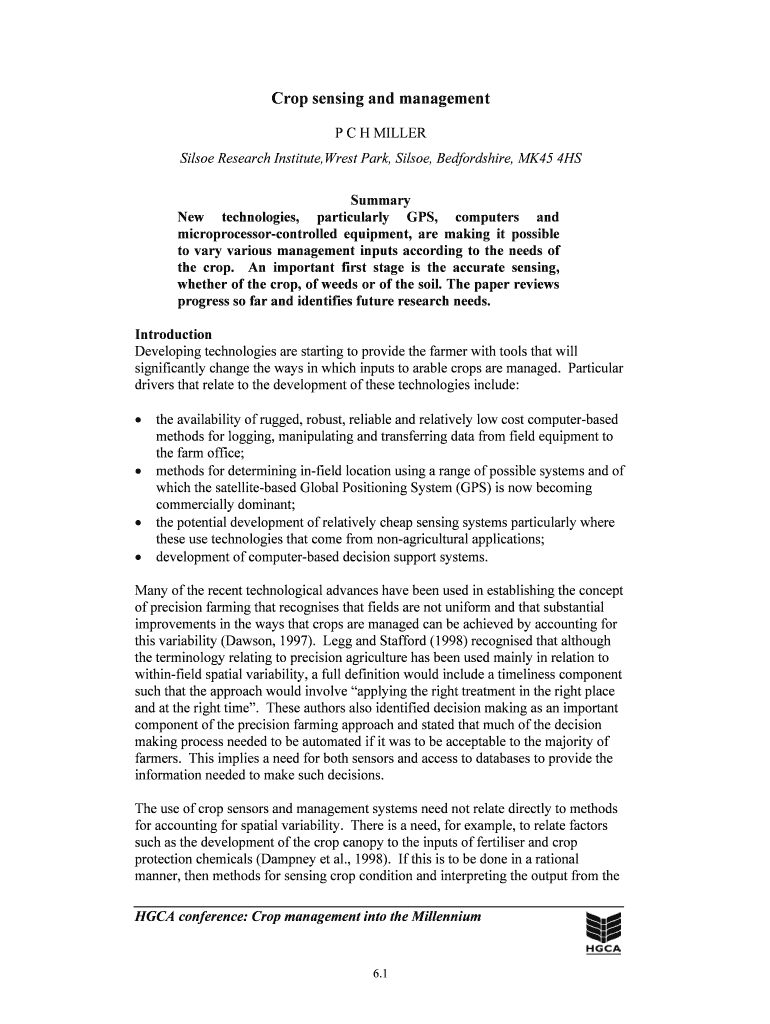
Crop sensing and management is a pivotal aspect of modern agriculture that leverages technology to monitor and manage crop health and productivity. Specifically, this methodology involves the use of precision tools such as GPS, computers, and microprocessor-controlled equipment to accurately assess crop conditions, identify weeds, and evaluate soil variability. By focusing on precision agriculture, farmers can optimize the use of inputs like water, fertilizers, and pesticides, significantly improving crop yield and reducing environmental impact. This approach is a cornerstone of the AHDB Cereals and Oilseeds program, which strives to enhance production efficiency by promoting the adoption of advanced farming technologies.
How to use the Crop sensing and management - AHDB Cereals and Oilseeds
Utilizing crop sensing and management technologies involves a systematic approach where farmers integrate several tools and techniques. Here’s a step-by-step guide:
-
Installation of Sensors: Equip fields with sensors capable of measuring variables such as soil moisture and nutrient levels. These sensors provide real-time data crucial for informed decision-making.
-
Data Collection and Analysis: Use drones or satellite imagery to gather data on crop health. Algorithms analyze this data, providing actionable insights on plant stress and growth patterns.
-
Precision Application of Inputs: Based on data insights, precisely apply fertilizers, and pesticides where needed, avoiding blanket applications. This reduces costs and environmental footprint.
-
Monitoring and Adjustment: Continuously monitor crop responses and make necessary adjustments to farming practices based on feedback from sensor data.
Important terms related to Crop sensing and management - AHDB Cereals and Oilseeds
Understanding terminology is crucial for implementing crop sensing and management effectively. Key terms include:
- NDVI (Normalized Difference Vegetation Index): A measure derived from remote sensing that quantifies vegetation health.
- VRT (Variable Rate Technology): Technology that allows variable rates of input application based on field data.
- GIS (Geographic Information Systems): Systems used to capture and analyze spatial and geographic data.
Knowledge of these terms facilitates better communication and execution of crop management strategies.
Steps to complete the Crop sensing and management - AHDB Cereals and Oilseeds
Executing a successful crop sensing and management program requires a series of well-coordinated steps:
-
Assessment and Planning: Begin by assessing current farm practices to identify areas for potential improvement with new technologies.
-
Selection of Technology: Choose appropriate technologies based on the specific needs of your crops and farm size.
-
Training and Implementation: Train staff on the use of new technologies. Implement the systems and monitor for any initial issues.
-
Evaluation and Adjustment: Regularly evaluate the outcomes of newly implemented practices and adjust for continuous improvement.
Why should you Crop sensing and management - AHDB Cereals and Oilseeds
Adopting crop sensing and management offers significant benefits, including:
- Increased Efficiency: Precision farming reduces waste of resources through targeted application of inputs.
- Enhanced Crop Yield: By optimizing input use based on specific crop needs, yields are increased.
- Environmental Benefits: Reducing excess fertilizer and pesticide use minimizes environmental damage.
- Data-Driven Decisions: Provides a robust framework for making informed agricultural decisions.
Thus, crop sensing and management represents a shift towards more sustainable and productive farming practices.
Key elements of the Crop sensing and management - AHDB Cereals and Oilseeds
Central elements include:
- Precision Technology: Use of high-tech equipment for data collection and resource management.
- Real-Time Monitoring: Continuous tracking of crop and soil conditions to make timely interventions.
- Data Integration: Combining various data sources to create a comprehensive management plan.
These elements work together to streamline farming processes, making them more effective and efficient.
Examples of using the Crop sensing and management - AHDB Cereals and Oilseeds
Practical application scenarios include:
- Precision Irrigation: Using soil moisture sensors to apply water only where needed.
- Targeted Fertilization: Employing VRT for applying fertilizers based on soil nutrient levels.
- Pest Control Management: Using drones for pest scouting and evaluating crop health conditions.
These examples illustrate how technology transforms traditional farming methods into sustainable practices.
Business types that benefit most from Crop sensing and management - AHDB Cereals and Oilseeds
While beneficial to various agricultural sectors, businesses most suited for these technologies include:
- Large-Scale Farms: Benefit from reduced input costs and enhanced yield through precision techniques.
- Specialty Crop Producers: Objective monitoring aids in managing crops with specific nutrient or soil needs.
These businesses see substantial benefits due to the scalability and efficiency of precision agriculture technologies.
Real-World Scenarios
Several case studies exhibit the successful implementation:
- A corn farmer reduces water usage by 30% using precision irrigation, leading to cost savings and sustained environmental resources.
- A wheat producer boosts yield by 15% by adopting VRT practices for fertilizer application in variable soil conditions.
Real-world scenarios underscore the tangible benefits of integrating crop sensing and management technologies in agriculture.