







Definition and Meaning of Food and Nutrition Services Disaster
The Food and Nutrition Services Disaster, often referred to as DSNAP, is a federal program designed to provide nutritional assistance to families affected by disasters. This initiative is part of the larger Supplemental Nutrition Assistance Program (SNAP) but is activated in times of crisis to support those who have been severely impacted by natural calamities. The program offers temporary financial assistance to purchase food, helping families stabilize their situation during challenging times. DSNAP operates under strict guidelines to ensure aid reaches eligible households swiftly and efficiently.
Steps to Complete the Food and Nutrition Services Disaster Application
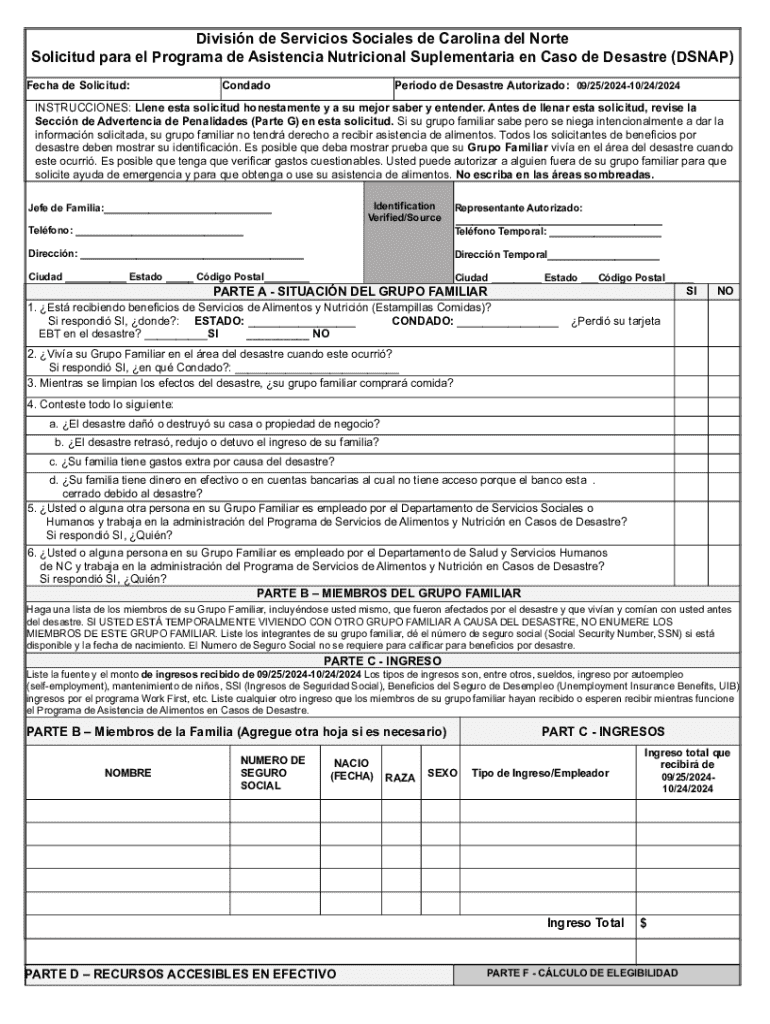
Completing the DSNAP application involves several steps to ensure that all necessary information is captured accurately.
- Gather Required Information: Applicants must collect identification, proof of residence during the disaster, and income documentation.
- Detailed Reporting: Provide details about the family situation, including household size and composition, income sources, and disaster-related expenses.
- Eligibility Calculations: Accurately report income and expenditures to determine eligibility and benefit amounts.
- Submit the Application: Applications can usually be submitted online, by mail, or in person at designated locations.
- Await Approval: After submission, the application will be reviewed, and eligible families will be notified of their benefit status.
Eligibility Criteria for Food and Nutrition Services Disaster
Eligibility for DSNAP is determined by a combination of factors. It's important to understand these criteria to assess qualification for assistance:
- Residency Requirement: Applicants must have lived in the disaster-declared area during the specific time frame.
- Income and Resources: Households need to demonstrate a loss of income or resources due to the disaster. This includes damage to property, loss of employment, or medical expenses.
- Impact Statement: Applicants must provide a statement detailing how the disaster affected their household, reinforcing the need for assistance.


Key Elements of the Food and Nutrition Services Disaster
A comprehensive understanding of DSNAP involves recognizing its core components:
- Emergency Activation: DSNAP is only activated following a federal disaster declaration, ensuring resources are directed to areas with verified needs.
- Assistance Duration: Benefits are typically available for a limited time post-disaster to aid in recovery.
- Benefit Calculation: Aid amounts are based on household size and income, tailored to provide sufficient nutritional support.
Required Documents for Food and Nutrition Services Disaster Application
The application process requires several documents to establish eligibility and facilitate processing:
- Identification: Government-issued ID to verify identity and residency.
- Proof of Residence: Document showing residence in the disaster-affected area, such as utility bills or lease agreements.
- Income Documentation: Recent pay stubs, tax returns, or employer verification are needed to detail household income.
- Expense Receipts: Receipts for disaster-related expenses can help demonstrate the financial impact and need for assistance.
Importance of Food and Nutrition Services Disaster
DSNAP serves a crucial role in responding to disaster scenarios, providing affected families with immediate food assistance. This financial support helps mitigate the increased costs that often accompany natural disasters, such as food spoilage due to power outages or temporary relocation expenses. By alleviating food insecurity, DSNAP contributes to community resilience, enabling quicker recovery and stabilization.
Who Typically Uses the Food and Nutrition Services Disaster
DSNAP mainly supports low-income households that are particularly vulnerable in disaster situations. Families experiencing significant property damage, loss of essential income, or displacement due to natural disasters are typical beneficiaries. Additionally, elderly individuals and those with disabilities represent a significant portion of DSNAP recipients, as these groups often face greater challenges in accessing resources post-disaster.

Important Terms Related to Food and Nutrition Services Disaster
Understanding DSNAP involves familiarity with several key terms and concepts:
- Disaster Supplemental Nutrition Assistance Program (DSNAP): The official name for the disaster-related nutritional assistance initiative.
- Federal Disaster Declaration: A formal announcement that activates DSNAP, signifying that specific areas are eligible for federal aid.
- Eligibility Assessment: A process determining who qualifies for aid based on income, resource loss, and disaster impact.
Legal Use of the Food and Nutrition Services Disaster
Utilizing DSNAP benefits involves adhering to specific legal guidelines to ensure compliance:
- Authorized Use: DSNAP benefits are strictly for purchasing food items; they cannot be used for non-food goods.
- Penalty for Misuse: Unauthorized use of benefits can result in penalties, including disqualification from future assistance programs.
- Verification Obligations: Applicants provide truthful information under penalty of law, reinforcing the integrity and proper allocation of resources.




