






Definition & Purpose of Disaster Food Assistance
Disaster food assistance, known as the "Ayuda para comprar comida tras un desastre natural," refers to the support provided to individuals and families affected by natural disasters. This form of assistance is a part of the Disaster Supplemental Nutrition Assistance Program (DSNAP), aimed at ensuring that displaced or affected families have access to essential nutrition during recovery periods. It provides financial support to purchase groceries and food items in the aftermath of events such as hurricanes, floods, wildfires, and other calamities.
Eligibility Criteria for Disaster Food Assistance
Eligibility for disaster food assistance is determined by several factors, including the severity of the disaster's impact on the applicant's living conditions and financial situation. Key eligibility criteria include:
- Residency in an area declared a disaster by the federal or state government.
- Evidence of disaster-related expenses, including property damage, loss of income, and relocation costs.
- Income level and available resources, which must be within specified limits to qualify for DSNAP benefits.
In some cases, exceptions and variations may apply depending on individual circumstances and state-specific regulations.


Steps to Complete the Application Form
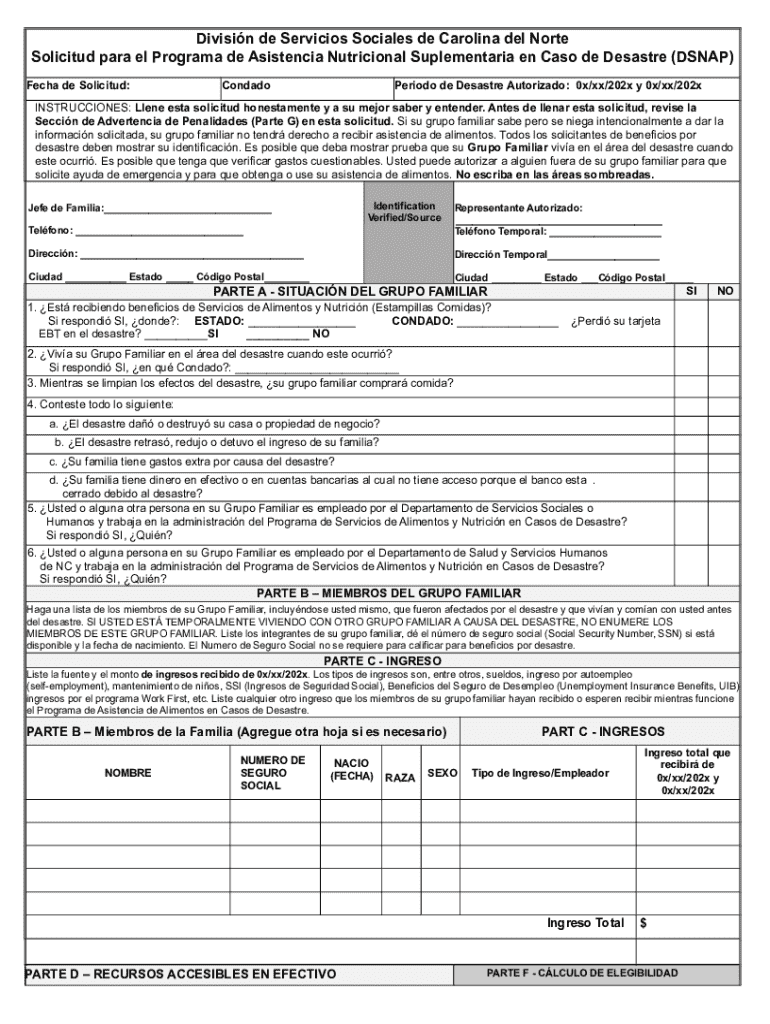
To apply for the "Ayuda para comprar comida tras un desastre natural," applicants must adhere to specific instructions while completing the DSNAP application:
- Gather required documentation, including identification, proof of residency, and evidence of disaster-related expenses.
- Carefully fill out all sections of the application form, providing accurate and honest details about your household's situation, income, and needs.
- Review the completed form for any errors or omissions to avoid delays in processing.
- Submit the form through the appropriate channel—online, in-person, or by mail—depending on the available resources and instructions in your state.
Required Documents for Application
Submission of the DSNAP application requires several key documents to verify identity, residency, and financial status:
- Government-issued photo ID for identity verification.
- Proof of residence within the disaster area, such as utility bills or rental agreements.
- Documentation of household income, including pay stubs or letters from employers.
- Receipts or statements for any disaster-related expenses incurred.
Ensuring the completeness and accuracy of these documents is critical to the application's success.
How to Obtain Disaster Food Assistance
Once eligibility is confirmed, obtaining disaster food assistance involves several steps:
- Complete and submit the DSNAP application, as outlined above.
- Attend an interview or provide additional information if requested by the administering agency.
- Await approval notification, which will detail the amount of assistance and instructions on how to access the funds.
- Upon approval, use the assistance benefits to purchase eligible food items from authorized retailers or vendors within your area.
Legal Considerations for Disaster Food Assistance
It is crucial to understand the legal obligations and constraints associated with receiving DSNAP benefits:
- Compliance with all federal civil rights laws is mandatory. Discrimination or bias is prohibited.
- Falsification of information on the application form can result in penalties, including disqualification from the program or legal action.
- Recipients must ensure that funds are used strictly for food purchases, per program regulations.
State-Specific Rules and Variations
The administration of DSNAP can vary significantly between states, influenced by local policies, available resources, and the nature of the disaster. Notable state-specific considerations include:
- Variability in income thresholds and benefit levels based on regional cost-of-living differences.
- Diverse application deadlines and processing times depending on the state's disaster response capacity.
- Potential for additional state-provided assistance or resources supplementing federal support.
Examples of Using Disaster Food Assistance
Practical examples highlight the impact and utility of disaster food assistance:
- A family displaced by a hurricane may use DSNAP benefits to purchase non-perishable food and essential groceries while in temporary shelter.
- Farmers affected by wildfires could use the assistance to cover the cost of food supplies during recovery, helping stabilize their household amid lost crops and income.
- Individuals in urban areas impacted by floods might rely on the program to maintain nutrition while repairing or relocating their homes.