







Definition & Meaning
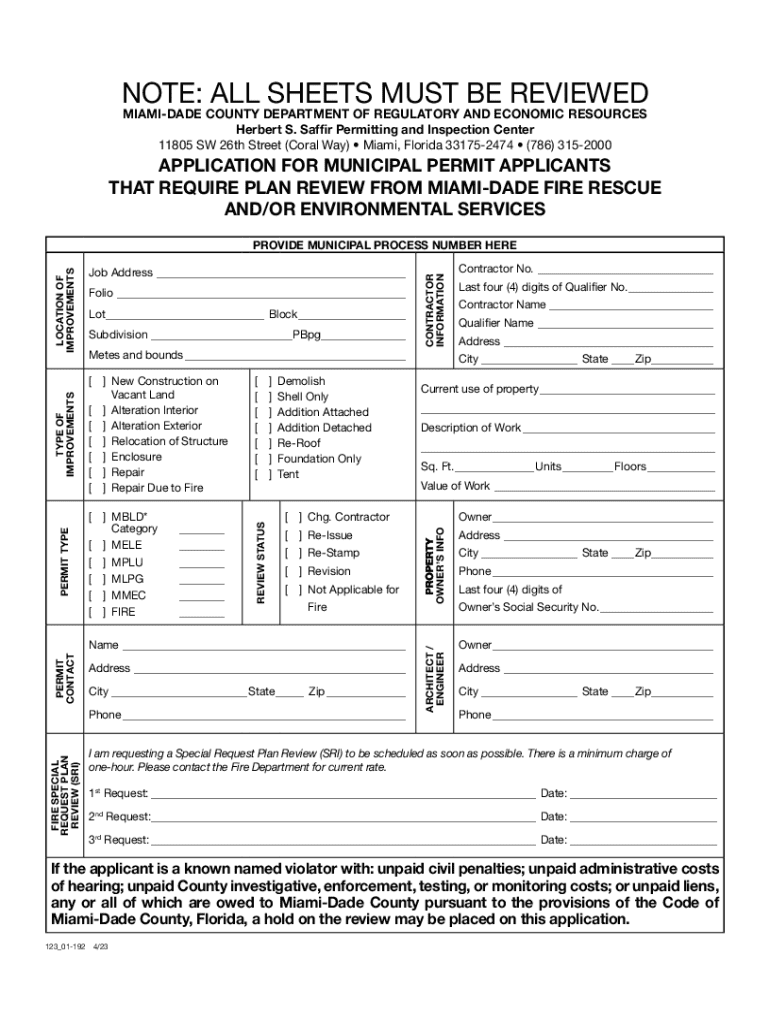
The "Application for Municipal Permit Applicants" is a formal document used to seek approval for various projects within a municipality, such as construction, remodeling, or other improvements. This form is essential for ensuring projects comply with local regulations and standards, particularly in Miami-Dade County where there's a focus on safety and environmental standards. Applicants must provide detailed information about their project, including types of permits applied for and specific property details, to facilitate thorough review and approval processes. The primary aim is to ensure compliance with local statutes and prevent any unapproved changes that could affect the community's infrastructure or environment.
How to Use the Application for Municipal Permit Applicants
Using the "Application for Municipal Permit Applicants" requires a systematic approach to ensure accuracy and compliance. To start, applicants must gather pertinent details about their project, including exact property location, the scope of work, and the specific type of permit being sought. It is crucial to fill out each section of the form in detail, including applicant contact information and, where applicable, contractor details. When submitting, ensure supporting documents such as site plans or architectural sketches are attached. This comprehensive approach guarantees that the application is considered complete, thereby minimizing delays in processing and increasing chances of swift approval.
Steps to Complete the Application for Municipal Permit Applicants
-
Gather Required Information: Compile all necessary personal, project, and property details needed to complete the form.
-
Fill Out Applicant Information: Enter contact information, including name, address, and phone number, ensuring accuracy to avoid delays.
-
Detail Project Scope: Clearly outline the intended work, including any structures to be erected or modified, to ensure that the permit aligns with the project goals.
-
Specify Permit Type: Indicate the exact type of permit needed, such as zoning, construction, or environmental, based on the project specification.
-
Attach Supporting Documents: Include relevant plans, designs, or other documentation that supports the application, demonstrating full compliance with local regulations.
-
Review and Submit: Double-check all entries for correctness before submission. Any errors could lead to processing delays or rejection.
Key Elements of the Application for Municipal Permit Applicants
- Applicant Details: Includes personal and contact information of the individual or entity applying for the permit.
- Property Description: Requires comprehensive details about the project location, including addresses and parcel numbers if available.
- Permit Type: Applicants must specify the exact type of permit required, aligning with specific project needs such as residential, commercial, or industrial purposes.
- Project Details: Includes a thorough description of the work to be done, which is vital for accurately assessing and validating compliance with regulations.
- Compliance Certifications: Applicants may need to certify that their project meets environmental, safety, and zoning requirements.
Important Terms Related to Application for Municipal Permit Applicants
- Zoning Compliance: Ensures that the proposed project adheres to the locality's zoning laws, which dictate land use and building codes.
- Plan Review: A process by which municipal authorities evaluate proposed construction plans to ensure compliance with local building and safety standards.
- Environmental Services: Pertains to the compliance with environmental regulations that protect natural resources and public health within the municipality.
- Contractor Information: Details about any third-party contractor involved in the project, including licensing details, which are crucial for verifying professional integrity and capability.
Form Submission Methods (Online / Mail / In-Person)
Applicants can submit the "Application for Municipal Permit Applicants" through multiple channels to accommodate different preferences and technological access:
-
Online Submission: Often preferred for speed and convenience, allowing for submissions via a municipal website or dedicated platform. This method typically includes an electronic review process, with alerts for any missing information.
-
Mail: A traditional method where applications are printed, filled out, and sent through postal services. This approach requires sufficient time for delivery and processing, and applicants should consider potential delays.
-
In-Person: Allows applicants to submit forms directly at municipal offices. This method may offer the benefit of immediate feedback or clarification from municipal staff, ensuring that applications are complete and correct upon submission.
State-Specific Rules for the Application for Municipal Permit Applicants
-
Florida (Miami-Dade County): Emphasizes strict adherence to environmental protection and fire safety regulations. Projects undergo detailed reviews by departments like Fire Rescue and Environmental Services to ensure compliance.
-
New York: Known for rigorous zoning laws, particularly in urban areas. Applicants must navigate complex regulations that differ between boroughs.
-
California: Focuses heavily on environmental sustainability and earthquake safety compliance, requiring additional documentation such as environmental impact reports.
Penalties for Non-Compliance
Non-compliant projects can face severe consequences, including:
-
Fines: Penalties for proceeding without a valid permit or breaching permit conditions, which can accumulate rapidly.
-
Forced Stop Work Orders: Legal mandates issued by authorities that require immediate cessation of project activities until compliance is met.
-
Legal Action: Serious cases can result in lawsuits, potentially leading to additional fines or court orders.
-
Demolition: In extreme cases, non-compliant structures may be subject to forced demolition to rectify the violation.




