
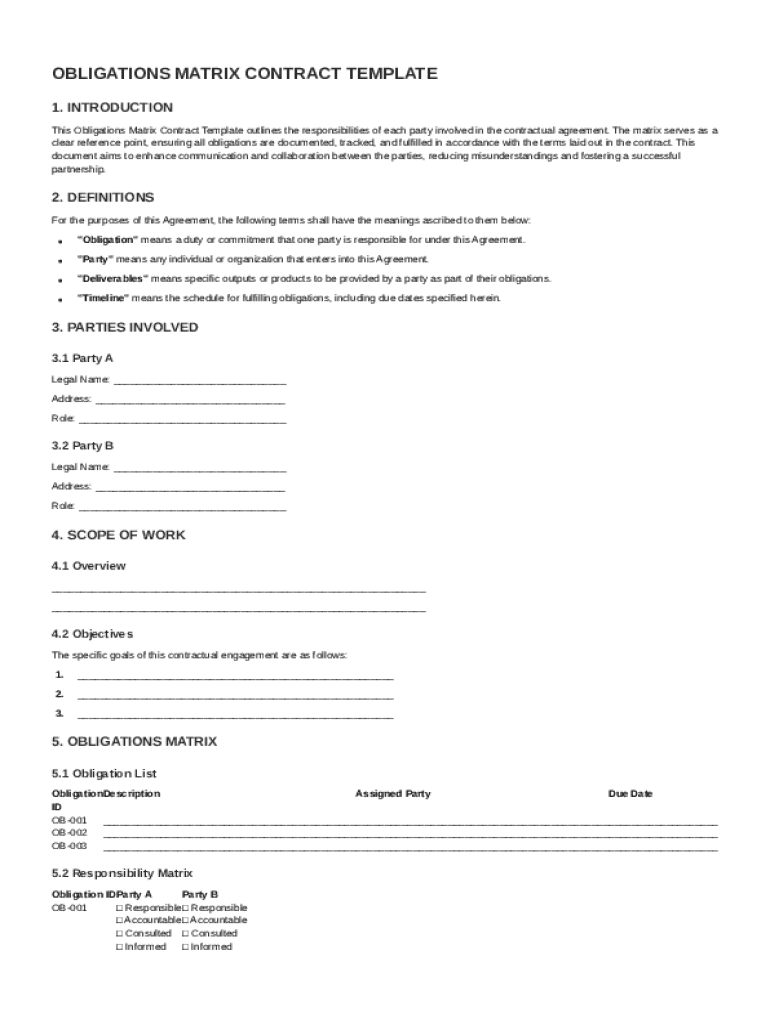







Definition and Meaning of the Obligations Matrix Contract Template
The Obligations Matrix Contract Template serves as a structured framework designed to clearly define and track the responsibilities of each party involved in a contractual agreement. It is a critical tool for ensuring all parties are aware of their duties and accountability within a contract. The template includes key sections such as definitions, involved parties, scope of work, and an obligations matrix, which delineates each party's commitments. This comprehensive approach helps facilitate effective communication and collaboration, minimizing misunderstandings and potential disputes.
Key Components Included
- Definitions: This section clarifies terminology used throughout the contract, ensuring all parties have a shared understanding of key concepts.
- Parties Involved: Identifies all individuals or entities entering the agreement, establishing their roles and responsibilities.
- Scope of Work: Details the specific tasks and deliverables expected from each party, providing a tangible framework for assessment.
- Obligations Matrix: Lists the obligations of each party in a matrix format, offering a clear and organized view of responsibilities aligned with specific timelines.
- Timelines and Deadlines: Outlines the schedule for deliverables, making it easier to track progress and enforce deadlines.
How to Use the Obligations Matrix Contract Template
To utilize the Obligations Matrix Contract Template effectively, follow these sequential steps to ensure thorough preparation and execution of the contract.
- Initial Assessment: Begin by evaluating the specific needs and objectives of the contractual agreement. Identify all involved parties and clarify their roles.
- Document Preparation: Collect necessary information, including legal names, contact information, and any pre-existing agreements or commitments relevant to the contract.
- Template Customization: Customize the template by filling in sections with specific details pertinent to the contract’s requirements. Pay attention to definitions and ensure clarity in the scope of work.
- Matrix Development: Develop the obligations matrix by listing each party’s responsibilities in detail, matched with corresponding timelines and deliverables.
- Review and Validation: Conduct a thorough review with all parties to confirm the accuracy of the details entered and ensure mutual agreement.
- Finalization and Execution: Secure signatures from all parties involved, and distribute copies for reference. Utilize DocHub’s electronic signature feature to streamline this process.
Practical Considerations
- Ensure all stakeholders agree on definitions and terms to prevent future disputes.
- Review and update the obligations matrix periodically as project conditions evolve.
Who Typically Uses the Obligations Matrix Contract Template
The Obligations Matrix Contract Template is predominantly used by businesses and organizations to manage diverse contractual agreements efficiently. Its structured format benefits a variety of users:


Business Environments
- Corporate Entities: Corporations use the template to delineate responsibilities in joint ventures or partnerships.
- Small and Medium Enterprises (SMEs): SMEs find it useful for establishing clear agreements with suppliers or clients due to its straightforward approach.
- Government Agencies: Public sector projects often involve multiple contractors, making the template essential for clarity and accountability.
Industry-Specific Applications
- Construction: Frequently used to assign tasks to subcontractors, ensuring specific deliverables within agreed timelines.
- IT Services: Outlines deliverables and timelines for software development projects, ensuring alignment between developers and clients.
- Consultancy Services: Consultants employ it to specify project outcomes and responsibilities with clients.
Key Elements of the Obligations Matrix Contract Template
Understanding and integrating the key elements of the Obligations Matrix Contract Template contributes to effective contract management and successful outcomes.
Core Sections
- Definitions: Precise explanations of terminology ensure all parties have a consistent understanding.
- Involved Parties: Clearly identifies all contractual parties and their respective roles.
- Scope of Work: Details tasks, deliverables, and expectations essential for accountability.
- Obligations Matrix: A detailed chart of responsibilities aligned with deliverables and timelines.
- Reporting Requirements: Outlines mechanisms for regular updates and tracking of contract milestones.
- Consequences of Non-Compliance: Specifies repercussions for failing to meet contractual obligations, promoting adherence and accountability.
Supporting Elements
- Amendment Procedures: Protocols for making changes to the contract as project needs evolve.
- Communication Protocols: Guidelines for maintaining effective communication throughout the contract lifecycle.
State-Specific Rules for the Obligations Matrix Contract Template
While the Obligations Matrix Contract Template offers a general framework adaptable to various contractual needs, certain states in the U.S. may impose specific regulations or requirements that affect its implementation.
Notable Variations
- California: May require specific disclosures regarding labor and employment laws within contracts.
- New York: Often mandates explicit language around liability and indemnification clauses.
- Texas: Contracts may need to address conditions particular to oil and gas transactions or state-specific construction codes.
Importance of Compliance
- Align the template with state laws to ensure enforceability.
- Consult with legal professionals to incorporate state-specific terms and conditions.
By integrating state requirements, the template remains legally sound and adaptable across different jurisdictions.
Examples of Using the Obligations Matrix Contract Template
Practical examples of the Obligations Matrix Contract Template in action illustrate its versatility and utility across various sectors.
Case Study Scenarios
- IT Development Project: A software company uses the template to coordinate with multiple vendors for system enhancements, clearly outlining deliverables and timelines.
- Construction Contract: A general contractor employs the template to manage obligations among subcontractors, aligning project milestones and reducing delays.
- Partnership Agreement: Two companies engaging in a joint venture utilize the template to specify contributions and responsibilities, fostering equitable collaboration.
Lessons Learned
- Clarity and Prevention: By clearly defining roles and deliverables, projects experience fewer misunderstandings and disputes.
- Accountability: The obligations matrix promotes accountability by holding parties to agreed responsibilities.
Legal Use of the Obligations Matrix Contract Template
Contractual agreements using the Obligations Matrix Contract Template must adhere to legal standards to ensure validity and enforceability.
Legal Considerations
- Compliance with Acts: Ensure the agreement adheres to relevant legislation such as the Uniform Commercial Code (UCC) where applicable.
- Data Protection: Include clauses that address data privacy and security, particularly when sensitive information is involved.
- Intellectual Property: Clearly define ownership and usage rights over intellectual property created as part of the contract.
Best Practices
- Regular Legal Review: Engage legal experts to review the contract, ensuring all clauses conform to current laws and regulations.
- Dispute Resolution: Include procedures for resolving disputes, such as mediation or arbitration, to avoid prolonged litigation.
Versions or Alternatives to the Obligations Matrix Contract Template
While the Obligations Matrix Contract Template offers a comprehensive approach, alternative templates or custom versions may be more suited to specific needs or preferences.
Alternative Versions
- Simplified Contract Template: For less complex agreements, a streamlined template may focus on core obligations without detailed matrices.
- Industry-Specific Templates: Created for specific sectors, such as healthcare or finance, to address unique regulatory and operational requirements.
Custom Approaches
- Tailored Templates: Modify the existing template to incorporate unique business processes or company policies, increasing relevance and effectiveness.
- Consultation with Experts: Collaborate with legal or industry experts to adapt the template, ensuring it precisely meets the contractual goals and compliance standards.
Incorporating alternatives or customizations allows for greater flexibility and ensures the template remains aligned with evolving business or legal requirements.




