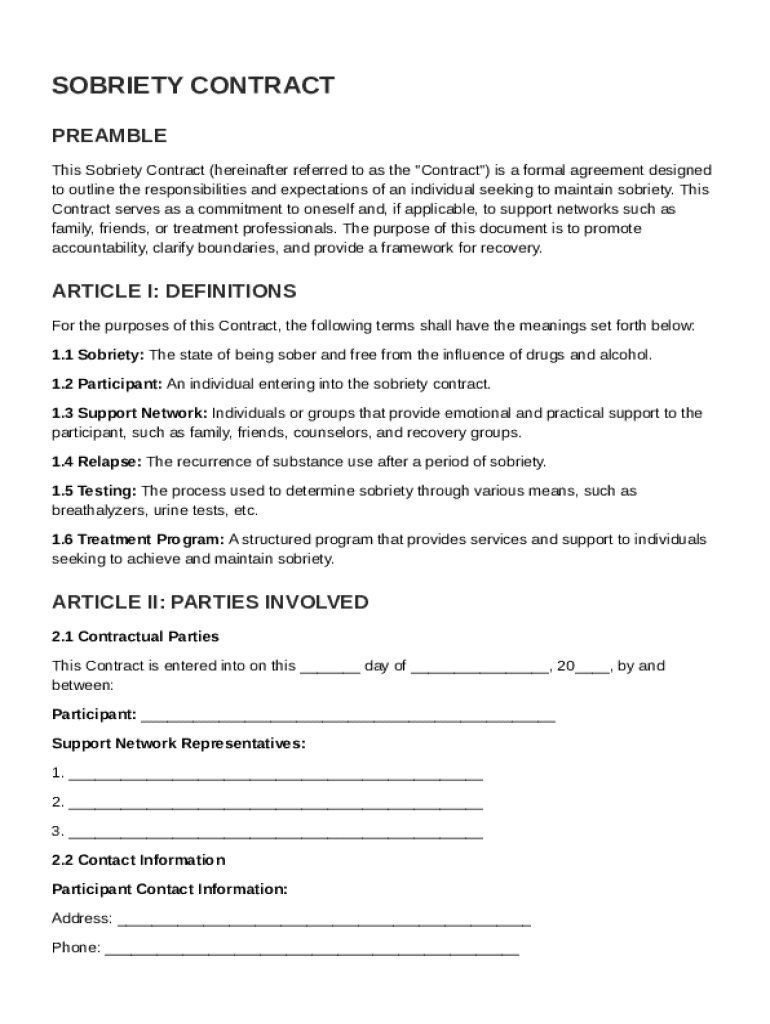







Definition & Meaning
A Sobriety Contract Template is a formal document outlining the responsibilities and expectations for an individual, referred to as the Participant, who is committed to maintaining sobriety. This contract involves a Support Network, which may consist of family members, friends, or professionals, who are dedicated to supporting the Participant's recovery journey. The contract serves as a mutual agreement that defines key terms, establishes objectives for maintaining sobriety, and outlines commitments from both the Participant and the Support Network. It includes daily responsibilities, communication protocols, testing procedures, and consequences for any potential relapse.
Key Elements of the Sobriety Contract Template
The Sobriety Contract Template is composed of several critical components that ensure clarity and effectiveness. Among these are:
-
Participant and Support Network Roles: Clearly defines the roles and responsibilities of both the Participant and their Support Network, ensuring everyone involved understands their commitments.
-
Objectives and Goals: Outlines specific sobriety goals, such as abstaining from certain substances, attending support meetings, or engaging in regular therapy sessions.
-
Communication Protocols: Establishes guidelines for how the Participant and Support Network will communicate, ensuring consistent and supportive interactions.
-
Testing and Monitoring: Details any testing procedures or monitoring tools that might be used to verify sobriety, such as breathalyzers or random drug tests.
-
Consequences for Relapse: Provides a framework for understanding the consequences of a relapse, including any adjustments to the contract or additional support measures.
-
Amendment and Termination Conditions: Sets the conditions under which the contract can be reviewed, amended, or terminated, allowing for flexibility and adaptation as needed.
How to Use the Sobriety Contract Template
Using a Sobriety Contract Template involves a few key steps to ensure its effectiveness:
-
Customization: Adapt the template to fit the specific needs and circumstances of the Participant and their Support Network. This includes detailing personalized goals and communication strategies.
-
Collaborative Development: Engage all parties involved in the contract's development process to ensure everyone agrees to the terms and feels a sense of ownership over the commitments.
-
Regular Review: Schedule regular meetings to review the contract and assess the Participant's progress. This ensures that the contract remains relevant and reflects any changes in circumstances.
-
Documentation and Signature: Ensure all parties sign the contract to acknowledge their understanding and agreement, thereby reinforcing the document's importance and formality.
Steps to Complete the Sobriety Contract Template
To effectively complete the Sobriety Contract Template, follow these detailed steps:
-
Identify the Participants: Document the names and roles of all individuals involved in the contract, including the Participant and members of the Support Network.
-
Define Objectives: Establish clear, achievable objectives for sobriety, which may include abstinence from substances, engagement in treatment, or participation in recovery meetings.
-
Outline Responsibilities: Specify the daily responsibilities of the Participant, such as maintaining communication with their support network and attending scheduled appointments.
-
Develop Communication Protocols: Agree on how and when communications will occur between the Participant and their Support Network, promoting transparency and mutual understanding.
-
Establish Monitoring Strategies: Decide on any necessary testing procedures or monitoring methods that will be used to support sobriety efforts.
-
Agree on Consequences: Outline the potential consequences of non-compliance or relapse, ensuring all parties understand the importance of adhering to the contract.
-
Assign Signatures: Obtain signatures from the Participant and all members of the Support Network to formalize the agreement and commitment to the sobriety plan.
Legal Use of the Sobriety Contract Template
The Sobriety Contract Template, while not a legally binding document in the traditional sense, holds significant moral and psychological weight. It serves as a mutual agreement based on trust and commitment, which can be vital in legal or therapeutic settings. While it may not be enforceable in a court of law, the contract outlines the agreed responsibilities and expectations, which can be used to guide the behavior and actions of the Participant and their Support Network. In professional settings, it can be supported by additional legal documents or agreements that incorporate more formal legal implications if necessary.
State-Specific Rules for the Sobriety Contract Template
While the general structure of the Sobriety Contract Template can be widely applicable, state-specific rules and considerations may play a role, especially for those receiving state-sponsored rehabilitation services. Certain states may have unique guidelines for monitoring substances, treatment requirements, or legal implications related to sobriety agreements. Understanding these local regulations helps create a more tailored and context-appropriate contract. Consulting with a legal professional familiar with state-specific rules can provide valuable insights when developing the contract to ensure compliance with any applicable laws or regulations.
Important Terms Related to Sobriety Contract Template
Several terms are crucial to fully understand the context and application of the Sobriety Contract Template:
-
Participant: The individual committed to maintaining sobriety and is the primary focus of the contract.
-
Support Network: The group of individuals who provide emotional, social, or professional support to the Participant.
-
Sobriety Goals: The specific objectives set within the contract to guide the Participant's journey towards sustainable sobriety.
-
Relapse: Refers to the return to substance use after a period of abstinence, highlighting the importance of having defined consequences and support structures in the contract.
Understanding these terms aids in the effective application and ensures that all involved parties have a shared understanding of the contract's purpose and directives.
Examples of Using the Sobriety Contract Template
The versatility of the Sobriety Contract Template allows for a wide range of applications:
-
Family Support: Commonly used within families where members support a loved one in recovery, detailing collective efforts and individual responsibilities.
-
Therapeutic Settings: Frequently integrated into treatment plans by therapists or counselors as part of structured recovery programs, reinforcing treatment objectives.
-
Workplace Rehabilitation Programs: Some employers implement sobriety contracts as part of employee assistance programs, providing structured support and monitoring to help employees regain control over their substance use.
-
Youth Recovery Programs: Utilized in programs targeting younger individuals where parental or guardianship oversight is integral to recovery efforts.
These examples illustrate how the Sobriety Contract Template can be effectively employed in diverse settings to support individuals striving for sobriety.