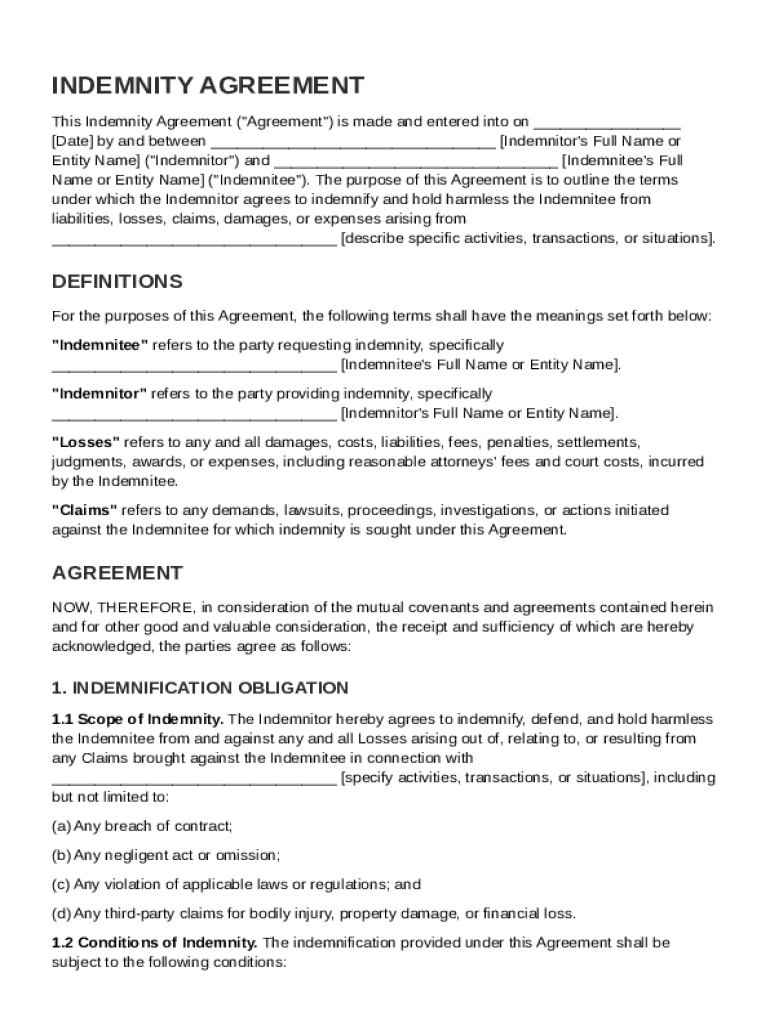







Definition and Meaning
An Indemnity Agreement functions as a contract in which one party, known as the Indemnitor, agrees to compensate and protect another party, the Indemnitee, from specific liabilities and claims. These agreements are crucial in various situations where potential losses or damages might arise due to the actions or inactions of the parties involved. Generally, the indemnity clauses specify the scope of indemnity, define key terms, and ensure that obligations are binding, even after the agreement's termination. For instance, a construction company might use an indemnity agreement to protect against potential claims related to property damage during a project.
Key Elements of the Indemnity Indemnity Agreement Template
Understanding the foundational aspects of the Indemnity Agreement Template is essential. Key elements include:
- Parties Involved: Clearly identifies the Indemnitor and the Indemnitee.
- Scope of Indemnity: Outlines what risks, damages, and liabilities are covered.
- Exemptions and Limitations: Specifies any exclusions to the indemnity provided.
- Notification Requirements: Details how and when each party must notify the other about potential claims.
- Cooperation and Governing Law: Enforces mutual cooperation and identifies the jurisdiction under which the agreement is governed.
How to Use the Indemnity Indemnity Agreement Template
To effectively use the Indemnity Agreement Template, follow these steps:
- Review the Template: Understand the terms and conditions outlined in the template.
- Customize the Agreement: Tailor the details like parties’ names, scope, and specific liabilities to your needs.
- Consult Legal Assistance: Have an attorney review the agreement to ensure it meets all legal requirements.
- Sign and Save: Have all relevant parties sign the document and keep copies for records.
These templates are often customized based on the transaction or the specific risks associated with the arrangement, ensuring comprehensive coverage for all involved parties.
Steps to Complete the Indemnity Indemnity Agreement Template
Completing the Indemnity Agreement Template involves several detailed steps:
- Input Basic Information: Begin by entering the names and details of the Indemnitor and Indemnitee.
- Clarify the Scope: Identify what liabilities or risks are covered.
- Specify Exceptions: Clearly outline what is not included under the indemnity.
- Define Responsibilities: Specify actions required by both parties in case of a claim.
- Review Legal Requirements: Consult legal counsel to ensure compliance with applicable laws.
- Finalize and Execute: Obtain signatures and distribute copies to all parties.
Important Terms Related to the Indemnity Indemnity Agreement Template
Being familiar with critical terms enhances the understanding of the indemnity agreement:
- Indemnitor: The party who agrees to indemnify.
- Indemnitee: The party who is protected against specific risks.
- Liability: The financial responsibility for claims or damages.
- Hold Harmless: A clause that releases one party from liabilities.
- Subrogation: The right to pursue another party's claims.
These terms help clarify roles and responsibilities within the agreement and ensure clarity in its execution.
Legal Use of the Indemnity Indemnity Agreement Template
In the United States, indemnity agreements are widely used in various sectors, including construction, finance, and real estate. They are governed by state laws, which may influence the enforceability of specific clauses, such as limitations on indemnity or exclusions. U.S. courts generally enforce indemnity agreements unless they violate public policy or are unclear. Thus, it is recommended to draft these agreements with precision and seek legal advice to ensure that contractual obligations align with relevant state and federal regulations.
Examples of Using the Indemnity Indemnity Agreement Template
Practical examples where indemnity agreements are utilized include:
- Construction Contracts: Protecting against property damage during project execution.
- Leasing Arrangements: Landlords indemnifying tenants for specific liabilities.
- Corporate Transactions: Protecting parties in mergers or acquisitions from undisclosed debts or legal claims.
Each scenario reflects the agreement's versatile nature, warranting its adoption across a broad spectrum of industries.
State-Specific Rules for the Indemnity Indemnity Agreement Template
Indemnity agreements are subject to state-specific legislation, which can affect their interpretation and enforceability. For instance, states like California enforce stricter rules on indemnity clauses, especially in construction contracts. States may also have differing regulations on the statute of limitations for indemnity claims. Therefore, it’s important to familiarize yourself with local laws and possibly consult with legal professionals to ensure the agreement is effective and enforceable within the intended jurisdiction.
Who Typically Uses the Indemnity Indemnity Agreement Template
Various entities benefit from using an indemnity agreement template, including:
- Construction Firms: To manage risks during building projects.
- Business Owners: Protecting against potential claims in commercial deals.
- Landlords and Tenants: Ensuring liability coverage in leases.
- Partnerships: Defining financial responsibility in business operations.
This broad applicability underscores the agreement's relevance across industries, making it a fundamental tool in managing potential risks effectively.