Key Elements of the Public Adjuster Contract Template
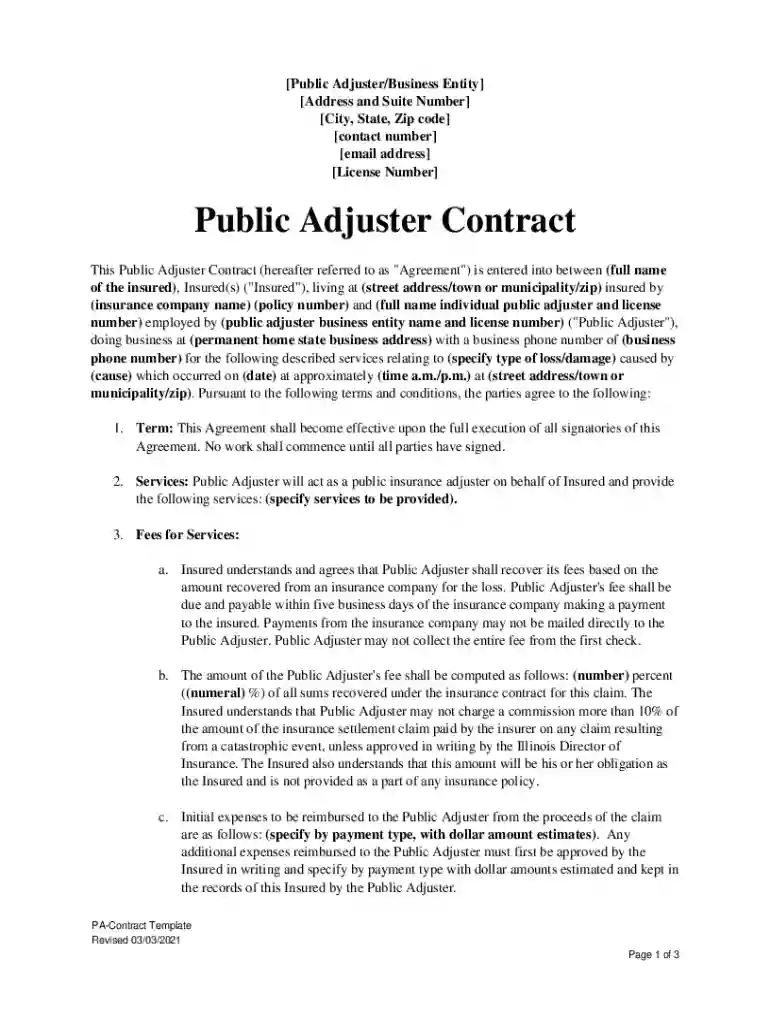
The Public Adjuster Contract Template is a crucial document that defines the relationship between an insured individual and a public adjuster. It details the scope of services to be provided and outlines the fee structure, typically based on the recovery amount from insurance claims. Specific provisions ensure compliance with legal requirements and promote transparency. Key elements include:
- Service Details: A clear description of the services expected from the public adjuster, such as negotiations with the insurance company, assessment of damage, and documentation of claims.
- Fee Structure: The contract typically specifies that fees are a percentage of the insurance recovery, incentivizing the adjuster to secure the highest possible settlement.
- Cancellation Rights: Most templates provide the insured with rights to cancel the contract, usually within a specified period, ensuring the insured has flexibility.
- Reimbursement Clauses: Terms for reimbursing any expenses incurred by the adjuster must be laid out to prevent future disputes.
Important Terms Related to Public Adjuster Contract Template
Understanding the terminology within the Public Adjuster Contract Template is essential for both parties. Some crucial terms include:
- Public Adjuster: A licensed insurance professional who advocates on behalf of the policyholder in negotiating an insurance claim.
- Insurance Recovery: The total amount of money recovered from an insurance claim, before deduction of fees.
- Fee Agreement: The mutually agreed percentage of the insurance recovery that compensates the public adjuster.
- Cancellation Period: The timeframe within which the insured can lawfully cancel the contract without penalty.
These terms ensure clarity and help prevent misunderstandings during the execution of the contract.
Legal Use of the Public Adjuster Contract Template
Legal compliance is paramount when using a Public Adjuster Contract. The template is designed to include necessary provisions that adhere to U.S. laws, providing the following assurances:
- State Compliance: Adapts to specific state requirements, especially those that have unique regulations governing public adjusters.
- Transparent Recommendations: The adjuster must disclose if they have any financial interest in recommended service providers.
- Department of Insurance Contact: The document typically includes contact information for the relevant state Department of Insurance, like Illinois, for queries or complaints.
These legal components are intended to protect all parties and ensure that the contract is enforceable.
How to Obtain the Public Adjuster Contract Template
Acquiring the Public Adjuster Contract Template is a straightforward process. Options include:
- Online Document Services: Platforms like DocHub offer easy access to customizable contract templates, allowing users to edit and tailor them to their specific needs.
- Direct from Adjusters: Many public adjusters provide their own templates to potential clients, often as part of their introductory package.
- Legal Professionals: Lawyers specializing in insurance claims or contractual law may provide or customize the template in accordance with the client’s precise needs.
Choosing a reliable source can ensure the template is up-to-date and legally sound.
Steps to Complete the Public Adjuster Contract Template
Completing the Public Adjuster Contract Template requires careful attention to detail. Follow these steps:
- Review the Template: Thoroughly read the document to understand all terms and conditions.
- Fill in Personal Details: Include names, addresses, and contact information for both the public adjuster and the insured.
- Detail Services: Specify the scope of services the adjuster will provide, ensuring all expected tasks are included.
- Define the Fee Structure: Clearly state the agreed percentage or fee structure based on the total insurance recovery.
- Establish Cancellation Policy: Note the period within which the insured can cancel the contract without any financial penalty.
- Sign and Date: Ensure both parties sign and date the document, and retain copies for their records.
Completing these steps carefully will help prevent any legal or operational issues.
Who Typically Uses the Public Adjuster Contract Template
The Public Adjuster Contract Template is primarily used by:
- Policyholders: Individuals or businesses seeking to employ an adjuster to assist with substantial insurance claims.
- Public Adjusters: Professionals offering their services to manage claims on behalf of insured clients.
- Insurance Brokers: These intermediaries may leverage the template to facilitate smoother claims processes for their clients.
Each user group benefits from the template in managing the claims process more efficiently and transparently.

State-Specific Rules for the Public Adjuster Contract Template
While the Public Adjuster Contract Template generally adheres to federal standards, specific states may have additional rules, such as:
- License Requirements: Certain states mandate that public adjusters carry specific licenses or certifications.
- Fee Caps: States like California might impose a maximum percentage that adjusters can charge, protecting consumers from exorbitant fees.
- Mandatory Disclosures: Some state regulations require disclosing relationships with preferred service providers.
Understanding these rules ensures the contract’s enforceability and compliance within different jurisdictions.
Examples of Using the Public Adjuster Contract Template
Usage scenarios illustrate the template’s effectiveness:
- Natural Disasters: After significant events, like hurricanes or earthquakes, a public adjuster contract ensures that victims receive professional assistance in navigating complex insurance claims, maximizing recoveries.
- Business Claims: Commercial properties facing large-scale damage benefit from these contracts as adjusters handle business interruption claims along with property loss.
- Complex Residential Claims: Homeowners dealing with multifaceted damage can rely on public adjuster expertise to compile and negotiate their claims effectively.
These examples highlight the contract's adaptability and utility across various real-world situations.