






Definition & Meaning
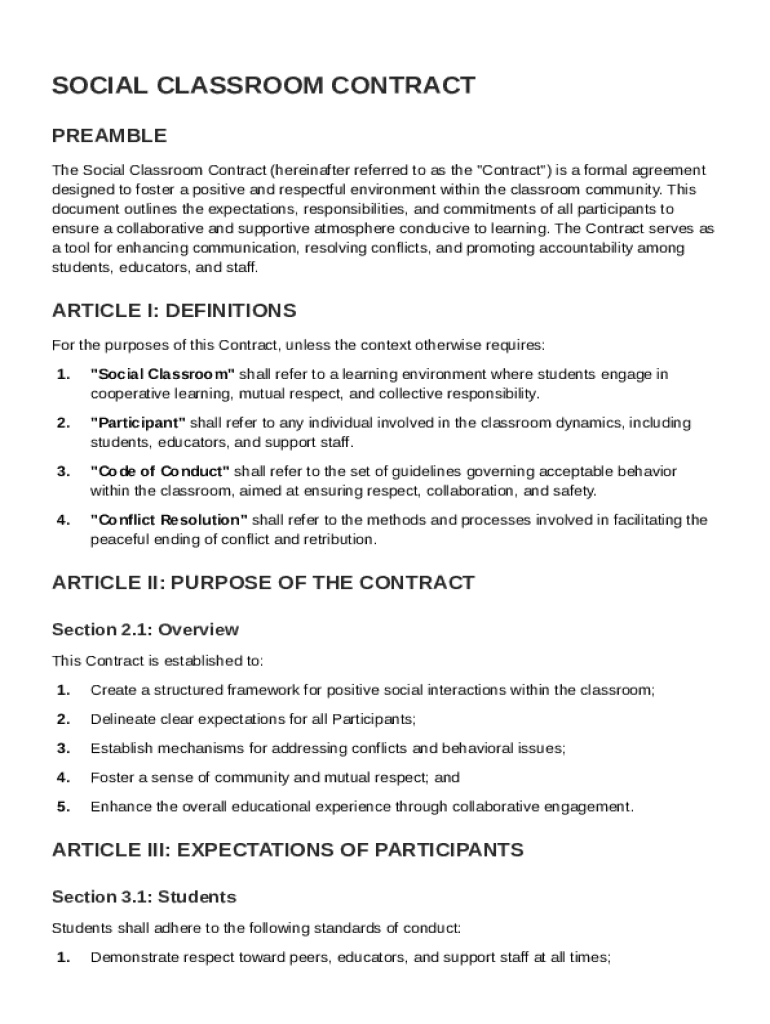
The Social Classroom Contract Template is a formalized document designed to foster a positive and respectful learning environment by clearly outlining the expectations, responsibilities, and commitments of students, educators, and support staff. This agreement establishes guidelines for behavior, sets protocols for conflict resolution, and promotes a collaborative and accountable classroom community. By defining these parameters, the contract aims to create a structured environment where all parties know their roles and can contribute to a conducive educational setting.
Key Elements of the Social Classroom Contract Template
When constructing a Social Classroom Contract Template, several critical components should be addressed to ensure clarity and effectiveness:
- Roles and Responsibilities: Define the specific roles each party plays, including students, educators, and support staff, and outline the expectations associated with each role.
- Code of Conduct: Detail the behavioral expectations for students and staff, emphasizing respect, inclusivity, and cooperation within the classroom.
- Conflict Resolution Mechanisms: Include a step-by-step process for resolving disputes, ensuring that issues are managed effectively and constructively.
- Collaboration Guidelines: Outline expectations for group work and peer collaboration, supporting teamwork and mutual support among students.
- Accountability Measures: Specify the consequences of not adhering to the agreed-upon rules and how accountability will be ensured.
Steps to Complete the Social Classroom Contract Template
Creating a comprehensive Social Classroom Contract Template involves a systematic approach:
- Identify Requirements: Gather input from teachers, students, and staff to determine what needs to be included based on past experiences and specific classroom needs.
- Draft Contract: Develop a draft that encompasses all identified requirements, ensuring it is clear and comprehensive.
- Review & Feedback: Share the draft with all stakeholders to collect feedback and suggestions for improvement.
- Revise & Finalize: Incorporate feedback to refine the document, making sure it covers all necessary aspects and is accessible to all parties involved.
- Implementation: Distribute the finalized contract and ensure that all parties understand and agree to it, with signatures indicating their commitment.
- Regular Updates: Review and update the contract periodically to reflect any changes or evolving needs in the classroom environment.
Important Terms Related to the Social Classroom Contract Template
Understanding key terminology can enhance the use and interpretation of the Social Classroom Contract Template:
- Stakeholders: Individuals or groups with vested interests in the contract, including students, educators, parents, and administrators.
- Inclusive Language: Ensures that the contract is accessible and respectful to all individuals, regardless of background or identity.
- Compliance: Refers to the adherence to the established rules and guidelines outlined in the contract.
- Sanctions: The penalties or corrective actions imposed for breaches of the contract's terms.
- Facilitation: The process of managing discussions and interactions to achieve the objectives outlined in the contract.
Who Typically Uses the Social Classroom Contract Template
This template is a versatile tool used by various parties within educational settings:
- Teachers and Educators: Use the contract to establish clear behavioral expectations and create a structured learning environment.
- Students: Engage with the contract to understand their responsibilities and the expectations laid out by the educational institution.
- School Administrators: Implement the contract as part of a broader initiative to maintain discipline and support educational goals.
- Parents and Guardians: Review the contract to gain insight into the behavioral expectations set for their children.


How to Use the Social Classroom Contract Template
Utilizing the Social Classroom Contract Template involves several key steps:
- Customization: Tailor the template to fit the specific needs and circumstances of the classroom community.
- Communication: Clearly communicate the purpose and content of the contract to all stakeholders, ensuring understanding and buy-in.
- Engagement: Encourage active participation from students and staff during the initial drafting process and subsequent reviews.
- Monitoring Compliance: Implement systems for monitoring adherence to the contract and address non-compliance effectively.
Examples of Using the Social Classroom Contract Template
Applied examples can illustrate the practical use of the contract:
- Elementary Schools: Teachers can use simplified contracts that focus on basic behavioral norms and teamwork among young students.
- High Schools: Contracts might address more complex issues like digital etiquette or advanced group collaboration strategies.
- Universities: At this level, the focus can be on fostering professional conduct and accountability expectations aligned with academic and future career goals.
Legal Use of the Social Classroom Contract Template
While not legally binding in the manner of standard legal contracts, the Social Classroom Contract Template can be an essential component of school policies:
- Enforcement: Schools may have systems to enforce the contract, such as detentions or parent meetings for violations.
- Amendments: Legal consultations can help ensure compliance with local and federal educational laws, especially in public school settings.
- Documentation: Keeping a signed copy of the contract on file can support documentation processes for educational reviews or audits.
State-Specific Rules for the Social Classroom Contract Template
Regulations and expectations surrounding this type of contract may vary by state:
- Legal Requirements: Some states may have specific guidelines related to the formulation and use of educational agreements.
- Cultural Considerations: Variations in cultural or regional norms can influence how contracts are perceived and implemented across states.
- Regulatory Bodies: State education departments may provide resources or guidelines to help schools develop effective contracts.
These blocks provide an in-depth exploration of the various aspects of the Social Classroom Contract Template, ensuring a thorough understanding of its utility and application in educational contexts.