







Definition & Meaning
The "Services for Students with DisabilitiesCalifornia State" refers to a collective framework designed to support students with disabilities within California State's educational institutions. These services aim to provide equal access to educational resources and opportunities, ensuring that all students, regardless of their physical or mental impairments, can succeed in their academic endeavors. The services usually include accommodations such as assistive technology, adaptive equipment, sign language interpreters, and specialized counseling.
Examples of what may be included are modified testing environments, note-taking assistance, and accessible transportation around campus. These services are pivotal to creating an inclusive educational landscape by accommodating the diverse needs of students and fostering an environment of equity and respect within California State systems.
How to Use the Services for Students with DisabilitiesCalifornia State
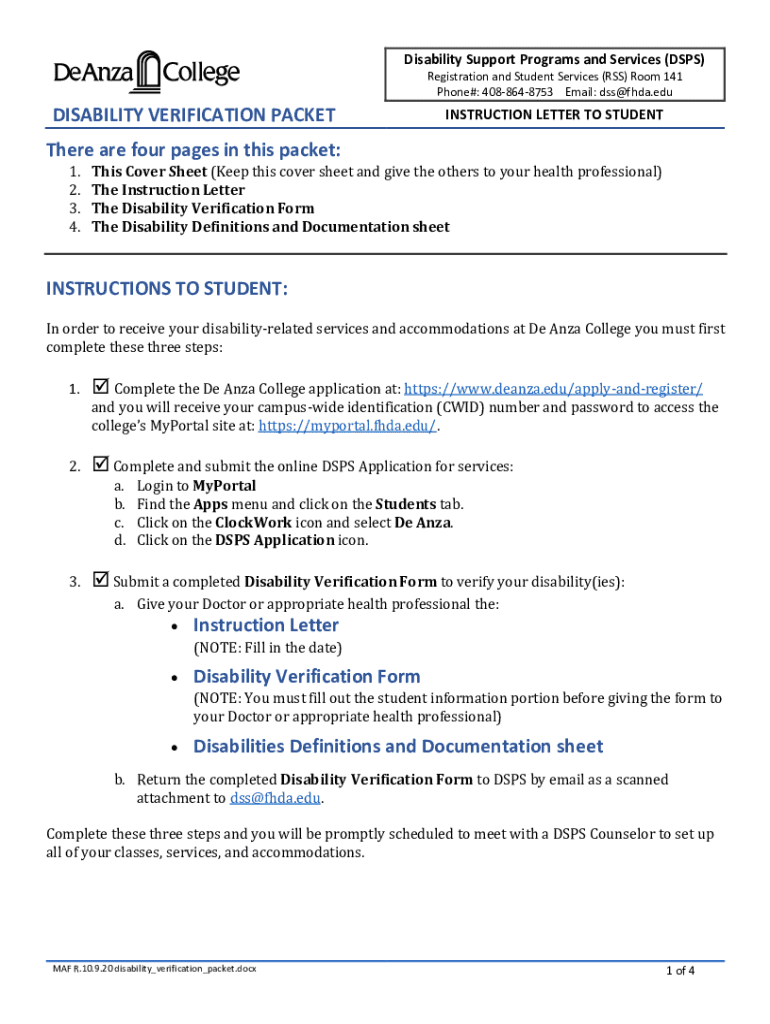
To effectively utilize these services, students should begin by contacting the Disability Support Programs and Services (DSPS) office at their respective institution. The process often involves submitting a formal request alongside necessary documentation that verifies the student's needs. This documentation typically includes a Disability Verification Form completed by a qualified health professional.
Once verified, students can work with DSPS coordinators to tailor specific support services that meet their individual requirements. The student may also need to communicate regularly with their instructors to ensure that necessary accommodations are in place for each class. By proactively engaging with these resources, students can maximize their educational experience within California State institutions.
Steps to Complete the Services for Students with DisabilitiesCalifornia State
-
Initial Contact: Reach out to the DSPS office at your campus to express interest in receiving support services.
-
Submit Documentation: Complete and submit a Disability Verification Form signed by a licensed healthcare provider. Ensure this documentation clearly outlines the nature of your disability and the accommodations needed.
-
Assessment and Planning: Meet with DSPS staff to discuss your specific needs and jointly develop an accommodation plan tailored to your courses and activities.
-
Implementation: Once official accommodations are approved, coordinate with your course instructors to implement the adjustments, such as extended exam times or special seating arrangements.
-
Ongoing Evaluation: Regularly review and adjust your accommodation plan as needed in collaboration with DSPS personnel to ensure it continues to meet your requirements effectively.
-
Feedback and Adjustment: Provide feedback to DSPS staff to continuously enhance the quality and effectiveness of the services provided.
Eligibility Criteria
Eligibility for accessing the services provided for students with disabilities within California State is primarily determined by the presence of a documented disability that significantly impacts one's ability to perform key academic tasks. Disabilities may include, but are not limited to, visual or hearing impairments, learning disabilities, and chronic health conditions.
Applicants must provide adequate documentation from a certified healthcare professional or educational psychologist, substantiating their need for support services. Additionally, the student must be enrolled in an accredited program within the California State education system and must demonstrate that the requested accommodations are necessary for their academic success.


Required Documents
To apply for services, students need to gather and submit precise documentation. The required documents generally include:
- Disability Verification Form: A formal document completed and signed by a qualified medical or psychological professional.
- Medical Reports: Additional medical documentation that outlines the diagnosis, nature, and extent of the disability.
- Educational Records: Any previous records from other educational institutions that indicate a history of accommodations or services provided.
These documents ensure the student's disability is thoroughly documented, enabling a fair evaluation of their support needs. They also aid in developing a comprehensive plan that addresses the specific accommodations necessary for the student's academic achievement.
Form Submission Methods (Online/Mail/In-Person)
Submission of applications for services can generally be performed through several avenues to accommodate various preferences and abilities.
- Online Submission: Many campuses provide a digital submission platform through their DSPS websites. This typically involves uploading scanned copies of the necessary documents.
- Mail: Students can mail physical copies of their documents directly to their campus’s DSPS office if online submission is not feasible.
- In-Person: Some institutions offer the option to hand-deliver documents to the DSPS office, allowing for immediate face-to-face communication, which can be beneficial for students seeking additional guidance during submission.
Legal Use of the Services for Students with DisabilitiesCalifornia State
The legal use of these services is governed by several legislative acts, primarily the Americans with Disabilities Act (ADA) and Section 504 of the Rehabilitation Act. These laws mandate that educational institutions offer reasonable accommodations to students with disabilities to ensure they have equal access to educational programs and activities.
Any misuse or fraudulent claiming of services, such as submitting false documentation or obtaining accommodations without a legitimate need, is strictly prohibited and can result in disciplinary actions, including loss of services, academic penalties, or legal consequences.
Key Elements of the Services for Students with DisabilitiesCalifornia State
The primary components of these services include:
- Accommodations: Adjustments to the learning environment, such as extended exam time or assistive technologies.
- Assistive Technology: Equipment or software designed to support educational tasks.
- Advising and Counseling: Professional guidance services tailored to help students navigate academic challenges.
- Alternative Learning Materials: Provision of accessible instructional materials, such as braille or audio textbooks.
These elements collectively ensure that students receive the support they need to succeed academically within California State institutions, fostering an inclusive educational environment that respects diversity and accessibility.
State-Specific Rules for the Services for Students with DisabilitiesCalifornia State
California State has specific regulations and guidelines that enhance federal provisions, ensuring that students with disabilities receive not only the minimum required support but also benefit from state-initiated enhancements. State programs often provide additional funding and resources to expand services beyond federal requirements.
These state-specific rules also emphasize cultural competency and the necessity to accommodate diverse populations within the state's education system. Being aware of and adhering to these local regulations ensures that students utilize the support services available to them effectively and legally.




