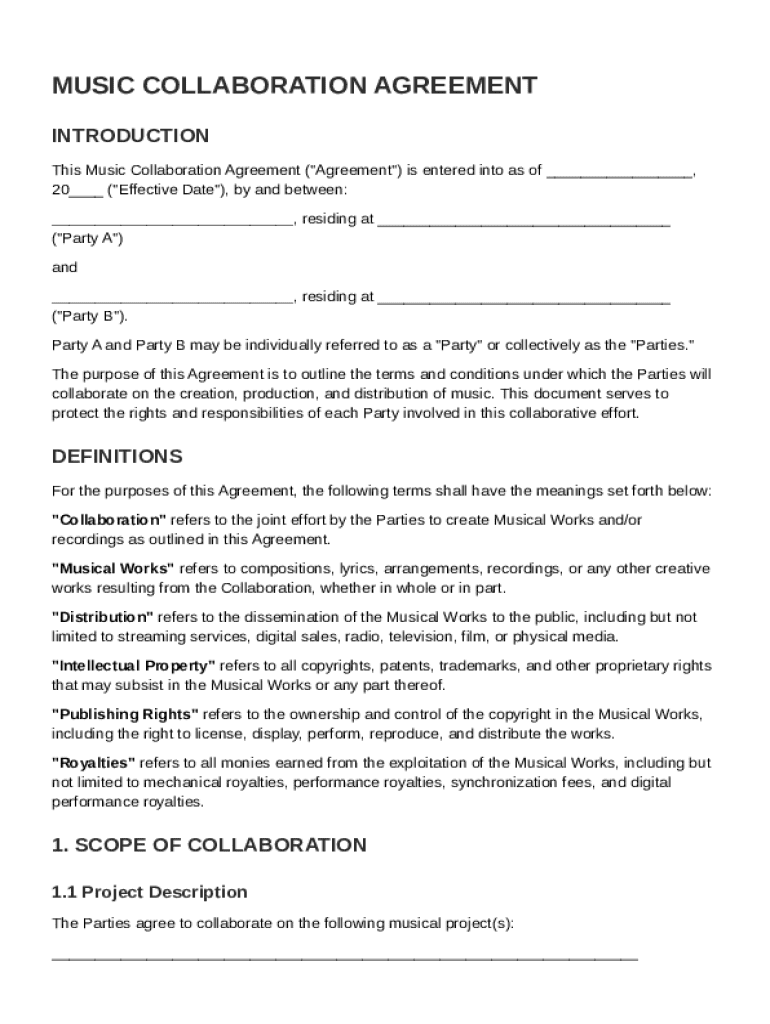







Definition and Meaning of the Music Collaboration Agreement Template
The Music Collaboration Agreement Template serves as a detailed blueprint for parties engaging in a musical partnership. It defines key parameters including roles, responsibilities, and the extent of collaboration between parties involved in the creation and distribution of musical content. Useful for songwriters, producers, and performers, this template ensures that all contributing parties understand their obligations and rights concerning royalties, ownership of musical works, and revenue sharing.
How to Use the Music Collaboration Agreement Template
Effectively using the Music Collaboration Agreement Template involves several steps that ensure both parties' interests are secure. The template:
-
Provides a Clear Framework: Establishes a structured approach to define each party's contributions, ownership percentages, and financial arrangements.
-
Customizable Sections: Allows customization to specific projects by adding or modifying clauses related to timelines, collaboration scope, and deliverables.
-
Legal Considerations: Offers a basis to discuss legal aspects such as copyright ownership, potential liabilities, and confidentiality agreements.
When filling out the template, each party must agree on and clearly document every term to prevent future disputes, ensuring that each aspect of the collaboration is meticulously recorded.
Key Elements of the Music Collaboration Agreement Template
The comprehensive Music Collaboration Agreement Template includes various elements crucial for effective collaboration:
-
Details of Parties Involved: Clear identification of all collaborating entities or individuals.
-
Scope of Collaboration: Specifics about the creative and production tasks each party is responsible for.
-
Ownership Rights: How the ownership of the completed musical work will be divided among the parties.
-
Financial Arrangements: Detailed breakdown of how earnings like royalties and performance fees will be distributed.
-
Responsibilities and Roles: Precise delineation of duties for each collaborator to avoid overlaps and ensure accountability.
-
Termination Conditions: Predetermined conditions under which the agreement can be terminated by either party.
Important Terms Related to Music Collaboration Agreement Template
Understanding specific legal terminology is vital when using the Music Collaboration Agreement Template:
-
Collaboration: The process where parties work together to create a musical project.
-
Musical Works: Any compositions, lyrics, or sound recordings developed during the collaboration.
-
Royalties: Payments made to rights holders for the use of a musical work.
-
Confidentiality: Ensuring that proprietary elements of the collaboration are not disclosed without permission.
Telegraphic clarity on these terms within the agreement prevents ambiguity and promotes transparency.
Legal Use of the Music Collaboration Agreement Template
The legal framework provided by the Music Collaboration Agreement Template helps protect the interests of all parties involved. Each clause aligns with legal standards, ensuring rights are lawfully upheld:
-
Compliance with the ESIGN Act: Facilitates the use of digital signatures for legitimizing agreements.
-
Dispute Resolution: Includes mechanisms for resolving disagreements through mediation or arbitration rather than litigation.
-
Jurisdiction Specification: Clearly states the legal jurisdiction under which the agreement will be governed, usually relevant to where the collaboration takes place.
This template acts as a legal safeguard by preemptively addressing potential issues and outlining resolutions.
Examples of Using the Music Collaboration Agreement Template
Real-world applications of the Music Collaboration Agreement Template underscore its utility:
-
Songwriting Partnerships: Collaborators use the template to define each party's contribution to lyrics and music.
-
Producer-Performer Agreements: Ensures production credits and profit shares are clearly allocated.
-
Label Collaborations: Record labels define the scope of their involvement with artists through these templates to fix marketing roles, distribution rights, and financial splits.
These examples illustrate how structured agreements streamline creative partnerships, thus fostering productive collaborations.
Steps to Complete the Music Collaboration Agreement Template
Accurate completion of the Music Collaboration Agreement Template involves a detailed, step-by-step approach:
-
Identify Collaborators: List all involved parties with contact information and roles.
-
Define the Project: Specify the purpose, goals, and expected outcomes of the collaboration.
-
Outline Financials: Detail how earnings and expenses will be managed and distributed.
-
Establish Ownership Rights: Decide and record the desired split of ownership for any musical works.
-
Draft Confidentiality and Termination Clauses: Ensure sensitive information is protected and have clear pathways for ending the collaboration if necessary.
Follow these steps to ensure the agreement covers all bases and meets the needs of each collaborator.
Who Typically Uses the Music Collaboration Agreement Template
A wide range of individuals and entities use the Music Collaboration Agreement Template:
-
Independent Artists: Musicians collaborating with others to produce and distribute music.
-
Record Labels: Institutions or companies signing agreements with artists for production and distribution.
-
Music Producers: Professionals seeking clear terms of engagement with artists and songwriters.
Using this template, these parties can solidify projects and ensure all contributions are recognized and compensated appropriately.