




01. Edit your bankwest login online
Type text, add images, blackout confidential details, add comments, highlights and more.

Type text, add images, blackout confidential details, add comments, highlights and more.

Draw your signature, type it, upload its image, or use your mobile device as a signature pad.

Send bankwest transaction dispute form via email, link, or fax. You can also download it, export it or print it out.
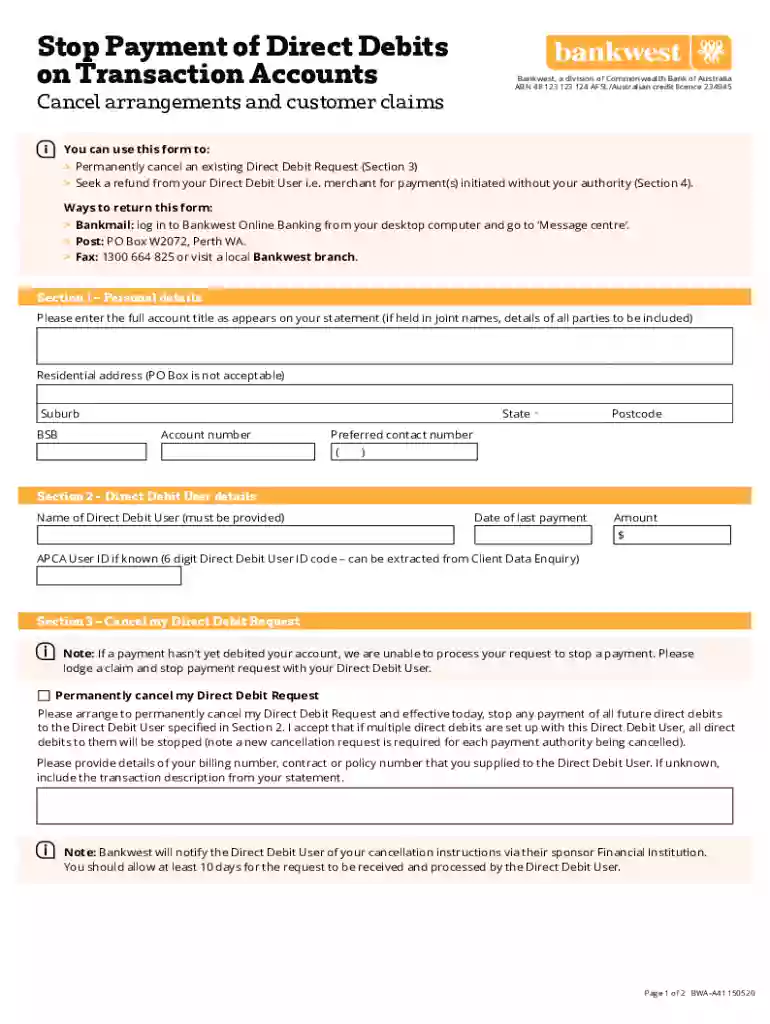
The "Stop Payments of Direct Debits on Transaction Accounts - Bankwest" form serves as an essential tool for customers who want to halt direct debit payments deducted from their transaction accounts. This form allows users to formally request Bankwest to stop further debits from specific payees and specify any unauthorized transactions requiring refunds. The document establishes a contractual shift in payment responsibilities and ensures that customers maintain control over withdrawals from their accounts.
Using the form involves following a detailed process to ensure Bankwest accurately processes the request. Customers need to provide pertinent information, including personal identification details and the information of the Direct Debit User from whom payments are being stopped. The form may also require detailed explanations should there be any disputes over unauthorized or incorrect withdrawals. It's crucial for users to communicate with the associated Direct Debit User to inform them of the cancellation and understand potential contractual obligations.
Completing the Stop Payments form involves several critical steps:
Cancelling direct debits on transaction accounts can be vital for maintaining financial control and security. This action is often necessary when agreements with Direct Debit Users have ended or in cases of unauthorized charges. Timely use of the form helps avoid potential financial discrepancies and ensures peace of mind for account holders.
Typically, the form is used by Bankwest customers experiencing change in service agreements, unauthorized transactions, or account management concerns. This includes individuals managing personal finances, such as retirees supervising disbursements or students managing budget constraints. Businesses may also utilize this form to manage their cash flow and control outbound payments more efficiently.


Key elements of the form include:
Legally, stopping direct debits effectively modifies the terms of payment authorizations previously agreed upon with the Direct Debit User. It is essential to consult any existing contracts to avoid breaches or unintended consequences. Documentation should be retained for legal protection in case disputes arise post-cancellation.
Real-world scenarios include:
By addressing such instances, users maintain financial oversight and prevent unauthorized access to their accounts.
Customers can submit the Stop Payments form:
We've got more versions of the bankwest login form. Select the right bankwest login version from the list and start editing it straight away!
| Versions | Form popularity | Fillable & printable |
|---|---|---|
| 2020 | 4.8 Satisfied (25 Votes) |
At DocHub, your data security is our priority. We follow HIPAA, SOC2, GDPR, and other standards, so you can work on your documents with confidence.


