
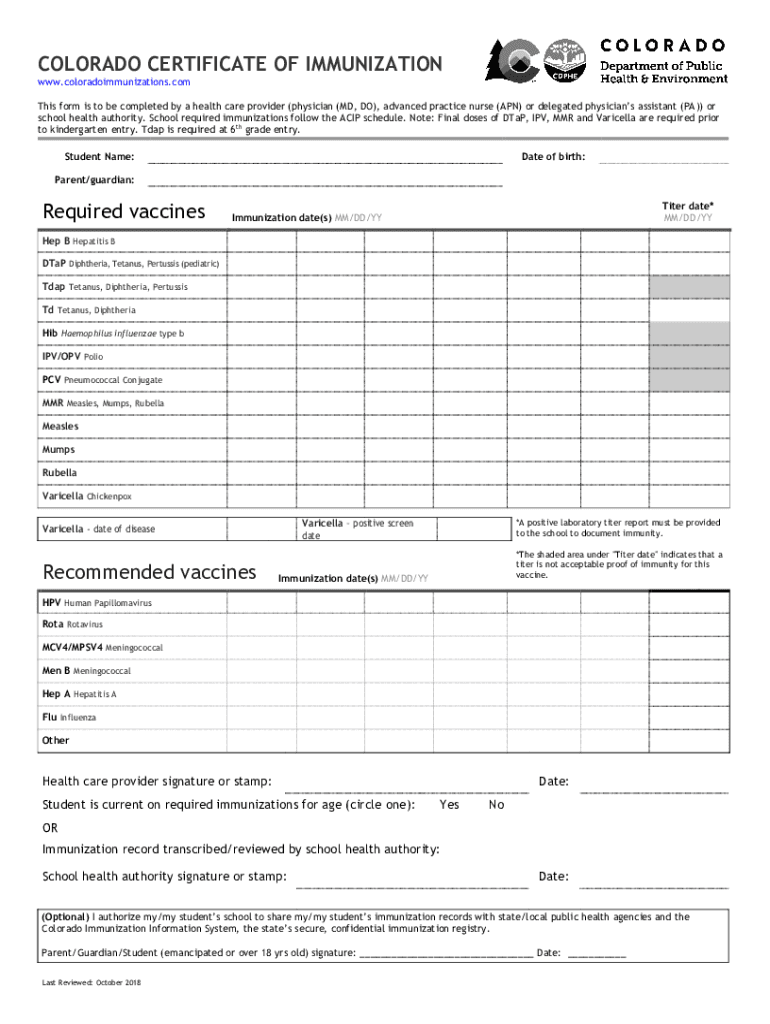







Understanding the Certificate of Immunization for Colleges and Universities
The Certificate of Immunization for colleges and universities is a crucial document that verifies a student’s immunization history. Educational institutions often require this certificate to ensure that students are vaccinated against specific diseases. This requirement helps maintain public health standards within campus environments.
Importance of the Certificate of Immunization
A Certificate of Immunization is significant for several reasons:
- Health Safety: It helps prevent outbreaks of communicable diseases on campus, protecting not only the student body but also faculty and staff.
- Compliance: Many colleges and universities mandate immunization records as part of their enrollment process, ensuring that students meet state and institutional health requirements.
- Participation in Activities: Some colleges may restrict participation in certain campus activities or health programs if immunization records are not on file.
Required Vaccines and Immunizations
The specific vaccines required for the Certificate of Immunization can vary by state and institution, but commonly mandated immunizations include:
- MMR (Measles, Mumps, Rubella): Often required before entry, as outbreaks can affect large populations.
- Tdap (Tetanus, Diphtheria, Pertussis): Frequently required for students living in communal settings like dorms.
- Meningococcal Vaccines: Critical for students in close quarters to reduce meningitis risk.
- Hepatitis B: Some schools require this vaccine due to potential exposure in health-related fields.
How to Obtain the Certificate of Immunization
Obtaining the Certificate of Immunization typically involves the following steps:
- Visit a Healthcare Provider: Schedule an appointment to receive vaccinations as recommended.
- Request Immunization Records: If you have already been vaccinated, request your immunization records from your healthcare provider or previous school.
- Complete Required Forms: Fill out any forms required by your college or university to formally document your immunization status.
- Submit Documentation: Submit the Certificate of Immunization to your school’s health services or admissions office, adhering to any deadlines set by the institution.
Common Mistakes in Completing the Certificate
When filling out the Certificate of Immunization, students can make several common mistakes:
- Incomplete Records: Failing to include all required vaccinations or missing dates can delay enrollment.
- Illegible Forms: Ensure that all written entries are clear and properly formatted to avoid confusion for reviewing staff.
- Missing Signatures: Some forms may require signatures from healthcare providers; neglecting this step can result in denial of the certificate.
Legal Implications and Compliance
The Certificate of Immunization must adhere to legal and institutional standards. Institutions often follow guidelines from the Centers for Disease Control and Prevention (CDC) and state health departments. Non-compliance can lead to:
- Inability to Register: Students may face delays or inability to register for classes without up-to-date immunization records.
- Exclusion from Campus: Some colleges may temporarily prohibit students from attending classes until their immunization documentation is resolved.
Who Utilizes the Certificate of Immunization
The certificate is primarily utilized by:
- Incoming College Students: New students are usually required to submit this form as part of enrollment.
- Current Students: Students entering specific programs, such as nursing or physical education, may need to provide updated immunization statuses.
- Health Services: University health services utilize these records to monitor and manage health risks on campus.
Variations in Certificate Requirements Across States
Immunization requirements can vary significantly by state, necessitating that students understand the specific guidelines applicable to their institution. For example, some states have stricter vaccine mandates due to higher instances of certain diseases.
Examples of Documenting Immunization History
When documenting immunization history on the Certificate of Immunization, ensure to:
- List each vaccine individually.
- Include the date of administration and name of the administering provider.
- Provide a titer test result if applicable, showing immunity without vaccination.
Accurate documentation plays a vital role in verifying compliance with immunization regulations, fostering a healthier school environment.




