



01. Edit your form online
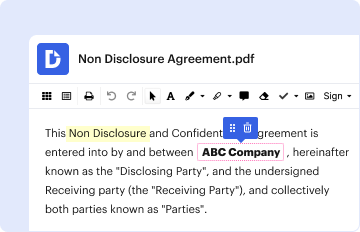
Type text, add images, blackout confidential details, add comments, highlights and more.

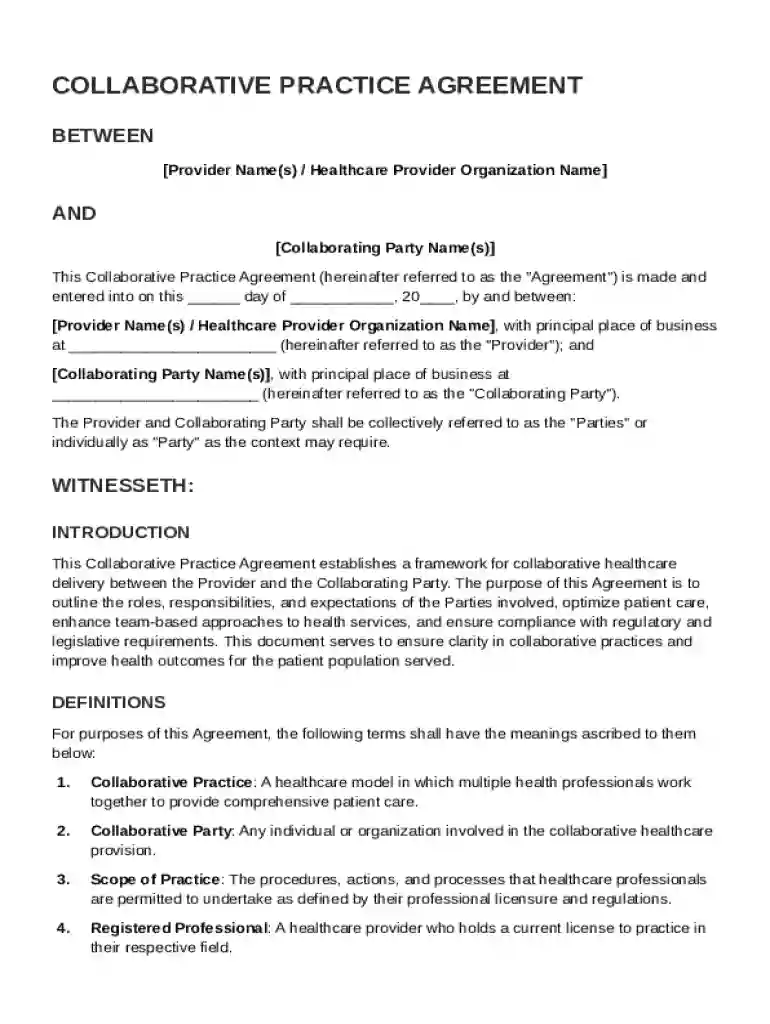
Type text, add images, blackout confidential details, add comments, highlights and more.
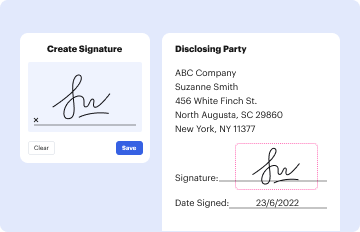
Draw your signature, type it, upload its image, or use your mobile device as a signature pad.

Send it via email, link, or fax. You can also download it, export it or print it out.
A Collaborative Practice Agreement Template serves as a formal contract between a healthcare provider and a collaborating partner, such as a physician or healthcare entity. This document outlines the terms and conditions under which both parties operate to provide cohesive and coordinated care to patients. Key components of the agreement include a detailed description of roles, responsibilities, and the scope of practice for each participant. The goal is to enhance patient care by encouraging teamwork and leveraging the unique skills of each party involved in the agreement.
The template acts as a framework, providing a standardized approach to documenting collaborative arrangements in healthcare, facilitating consistency, and adherence to legal requirements.
The Collaborative Practice Agreement Template encompasses several critical components to ensure a comprehensive understanding and effective collaboration. These elements provide clarity and guidance for both parties involved.
Participant Roles and Responsibilities:
Objectives and Goals:
Legal Compliance:
Patient Care Processes:
Evaluation and Review:
The Collaborative Practice Agreement Template plays a crucial role in legalizing the partnership between healthcare parties. It complies with federal and state regulations to ensure that all collaborative activities are conducted within the law.
Regulatory Framework:
Dispute Resolution:
Confidentiality Agreements:
The document not only facilitates professional collaboration but also protects each party legally by establishing a clear and enforceable contract.
Using the Collaborative Practice Agreement Template involves several strategic steps to ensure its effective application and adoption within a healthcare setting. This process is designed to maximize efficiency while minimizing errors or misunderstandings.
Review and Customize:
Consult Legal Experts:
Negotiate Terms:
Implement:
Monitor and Update:
Understanding critical terminology within the Collaborative Practice Agreement Template enhances clarity and ensures all parties are on the same page. Some essential terms include:
Scope of Practice:
Collaborative Partner:
Regulatory Body:
By clarifying these terms, the agreement ensures mutual understanding and precise execution of collaborative healthcare practices.
The Collaborative Practice Agreement Template is primarily used by healthcare professionals and organizations seeking to formalize partnerships that promote integrated patient care.
Healthcare Providers:
Healthcare Organizations:
Regulatory and Licensing Bodies:
These users leverage the template to promote efficiency, accountability, and enhanced patient outcomes through coordinated care.


Finalizing a Collaborative Practice Agreement Template involves organized steps to accurately reflect the intended collaborative relationship. Completing the form carefully ensures accountability and compliance.
Gather Information:
Define Terms and Conditions:
Review with Stakeholders:
Finalize and Execute:
Implement:
Since regulations can vary widely, understanding state-specific rules for the Collaborative Practice Agreement Template is vital for compliance.
State Licensure Requirements:
Scope of Practice Variances:
Renewal and Review Cycles:
Compliance with local laws is crucial for ensuring the enforceability and credibility of a collaborative practice agreement.
At DocHub, your data security is our priority. We follow HIPAA, SOC2, GDPR, and other standards, so you can work on your documents with confidence.



Feb 9, 2023 Collaborative Environment: Use centralised platforms for document sharing and communication to ensure transparency and keep all stakeholders
This agreement sets forth the terms of the Collaborative Practice Agreement between (nurse practitioner and specialty as listed on the State issued
It is recognized that no collaborative practice agreement can effectively cover every clinical situation. Therefore, the collaborative practice agreement is not


