






Definition and Meaning of the Residential Electrical Contract Template
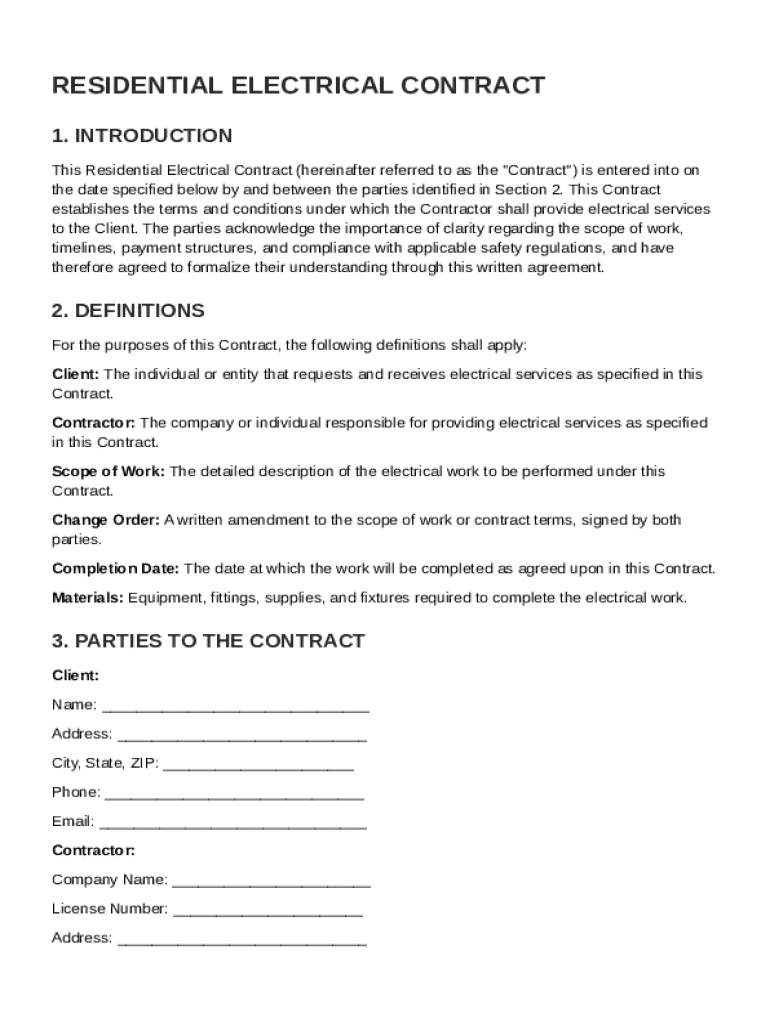
The Residential Electrical Contract Template serves as a structured document designed to outline the agreement between a client and an electrical contractor for services within a residence. This template ensures that both parties clearly understand the scope of work, payment terms, timelines, and legal obligations. It provides a detailed framework that includes important elements such as warranties and insurance requirements, which help in setting clear expectations and avoiding potential disputes.
Key Components
- Scope of Work: Clearly defines tasks to be performed.
- Payment Terms: Outlines how and when payments will be made.
- Timelines: Establishes the project schedule.
Importance
The contract ensures compliance with safety regulations and legal requirements, fostering a transparent and professional relationship between the contractor and the client.
How to Use the Residential Electrical Contract Template
To use the Residential Electrical Contract Template effectively, follow a structured approach:
- Review the Template: Understand all sections and adapt them to specific needs.
- Customize Relevant Sections: Modify the scope of work, timelines, and payment details to fit the specific project.
- Add Special Conditions: Include any additional provisions or requirements unique to the job.
Practical Steps
- Consultation: Discuss with all parties involved to ensure agreement on terms.
- Customization: Use the template’s editable fields to tailor the document to the specific project.
- Finalize and Sign: Review the final draft with each party before signing.
Using the template as a guide helps prevent misunderstandings and ensures that all aspects of the project are addressed.
Steps to Complete the Residential Electrical Contract Template
Completing the Residential Electrical Contract Template involves a series of ordered steps to ensure accuracy and completeness.
- Initial Drafting: Start by inputting general information about the contractor and client.
- Detail Project Scope: Elaborate on all tasks, specifying start and end dates.
- Define Payment Details: Clearly outline the payment schedule and methods.
- Incorporate Legal Clauses: Add warranty and dispute resolution clauses as necessary.
- Review and Edit: Double-check information for accuracy and coherence.
Completion Tips
- Clarity and Specificity: Ensure all terms are clear and unambiguous.
- Legal Input: Consider having a legal professional review the draft.
By following these steps, the contract becomes a reliable document that supports the smooth execution of electrical services.
Key Elements of the Residential Electrical Contract Template
This contract template includes several crucial elements essential for ensuring completeness and legal enforceability.
Essential Elements
- Contact Information: Includes names, addresses, and contact details of both parties.
- Scope of Work: Specifies duties, responsibilities, and goals.
- Payment Terms: Details on deposits, milestones, and final costs.
- Warranties and Guarantees: Protects both parties by outlining guarantees on materials and workmanship.
- Insurance and Licenses: Assures the contractor's compliance with state regulations.
Detailed Breakdown
- Dispute Resolution: Methods for resolving disagreements.
- Termination Clauses: Conditions under which the contract can be ended early.
Ensuring these elements are present and clearly defined ensures the protection and satisfaction of both the client and the contractor.
Legal Use of the Residential Electrical Contract Template
The Residential Electrical Contract Template ensures that all agreements adhere to legal standards, covering crucial legal aspects.
Legal Provisions
- Compliance with Regulations: The template is designed to meet local and national electrical safety codes.
- Liability Clauses: Protects both parties against potential liabilities arising from service delivery.
- Binding Agreement: Once signed, it becomes a legally enforceable document.
Important Considerations
- Review by Legal Counsel: It’s advisable to have legal experts review the contract to ensure adherence to local laws.
This template plays a significant role in reducing legal risks and ensuring commitments are met according to agreed terms.
State-Specific Rules and Regulations
Rules regarding contracts can vary by state, making it crucial to adjust the Residential Electrical Contract Template accordingly.
Variations to Consider
- Licensing Requirements: Some states have specific licensing requirements for electrical contractors.
- Consumer Protection Laws: State-specific laws may affect contract terms related to cancellation and refund policies.
- Building Codes: Local codes might necessitate changes in how work is described and delivered.
Practical Adjustments
- Consult Local Regulations: Always verify state laws before finalizing the contract.
- State Amendments: Modify the template to adhere to regional legal requirements.
These adjustments help ensure the contract’s enforceability and relevance across different jurisdictions.
Who Typically Uses the Residential Electrical Contract Template
This template is used by a variety of individuals and businesses involved in residential electrical projects.


Users
- Electrical Contractors: Establish terms for services provided in residences.
- Homeowners: Secure detailed documentation of the work promised and received.
- Property Managers: Manage electrical maintenance and installation contracts efficiently.
Utility
Each party benefits from the contract’s structure, which facilitates clear communication, legal compliance, and project management.
Versions or Alternatives to the Residential Electrical Contract Template
While the Residential Electrical Contract Template is widely used, there are alternative versions or related documents that may suit varying needs.
Alternatives
- Commercial Electrical Contract: Tailored for business and industrial projects.
- Short-Form Contract: Useful for small or less complex jobs.
- Subcontractor Agreement: For use when engaging subcontractors for portions of the project.
Selecting the Right Version
- Project Size: Consider the scale and scope of the work.
- Specific Needs: Review whether specialized terms or clauses are needed.
Using the appropriate version or alternative ensures that the contract precisely meets the requirements of the project type and scope.