
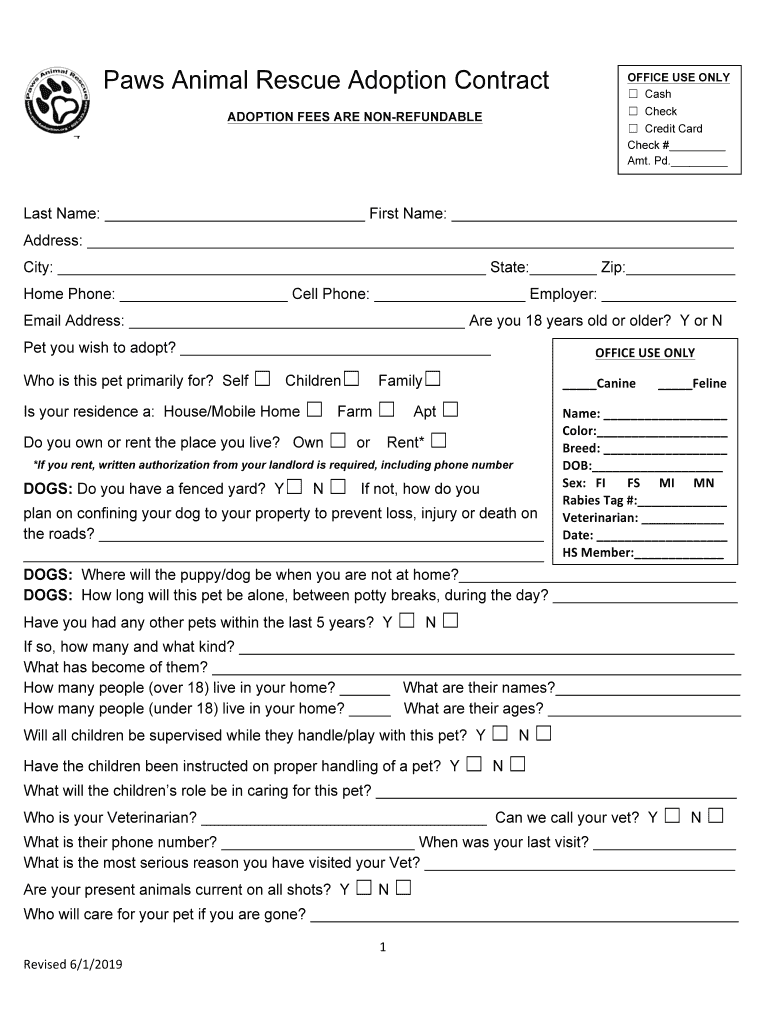







Definition and Meaning of "Adoption Fees Are Non-Refundable"
Adoption fees are payments required to adopt a pet, typically collected by animal shelters or rescue organizations. The stipulation that these fees are non-refundable means that once paid, the amount cannot be returned to the adopter if they decide not to proceed with the adoption or return the pet at a later date. This policy underscores the financial commitment and responsibility involved in adopting a pet while helping the organization cover its expenses related to the care and management of the animals.
How to Use the Adoption Fees Are Non-Refundable Clause
When entering into an adoption agreement, understanding the non-refundable nature of the fees is crucial. Prospective adopters should:
- Review the adoption contract thoroughly before signing, ensuring clarity on fee conditions.
- Communicate with the shelter or rescue group to confirm all fee details.
- Consider the commitment seriously, recognizing that the fees support the organization's operational costs.
Steps to Complete the Adoption Contract with Non-Refundable Fees
Completing an adoption contract involves several steps, emphasizing the seriousness of the commitment. These typically include:
- Initial Inquiry: Contact the shelter to express interest in a specific pet and understand the adoption process.
- Application Submittal: Fill out the relevant application, providing all requested personal and pet-related information.
- Review Contract: Carefully read through the adoption contract, paying particular attention to clauses about non-refundable fees.
- Fee Payment: Pay the stated adoption fee as confirmed by the shelter.
- Document Submission: Provide any additional required documents such as proof of residence or veterinary references.
- Finalize Adoption: Sign the contract, acknowledging the terms regarding non-refundable fees, and take your new pet home.
Why Are Adoption Fees Non-Refundable
The non-refundable nature of adoption fees serves several purposes:
- Operational Support: Fees help cover the costs of caring for animals, including food, veterinary care, and personnel.
- Deterrent to Casual Returns: This policy discourages potential adopters from hastily returning pets, fostering more thoughtful adoption decisions.
- Financial Commitment: It ensures adopters are serious about their commitment to providing a permanent home.
Key Elements of the Adoption Fees Are Non-Refundable Clause
Understanding this clause is essential for all involved parties:
- Financial Terms: Clearly outlines the payment amount and non-refundable nature.
- Usage: Specifies that fees support shelter operations and should not be viewed as a purchase price.
- Finality: Indicates that once the fee is paid, no part of it can be reclaimed even if the adoption is terminated.
Important Terms Related to Adoption Fees Are Non-Refundable
Several terms often appear alongside this clause in adoption contracts:
- Adoption Contract: The legally binding document illustrating terms of the adoption.
- Surrender: Referring to an animal previously adopted that is returned to the shelter.
- Ownership Transfer: The legal transition of pet ownership from the shelter to the adopter.
Legal Use of the Adoption Fees Are Non-Refundable Clause
This clause is a legally enforceable part of the adoption contract:
- Binding Agreement: Upon signing, adopters agree to this term, committing them financially.
- Consistency with Local Laws: Many states provide shelters with the autonomy to enforce non-refundable fees as part of their operational policies.
- Implicative Awareness: Potential adopters must be made aware during the application process.
Examples of Using the Adoption Fees Are Non-Refundable Clause
Real-world scenarios underscore the necessity of this clause:
- Animal Care: Fees support vet visits, vaccinations, food, and shelter administration, essential for preparing pets for adoption.
- Commitment Incentive: Adopters who pay a non-refundable fee are often more invested in maintaining the pet's wellbeing, reducing the likelihood of pet returns.
State-Specific Rules for Non-Refundable Adoption Fees
While the overarching principle remains, local regulations may influence implementation:
- Variable Fees: Some states allow variable fee structures based on pet type, age, or breed.
- Disclosure Requirements: Certain states mandate specific disclosures regarding fees being non-refundable up front before they can be enforced.




