




01. Edit your form online
Type text, add images, blackout confidential details, add comments, highlights and more.

Type text, add images, blackout confidential details, add comments, highlights and more.

Draw your signature, type it, upload its image, or use your mobile device as a signature pad.

Send it via email, link, or fax. You can also download it, export it or print it out.
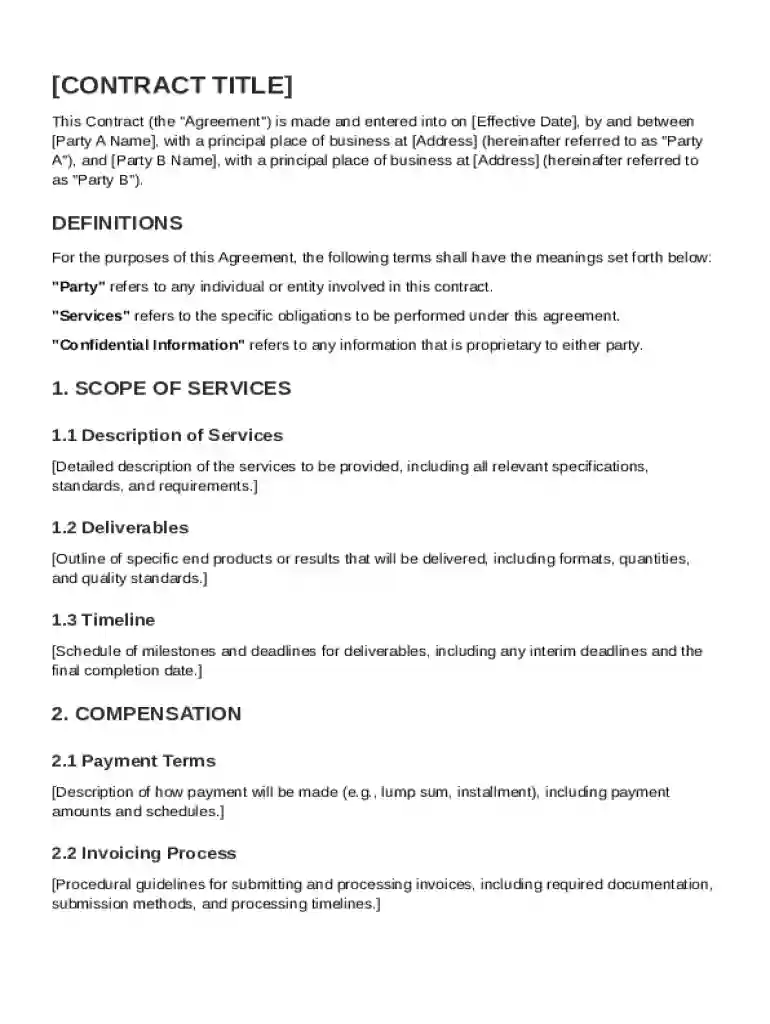
A Law Contract Template is a standardized document used to outline agreements between two or more parties. It specifies details such as the scope of services provided, compensation terms, and roles and responsibilities. In legal parlance, these templates help offer a clear framework for the relationship, reducing the risk of misunderstandings. By providing a pre-structured format, users can ensure the inclusion of essential contractual components, fostering clearer communication and mutual understanding from the onset. It simplifies contract creation, ensuring compliance with legal standards while saving time and resources.
Using a Law Contract Template involves several key steps to ensure a comprehensive and legally sound contract. First, select a template that fits the nature of your agreement. Next, fill in the specific details relating to the involved parties, such as names and addresses. Identify and customize clauses pertinent to the agreement, such as those relating to payment terms, confidentiality, and dispute resolution. It is crucial to consult with a legal expert if specific adjustments or additions are required to address unique aspects of the agreement. After customization, review the draft for accuracy and completeness before all parties sign the document.
Understanding key terms associated with a Law Contract Template ensures clarity and minimizes potential disputes. Terms like "confidentiality," "dispute resolution," and "force majeure" are commonly found in legal contracts. Confidentiality clauses help protect sensitive information from disclosure, while dispute resolution outlines methods for resolving conflicts. Force majeure refers to unforeseeable events that may prevent contract fulfillment. Knowing these terms facilitates smoother negotiations and reduces the likelihood of contractual breaches.
A well-constructed Law Contract Template should encompass several critical sections that ensure its comprehensiveness and enforceability. Key elements include identification of the parties involved, a clear definition of services or goods provided, payment terms, and a timeline for delivery or completion. Additional sections such as confidentiality agreements, liability clauses, and methods of dispute resolution are also essential. Including termination conditions and procedures for amending the contract adds flexibility while ensuring that both parties are aware of their obligations and potential legal repercussions.
Completing a Law Contract Template involves a systematic approach to ensure that it serves its intended purpose effectively. Begin by gathering necessary information from all parties involved. Fill in the standard sections, ensuring accurate data entry. Review and modify sections that require customization to reflect mutual agreements. Once edits are completed, go through the document to confirm that no crucial detail is missing. Discuss any points of concern with the involved parties, and seek legal review if needed. Ensure that each party signs the document appropriately to make it legally binding.
The legal use of a Law Contract Template revolves around its ability to establish a binding agreement that adheres to legal standards. It is used to formalize relationships in various settings, offering a solid foundation by structuring expectations and deliverables. Legally, these templates ensure that all parties are aware of their rights, obligations, and liabilities. To maximize the template’s legal effectiveness, it should be tailored to align with jurisdiction-specific laws and reviewed by a legal professional before finalization.
Different states in the U.S. have specific regulations concerning contract templates. While a general template provides a good starting point, local requirements may necessitate modifications. For instance, certain states have unique disclosure requirements or particular statutes of fraud that affect how agreements must be documented and executed. Understanding these distinctions is vital to ensure that a contract is compliant with relevant laws. It may involve consulting state-specific legal guidelines or seeking advice from a legal professional familiar with the jurisdiction in which the contract will operate.
Practical application of the Law Contract Template spans diverse scenarios, enhancing its usability across various sectors. For instance, a small business might utilize the template to formalize agreements with vendors, clearly outlining expectations and responsibilities. Similarly, freelancers can use it to define the scope of work and payment terms when engaging with clients. In each case, the template serves to streamline the agreement process, minimize misunderstandings, and establish legally sound partnerships. Examining real-world examples highlights the template's adaptability and importance in detail-oriented professional arrangements.
At DocHub, your data security is our priority. We follow HIPAA, SOC2, GDPR, and other standards, so you can work on your documents with confidence.

Available contract templates include: Consulting (Company/Individual), Short Consulting (Company/Individual), Master Services (Company/Individual), Speaker,
THIS AGREEMENT made and entered into this the day of , 20, by and between the (agency name) an agency of the State of Mississippi, and (specific attorney(s)


